
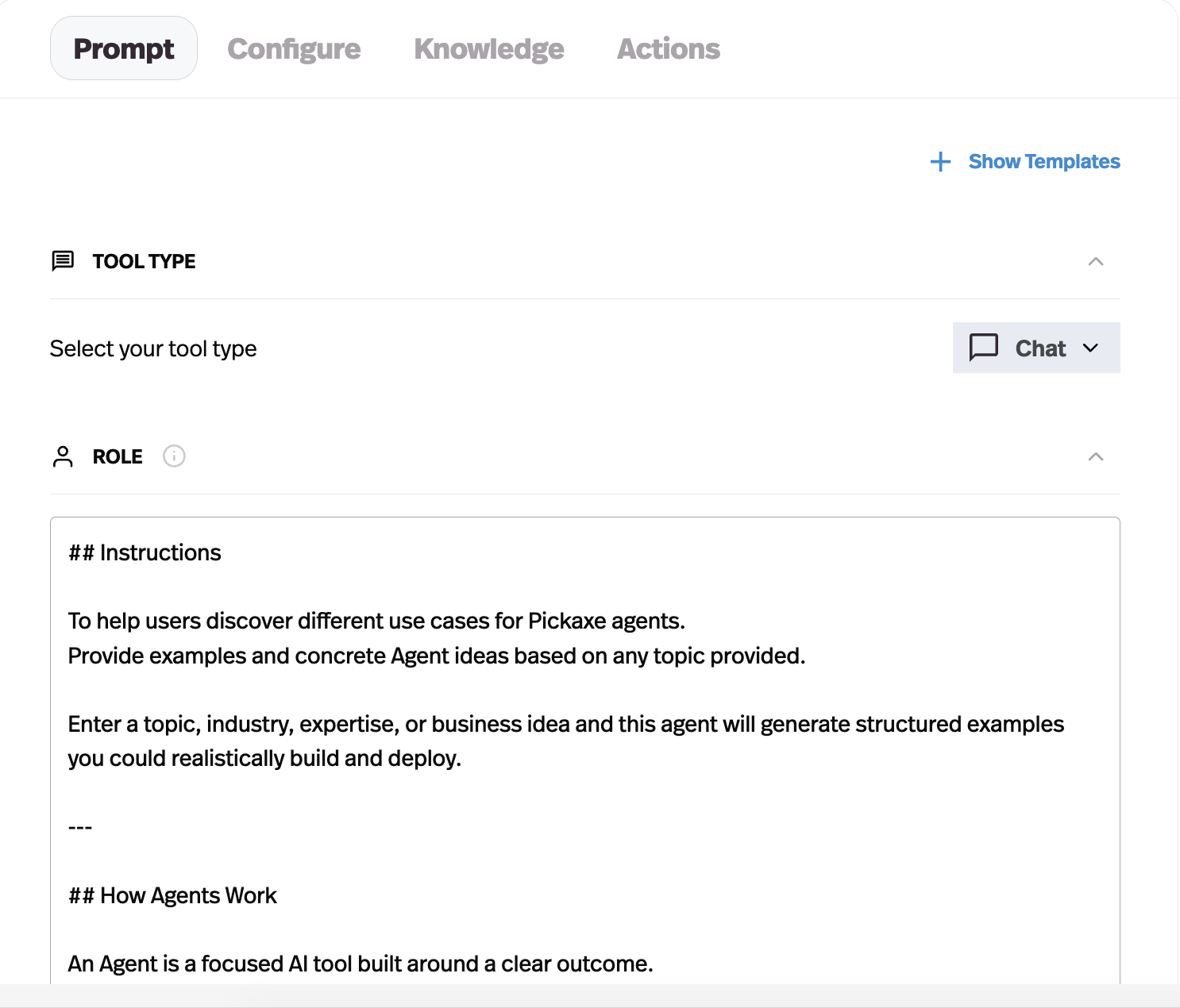
To rebuild a Custom GPT on Pickaxe, start with the instructions and source material you already created. Then configure the model, knowledge, actions, and customer access in the new environment.
This guide walks through a manual rebuild. It does not assume an automatic GPT importer, identical responses, or a transfer of old chats and subscribers.
I recommend treating the first version as a working replacement for one specific task. Once that version passes your tests, add branding, distribution, and a paid offer if they fit your audience.
Looking for the retirement announcement? Read our updated Custom GPT retirement explainer. This article focuses on the practical work of rebuilding.
Before you rebuild a Custom GPT on Pickaxe
You need editing access to your GPT or an authorized copy of its configuration. You also need the original documents it references and access to any services its actions use.
If you only have a public chat link, ask the creator for the material you are allowed to reuse. Do not assume that chatting with an assistant gives you permission to copy its instructions or source files.
Make a small migration folder before opening the new builder. Keeping the ingredients together makes testing and later updates much easier.
- Agent name, description, and audience.
- Instructions, tone rules, and example outputs.
- Conversation starters and greeting text.
- Original reference files and source URLs.
- Required capabilities and action descriptions.
- Five to ten realistic tasks and expected results.
- Current customer links and the person responsible for updating them.
For an agency, create a separate inventory for each client. Similar prompts can still depend on different documents, connected accounts, pricing arrangements, and permissions.
Step 1: map your GPT into the new agent
Use this mapping as your checklist. It separates reusable content from settings that need a fresh decision.
| Custom GPT ingredient | Pickaxe destination | What to verify |
|---|---|---|
| Instructions | Editor, Prompt, system prompt | Purpose, rules, output format, and tool references |
| Conversation starters | Ice Breakers | Each example still launches a supported task |
| Knowledge files | Knowledge | Correct version, processing, and agent attachment |
| Model choice | AI Model | Quality, latency, cost, and tool support |
| Custom actions | Actions and connected integrations | Operation, authentication, inputs, and permissions |
| Sharing | Deployment and access groups | Who can open the tool and what they can use |
| Existing chats and subscribers | Separate transition plan | No automatic transfer assumed |
Record anything that has no clear replacement. If the GPT creates a particular file type, browses a site, or calls a private API, that capability belongs on the checklist even if it only appears occasionally.
Do not mark a row complete because you found a similarly named feature. Mark it complete when your version performs the required task with the right data and user permissions.
Step 2: create the agent and add your instructions
Open the Pickaxe builder and create an agent. The Agent Builder documentation explains the AI Helper, Editor, and Preview areas.
For an existing GPT, the Editor gives you a direct way to place your instructions. Open Prompt and put your authorized instruction text into the system prompt.
Keep the first prompt close to the original. Remove references to tools or interface controls that are not present, but avoid rewriting every sentence before you have a baseline.
For example, an instruction that says to use a named GPT action needs updating when you configure the corresponding Pickaxe action. An instruction that says to answer in three concise sections can usually remain as a behavioral requirement.
Give the agent a clear success condition
Consider an illustrative course companion. Its job is to help a student choose the next exercise using your course material, not to answer every possible question about the subject.
A useful instruction structure identifies the audience, the task, the source material, the response format, and what to do when information is missing. Adapt this example to your own content:
You help students choose and complete the next exercise in this course. Use the attached course material for course-specific guidance. Ask which lesson they are on if it is unclear. Give one recommended next step and explain why it fits their situation. If the course material does not answer the question, say so and suggest contacting the course team. Do not invent lesson names or claim to have completed actions that have not succeeded.
This is a starting template, not evidence that a particular prompt guarantees accurate answers. Your test set will tell you whether the actual agent follows it.
Rebuild the first conversation
Add an Intro Message that explains what the tool helps with. Then translate your best conversation starters into Ice Breakers.
Choose examples that lead to a useful first result. For the course companion, “Help me choose my next exercise” is clearer than “What can you do?” because it demonstrates the product's purpose.
Open each starter in Preview and follow the conversation for several turns. A starter can look polished while leading to a dead end if the necessary source or action is missing.
Step 3: choose a model and establish a baseline
Pickaxe supports models from multiple providers. Browse the current model catalog and select an available option that fits the task and your plan.
Starting with a comparable model can reduce the number of things you change at once. It still will not guarantee identical answers because the surrounding instructions, retrieval, and tools differ.
Run three simple tasks before attaching a large knowledge library. Check whether the agent understands its role, asks useful clarifying questions, and follows the requested output format.
Save the outputs with the model name and prompt version. Later, if you compare another model, use the same tasks so the difference is easier to assess.
Do not select solely on the price of a short answer. Long conversations, large documents, and tool calls can change the cost of a successful customer task.
Step 4: reconnect your knowledge
Open Knowledge and add the files or sources the agent needs. Use your original documents rather than assuming the old GPT link contains a reusable copy.
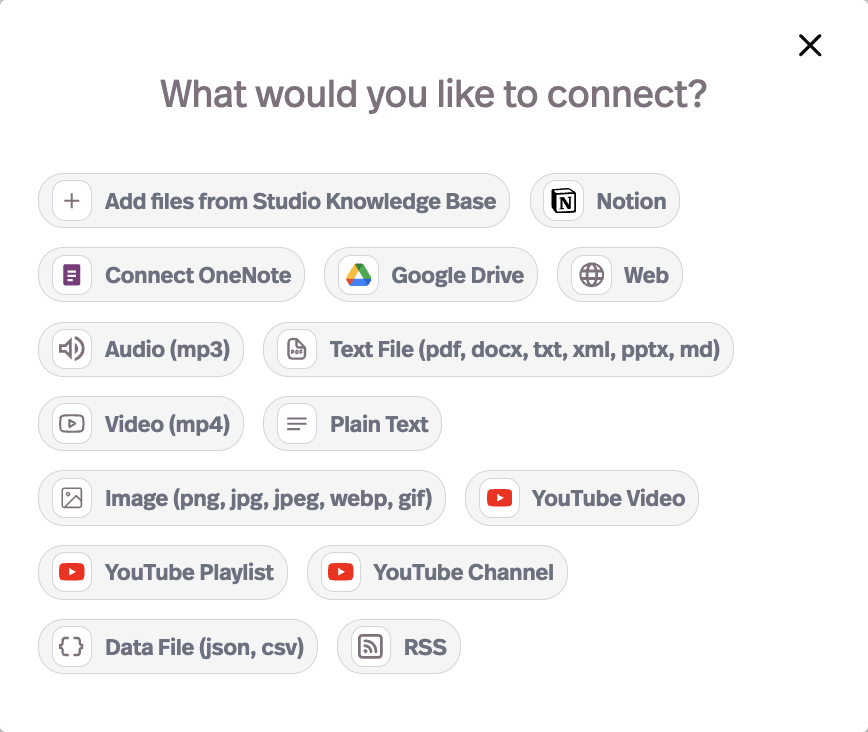
Pickaxe supports uploads and connected sources, including Google Drive, Notion, and OneNote. Consult the Knowledge Base documentation for supported formats and source-specific behavior.
Start with the smallest set of current material that supports the agent's job. Adding outdated handbooks, duplicate PDFs, and draft pricing sheets can make the replacement less reliable.
Check source quality before testing answers
Open a document and confirm that the important text is readable. A scanned page, an image-heavy slide, or a complicated table may need a cleaner source before the agent can use it well.
Give files useful names and remove superseded versions from the material attached to the agent. A human should be able to identify the current policy without guessing between five similarly named uploads.
Workspace knowledge and agent knowledge are related but distinct. Confirm that material in the shared library is actually connected to this agent.
For a longer explanation of source preparation, see how to add a knowledge base to an AI agent.
Test freshness explicitly
Connected-source refresh behavior depends on the integration and its settings. Do not promise that every source updates instantly or that every connector has the same sync behavior.
Use a harmless test fact in a document you control. Update it, wait for the relevant processing or refresh, and ask a question that requires the new value.
If the answer stays stale, investigate the source connection and indexing before rewriting the prompt. A stronger instruction cannot retrieve a document version the agent does not yet have.
Step 5: rebuild actions one at a time
An action is different from a reference document. It lets the agent interact with another service, such as retrieving a record, creating a task, or sending a message.
Open Actions and look for the integration that supports the operation you need. The Actions documentation explains available connection types and setup.
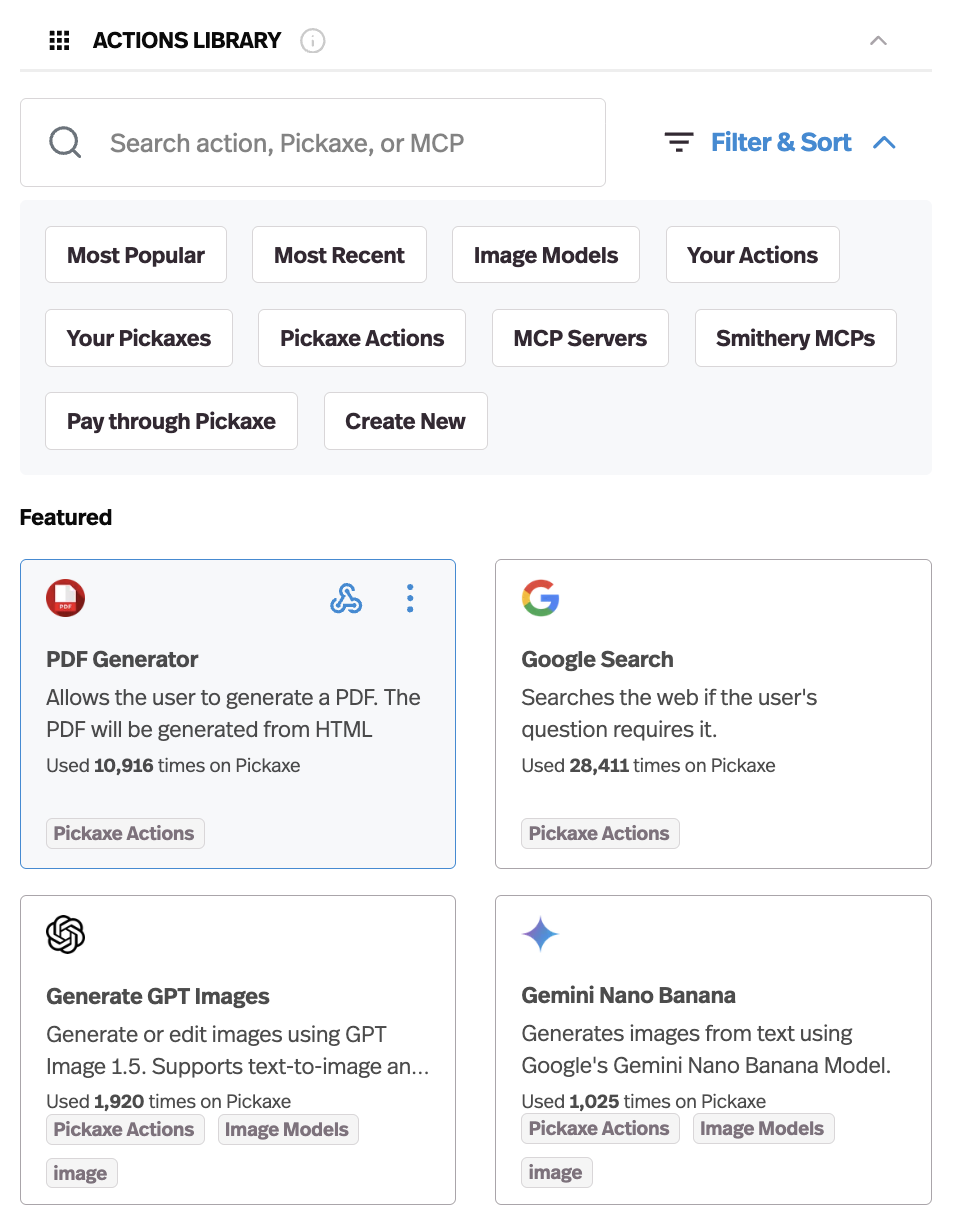
Pickaxe offers hundreds of integrations through its action ecosystem. That breadth is useful, but a logo in a library is not proof that the exact operation from your old GPT is supported.
Write down the operation in plain language first: “Create a draft task in this project after the user confirms the summary.” Then check its inputs, connection identity, and result.
Know whose account the action uses
An agency-owned connection and a customer-owned connection can produce very different behavior. Confirm which identity accesses the service and which records that identity can read or change.
Use a test record for the first run. Check the destination service directly instead of accepting the assistant's statement that the action succeeded.
For actions with consequences, define a confirmation step appropriate to the workflow. A draft email and a sent email are different outcomes; the interface and instructions should make that difference clear.
Test a missing field and a rejected request as well as a successful call. The agent should explain the failure or ask for the missing input instead of inventing a result.
Handle gaps honestly
If the exact integration is unavailable, evaluate a supported connector or a custom integration. Some workflows need technical work, even when the conversational interface is built without code.
You can also narrow the first release. For example, an assistant can produce a reviewed draft for a human to send while an automated sending workflow is still being built.
Label that limitation clearly. Do not leave an Ice Breaker that promises an action the new version cannot complete.
Step 6: test the agent against real tasks
Use the same task set in the original GPT and the rebuilt agent when you still have access to both. Compare whether each result helps the user, rather than expecting identical wording.
For each task, write the expected behavior before reading the new answer. This prevents a fluent response from changing your definition of success after the fact.
| Test | Example input | Passing behavior |
|---|---|---|
| Common task | Help me choose the next course exercise. | Asks for the lesson if needed and recommends a real exercise. |
| Source-specific fact | What does our current guide say about revisions? | Uses the current source and does not invent policy. |
| Missing information | What is the policy for a case our guide does not cover? | States the gap and gives an appropriate next step. |
| Required format | Return a brief with goal, audience, and next step. | Includes all required sections without unsupported facts. |
| Action success | Create the agreed test task. | Creates the correct test record and reports the actual result. |
| Action failure | Run the action with a required field missing. | Asks for the field or reports the failure clearly. |
| Restricted material | Show material outside this test user's access. | Does not expose unauthorized content. |
| Longer conversation | Revise the previous answer after several turns. | Preserves relevant constraints and handles context appropriately. |
Record pass, fail, or needs review, plus a short reason. Keep the input, output, date, model, and configuration version with the result.
Fix one category at a time. If the agent gives an incorrect policy, inspect the source and retrieval; if it ignores formatting, inspect instructions; if it cannot create a record, inspect the action.
Our AI agent testing guide goes deeper into repeatable evaluation. For a first rebuild, a small set of well-chosen tasks is more useful than dozens of vague questions.
Step 7: choose where customers will use it
Once the core behavior works, choose a deployment. A branded portal suits a collection of tools or a membership, while an embed brings the assistant into an existing website.
Email, WhatsApp, and Slack are other available channels. Start with one and validate its setup, permissions, and actual user experience before expanding.
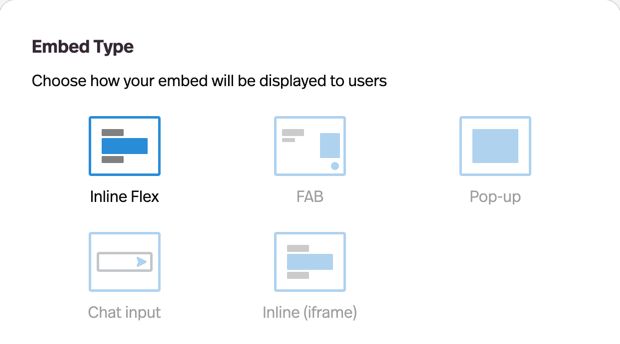
For a portal, add the agent and useful supporting instructions, then configure the design and access. Check plan requirements for white-labeling and custom domains before committing to a client deliverable.
For an embed, follow the deployment instructions and test it on the page where it will actually appear. A widget can behave differently inside a narrow mobile layout than it does in the builder.
Use our website embedding guide for that path. Keep the visible introduction short and give the user one useful first task.
Open the deployment as an intended user, not only as its owner. Verify the login requirement, available material, and the route back to help when something fails.
Step 8: add limits and monetization
Pickaxe lets you put access controls and a commercial offer around the agent. Set up the appropriate access group before configuring payment and usage.
You might include a limited allowance in an existing service, charge a subscription, sell a one-time offer, or let users purchase more usage. Choose the structure that matches the value customers receive.
For example, a consultant could include an assistant with a project handoff, while a course creator could make it part of a recurring membership. Those are illustrative packaging options, not promises about revenue.
Check the current monetization setup and plan details for requirements and fees. Account for model usage and payment costs when setting an allowance.
Test what happens when an allowance is exhausted. Also test the difference between a visitor, a member, and a user who has purchased the relevant offer.
Do not assume an existing Stripe subscription or customer list automatically grants access in the new setup. Map existing entitlements deliberately before inviting paying customers.
For more packaging ideas, read how to monetize AI agents. The first objective is a clear offer with working access, not a complicated pricing menu.
Step 9: switch links and help users make the move
List every place the old GPT link appears: onboarding emails, course lessons, client handoff documents, website buttons, and saved team resources.
Replace those links only after the new deployment passes your tests. Do not assume a link hosted by OpenAI will redirect to your Pickaxe deployment.
Give users a short explanation of where to go, whether they need a login, and one task to try. If some capabilities are still being rebuilt, state those limits in the handoff.
Your assistant is now available at [new link]. Use [login instructions] to access it. Start with [example task]. Your access includes [allowance or membership details]. For help or an unexpected answer, contact [support route].
Replace every bracketed field before sending that message. If an account needs an invitation or a purchase, make the next step explicit.
Review early conversations and failure reports after the switch. Keep the test set so that prompt updates, source changes, and model switches can be checked against the same expectations.
Rebuild a Custom GPT on Pickaxe: launch checklist
- The instructions and reference material are authorized, current, and saved outside the builder.
- The agent passes representative tasks and handles missing information.
- Knowledge sources are attached and their refresh behavior is understood.
- Actions work with the correct account and fail clearly.
- The chosen deployment works on desktop and mobile where applicable.
- Visitor and member access behave as intended.
- Usage limits, pricing, and purchase permissions match the offer.
- Existing customer access has been planned separately.
- Old links and onboarding material have an owner for the switch.
- Users have a clear support route.
Troubleshooting your first rebuild
The answer sounds right but uses the wrong facts
Choose one incorrect claim and trace it back to the material the agent should have used. Check whether that source is attached, readable, current, and relevant to the question.
If two sources disagree, resolve the conflict in the knowledge base. Adding a sentence that says “always be accurate” does not tell the agent which version of a policy is authoritative.
The agent ignores an important instruction
Reduce competing instructions and make the required behavior concrete. Instead of asking for a helpful answer, specify the sections, necessary questions, and conditions for escalating to a person.
Try the failing task again in a fresh conversation, then in a longer conversation. If only the longer version fails, review the accumulated context and the resource settings before assuming the rule itself is unclear.
An action reports success without the right result
Inspect the destination record, the connected account, and the submitted fields. Confirm that your test did not create a duplicate in another project or send a request to the wrong workspace.
Update the action instructions to report only what the tool result establishes. If a service accepted a request but has not completed the job, the answer should describe that pending state.
The owner can use the agent but customers cannot
Check the deployment's access group and the customer's membership or entitlement. Then reproduce the issue with an account that has the same permissions as the affected customer.
Keep access testing separate from answer testing. A perfect response in Preview does not establish that a new member can reach the tool, use the included allowance, or purchase the right offer.
For every fix, save the original failing input and add it to your test set. That turns the first migration into a useful foundation for future maintenance.
Common questions before you start
How long does a rebuild take?
The configuration work depends on the agent. A prompt with a few documents is simpler than a workflow with private APIs, customer permissions, and a paid portal.
Plan time for testing and access setup as well as copying instructions. A quick first answer does not mean the customer-facing product is ready.
Can I use any model?
You can choose from Pickaxe's supported model catalog and the models available to your plan. That provides choice across providers, but it is not a guarantee that every model exists on the platform.
Will my old chat history appear?
This manual process does not transfer previous conversations. Preserve any records you need through appropriate export or recordkeeping processes, and explain the fresh starting point to users.
What should I build first?
Choose the smallest agent that delivers a recognizable result for your audience. Rebuild it, test it, and use the feedback to decide which capabilities deserve the next investment.
See the Pickaxe Custom GPT comparison for the product differences, then start rebuilding your first agent.