

Anthropic vs OpenAI is a business buying decision before it is a model contest. I would keep a working, governed deployment in place, then evaluate the challenger on a specific job where the current setup falls short.
The adoption evidence supports taking both seriously. It does not support moving a company because one provider tops a chart with a different population, date, or definition of adoption.
I compared the original research and current business documentation, checked on October 12, 2026. This is a focused guide to adoption and procurement, rather than a fresh benchmark of individual models.
This article appears on Pickaxe's blog. The product screenshots below are official help-documentation images, not results from my own business workspaces; their example numbers do not describe Pickaxe customers or this research.
Anthropic vs OpenAI: where I would start
My starting point is the work employees or customers need to finish. A provider's popularity is useful background, but I want to know what product the team will use, which systems it can reach, and who owns the result.
| Reader and job | Anthropic starting point | OpenAI starting point | My recommendation |
|---|---|---|---|
| Team with an established, governed assistant | Claude where already approved | ChatGPT where already approved | Best fit: keep the incumbent unless a measured gap justifies change |
| Developers evaluating coding agents | Claude Code | Codex | Verify in pilot against the same repository tasks |
| Staff researching and drafting together | Claude projects and workplace connectors | ChatGPT Projects, Apps, and Company Knowledge | Both merit a trial with approved sources |
| Agency delivering a branded client service | Claude API or a platform offering Claude | OpenAI API or a platform offering OpenAI models | Choose the delivery platform and evaluate the model separately |
These are product starting points, not scores. Anthropic's Team documentation and OpenAI's Business overview describe the included surfaces and plan qualifications.
If you need an assistant for employees, start with an employee workspace. If clients need a portal, payments, and bounded Actions, start with that delivery requirement; our build versus buy framework explains the distinction.
What the business adoption data actually says
The clearest answer is dated and scoped. Anthropic leads the Ramp payment snapshot below; OpenAI leads the large-enterprise production survey below. Those statements can both be true.
| Original source and period | Anthropic | OpenAI | What the percentages mean |
|---|---|---|---|
| Ramp AI Index, August 2026 | 43.78% | 39.76% | Businesses with observed provider payments in Ramp's sample |
| a16z CIO survey, published January 30, 2026 | 44% | 78% | Surveyed large enterprises using the provider's models in production |
| Menlo Ventures, 2025 enterprise report | 40% | 27% | Estimated enterprise LLM API spending share |
Sources: Ramp's historical provider table and methodology, a16z's survey and disclosures, and Menlo's 2025 report. These are different periods and measures, not three estimates of one market share.
Ramp's September 9 write-up rounds its August figures to 43.8% and 39.8%. I use the historical table's precision above and treat the September explanation as the accompanying dated narrative, not proof of an October market share.
The practical takeaway is that a buyer cannot infer “most companies choose this provider” without finishing the sentence: which companies, choosing which product, during which period?
Read the denominator before the headline
Ramp observes corporate card, invoice, and ACH payments. It defines adoption as a positive transaction for an AI product or service within a month, and its methodology warns that free tools and employees' personal accounts can be missed. Ramp methodology
A company buying both providers can appear in both adoption rates. Adding the two percentages or turning them into a two-slice pie would imply exclusive choices the data does not establish.
a16z surveyed 100 verified senior executives at Global 2000 companies and counted production use directly or through cloud providers. Its authors disclose that they are OpenAI investors. a16z methodology
Menlo combines a survey of roughly 500 US enterprise decision-makers with a market model. Its API spending estimate is neither a count of business subscriptions nor a worldwide population survey; it also identifies Anthropic as a portfolio company. Menlo methodology and disclosures
I would copy these qualifications into any internal recommendation. A procurement slide should preserve the source's population, period, unit, and commercial interests beside the number.
Why the reports can favor different providers
The obvious explanation is not that one report must be wrong. A small business paying directly, a multinational using models through its cloud contract, and a developer buying an application are different observations.
Timing also matters. January production deployments reflect decisions and integrations made earlier; August payments reflect a later month, and spending share gives more weight to expensive workloads than a company count does.
| Question | Suitable evidence | What it cannot establish |
|---|---|---|
| Are businesses paying a provider? | Transaction-based adoption | How many employees use it effectively |
| Is a provider in production at large enterprises? | Scoped executive survey | The choice of every small business |
| Where are API dollars going? | API spending estimates | Exclusive customer preference |
| Does my workflow improve? | A controlled local pilot | A universal provider ranking |
Best fit for a purchase decision: use market evidence to build the shortlist, then use your own acceptance cases to select the deployment. That is my recommendation, not a causal finding from these reports.
It also prevents a common mistake: citing consumer downloads as enterprise adoption, then using enterprise revenue to claim every employee prefers the same assistant.
Popularity is a shortlist signal, not a migration case
I would take a growing provider seriously because it may attract integrations, experienced implementers, and internal demand. I would still ask whether those advantages exist for my actual product and contract.
An employee saying “everyone uses Claude now” is a reason to investigate. A department showing accepted deliverables, fewer revisions, and manageable spending is a reason to expand access.
Likewise, a familiar ChatGPT workflow has value even if a different provider is gaining adoption. Training material, approved integrations, and a reliable escalation process can outweigh a small improvement on an unrelated task.
Before switching, I would write down the failure that motivates the change. “The report sounds better” is difficult to evaluate; “the source summary omits revised exceptions” gives the pilot something concrete to catch.
Our AI workflow audit helps identify the task worth improving. I would complete that audit before commissioning a company-wide provider migration.
Separate the employee app, coding agent, and API
“We use OpenAI” might mean a ChatGPT workspace, Codex, an API application, or models reached through another platform. “We use Anthropic” can describe equally different arrangements.
| Surface | Anthropic example | OpenAI example | Decision to verify |
|---|---|---|---|
| Employee workspace | Claude Team | ChatGPT Business | Seats, shared context, allowed tools, administration |
| Coding agent | Claude Code | Codex | Repository access, execution permissions, review process |
| Custom application | Claude API | OpenAI API | Model availability, billing, limits, data handling |
| Client service | Application or delivery platform using Claude | Application or delivery platform using OpenAI | Customer access, branding, payments, ongoing support |
Sources for workspace and coding access: Claude Team and ChatGPT Business. API and external application arrangements require their own agreement and configuration review.
OpenAI explicitly says that Business subscriptions and API usage are separate. Anthropic's Team documentation now links to monthly API credits, so the old blanket claim that team subscriptions never include any API allowance is also unsafe. Check the current credit conditions before calculating an API bill.
I would record the exact purchased surface in the proposal. Otherwise, a feature shown in a consumer app can quietly become a promise about an API integration that does not provide it.
Compare knowledge access on the actual task
Both products offer ways to organize work around context. The meaningful test is whether the right person receives the right answer from the right source after that source changes.
| Requirement | Claude | ChatGPT | Better-fit rule |
|---|---|---|---|
| Reusable project context | Projects organize chats and knowledge | Projects organize chats, files, and instructions | Both; test the required source set |
| Workplace information | Team documents supported connectors | Business documents Apps and Company Knowledge | Verify the exact connector and administrator settings |
| Project configuration | Check project instructions and sharing | Project settings configure instructions and memory | Best fit: the setup your team can maintain |
| Permission-sensitive answers | Test connected-system and project boundaries | Test workspace and project boundaries | Neither passes without a boundary test |
Sources: Claude projects, Claude Team, and ChatGPT Projects. Features depend on the chosen plan, settings, and source integration.
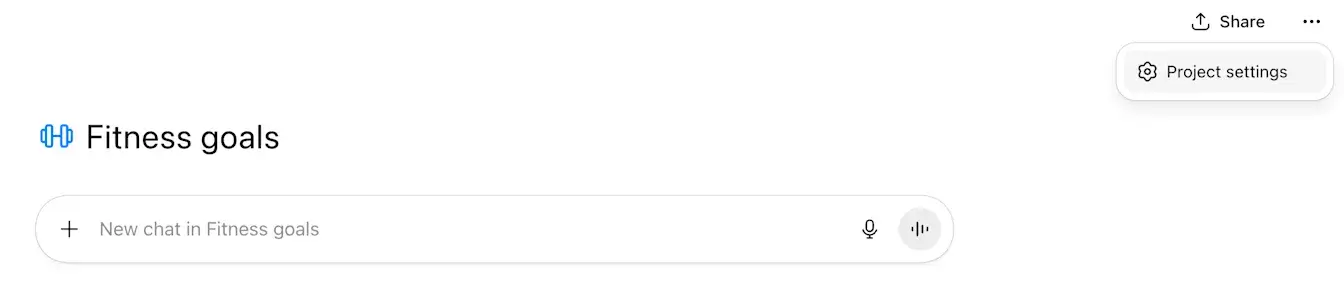
I would use an approved policy document and then replace one exception. The answer must reflect the approved version, identify missing information, and avoid treating a plausible inference as policy.
For a client assistant, our knowledge base guide covers source preparation. Better source organization can matter more than changing the provider behind a disorganized collection.
Compare governance before expanding access
I would make governance a pass condition before comparing answer style. A product that cannot meet the client's actual access and data requirements is unsuitable even if employees enjoy using it.
| Check | Anthropic evidence to inspect | OpenAI evidence to inspect | My decision rule |
|---|---|---|---|
| Training use | Commercial-product policy | Business workspace policy | Both document business-data protections; verify the surface |
| Workspace access | Team administration and project sharing | Business roles and project permissions | Verify who can invite, share, and remove access |
| Connected services | Connector permissions and provider terms | App permissions and third-party terms | Review each connected system separately |
| Special retention or regional requirements | Applicable enterprise agreement | Applicable enterprise agreement | Depends on contract and configuration |
Sources: Anthropic's training-use explanation, OpenAI Business privacy, and ChatGPT Work enterprise requirements.
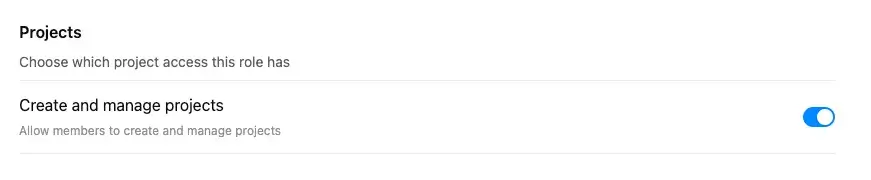
No training on business data is not the same promise as zero retention. OpenAI's Work guidance specifically qualifies residency, connected services, and supported surfaces; I would request the exact agreement rather than turn those qualifications into a universal guarantee.
I would also test offboarding. Remove a trial member, revoke their connected-system access, and confirm that shared resources follow the intended policy; treat deletion and retention as separate checks.
Compare operational visibility with useful outcomes
Usage dashboards help find unused seats and concentrated spending. They do not, by themselves, establish that work became better or cheaper.
| Operational question | Claude starting evidence | ChatGPT starting evidence | Better-fit rule |
|---|---|---|---|
| Are assigned seats being used? | Team and Enterprise analytics | Business usage visibility | Both; reconcile period and eligible activity |
| Which product drives activity? | Product-specific analytics | Workspace controls and reporting | Verify the required breakdown |
| Who approves more capacity? | Seat and usage-credit administration | Seat and workspace-credit administration | Best fit: clear ownership and enforceable budgets |
| Did work improve? | Local accepted-result records | Local accepted-result records | A separate outcome measure is required |
Sources: Claude usage analytics and ChatGPT Business overview. This table compares documented starting points, not equivalent reporting depth on every plan.
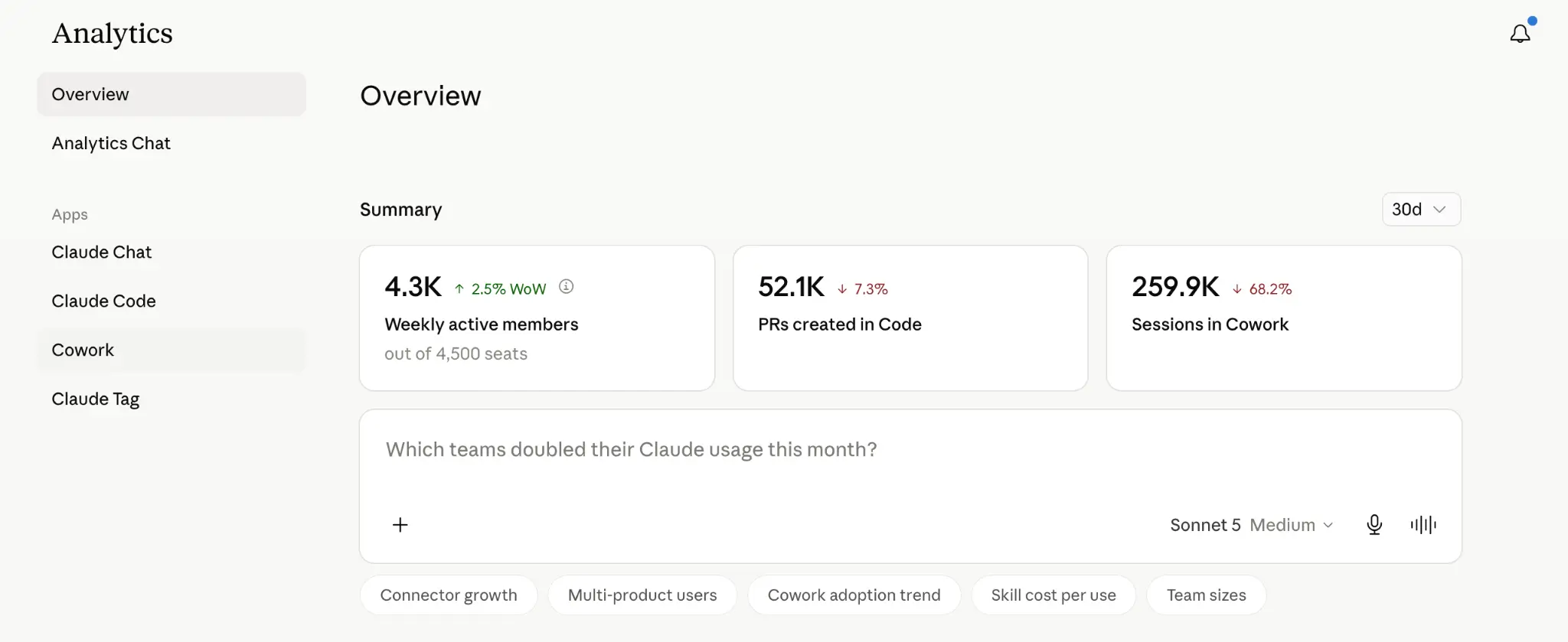
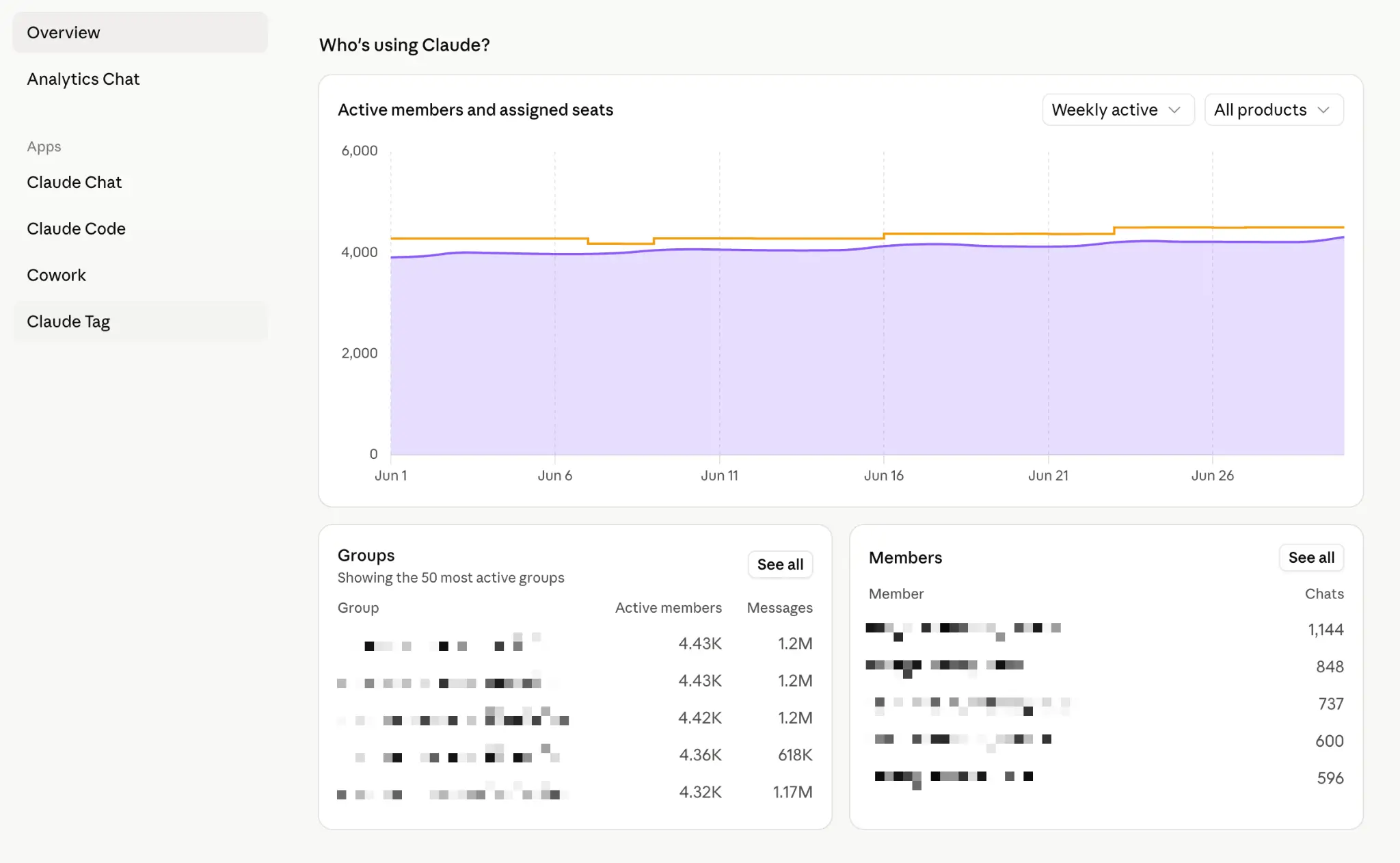
My operating review would combine these signals with accepted deliverables, rework, escalation, and the full bill. More messages can mean more useful work, but they can also mean a task needed repeated correction.
Anthropic vs OpenAI pricing: keep the meters separate
As checked on October 12, 2026, the published standard and premium seat prices below match. Matching prices do not establish matching allowances or task costs.
| Self-serve workspace seat | Claude Team | ChatGPT Business | Scope |
|---|---|---|---|
| Standard, monthly billing | $25 per member per month | $25 per user per month | USD; published US or applicable USD-market rate |
| Standard, annual billing | $20 per member per month | $20 per user per month | Billed annually; not a cancel-anytime monthly rate |
| Premium, monthly billing | $125 per member per month | $125 per user per month | Different included usage rules apply |
| Premium, annual billing | $100 per member per month | $100 per user per month | Billed annually; usage beyond allowances can cost more |
| Minimum | Two members | Two Standard or Premium seats total | Confirm checkout and regional terms |
Sources: Claude Team pricing and ChatGPT Business pricing. Claude explicitly excludes applicable taxes; OpenAI notes country and currency variation, so I would confirm local taxes and the final checkout total.
For hypothetical US planning arithmetic, ten standard seats at the listed annual rate equal $200 per month in seat charges, or $2,400 per year. Eight standard and two premium seats equal $360 per month, or $4,320 per year, for either listed schedule before taxes and other charges.
That is a seat subtotal, not a complete implementation budget. I would add usage extensions, separately billed API activity after any applicable credits, third-party tools, integration work, and staff review as separate lines.
For an API pilot, record the actual model, input, cached input, output, tool calls, and retries. Our token economics guide explains why a subscription fee cannot stand in for those workload costs.
Workflow one: an internal policy assistant
I would start with a fictional operations team answering questions from an approved travel policy. The trial uses synthetic documents and test accounts; it is a proposed pilot, not an observed deployment.
The owner prepares a current policy, a superseded version, and a list of questions with expected evidence. The workspace administrator approves the project and any source connection before participants begin.
In either product, the task is to find the applicable rule and cite the approved source. Participants should receive a clear explanation when a requested exception is absent, rather than an invented allowance.
I would include a change to the reimbursement rule and a document restricted to managers. A successful answer must use the approved revision and respect the tested permissions, including when an ordinary employee asks indirectly for the restricted content.
The output is a draft answer for staff review, not an automatic reimbursement approval. If a connector fails or a source cannot be retrieved, the assistant should disclose the gap and point to the named policy owner.
The maintenance owner updates sources and acceptance cases together. I would compare completed questions, correction time, and escalations while preserving the same approval boundary for both tools.
Workflow two: a branded client assistant
Now consider a fictional consultancy selling access to an assistant that explains its approved onboarding materials. The client needs a branded destination, controlled access, and a clear service allowance.
Here I would separate the model decision from the client delivery decision. A team workspace is not automatically the right commercial experience for an external customer, and an API alone does not assemble that experience.
Pickaxe's model documentation describes switching models for an agent. Its portal documentation describes branded multi-agent hubs, while monetization documentation covers member access groups, Stripe connection, and usage allowances.
My proposed setup would connect only the client's approved material, configure one bounded handoff Action, and test as an actual client access group. I would compare candidate models on the same questions without promising that every provider exposes identical capabilities through the platform.
The assistant can prepare an intake summary, ask the client to confirm it, and submit through the configured integration. A timeout must produce an uncertain-status message, not a fabricated success; retries need a duplicate-safe design.
Pickaxe is a useful starting point when that delivery package fits the service. I would still inspect the relevant plan, model availability, integration permissions, and payment terms before quoting the client.
Run a small pilot with explicit stop conditions
I would avoid buying a second company-wide subscription just to discover whether anyone prefers it. Select a small group with a recurring task, keep the evaluation window fixed, and use the same approved inputs.
My proposed test set has 24 cases: eight routine tasks, eight source or permission changes, and eight failures or ambiguous requests. These counts are a suggested design, not a statistical guarantee of production reliability.
For each case, record the product surface, model when visible, settings, source version, output, reviewer decision, and charges that can be attributed. Log additional attempts rather than quietly replacing the first answer with the best one.
A permission leak, unauthorized external action, or false success claim should stop expansion until the cause is fixed and retested. A slow but correct answer is a different failure from an answer that reaches the wrong system.
For coding work, add repository-specific tests, review requirements, and explicit execution permissions. The business adoption chart cannot substitute for those controls.
Our agent evaluation guide explains how to keep failures in a reusable test set. I would preserve the pilot cases after procurement so future configuration changes face the same evidence.
Write a decision scorecard without invented precision
The scorecard should show evidence, not a tidy total that hides unacceptable failures. I would use four outcomes: passes, fails, needs configuration, and not evaluated.
Compare acceptance rate, reviewer rework, end-to-end completion time, and cost per accepted result. Define an accepted result before the trial, including grounding, permissions, and output requirements.
I would keep severity separate from frequency. A tool that usually writes pleasant summaries but occasionally reveals restricted material has a different problem from one that regularly needs copy edits.
For each unresolved item, write the owner and next verification step. “Needs configuration” becomes useful when it means someone will adjust a connector permission and rerun named cases.
If both products pass, I would favor the one that fits existing administration and workflow ownership. If each wins a meaningful task, using both can be sensible, provided the extra contracts, sources, and support burden are justified.
The final recommendation should name the scope: a particular department, task, product, and review process. It should not turn one successful policy-assistant trial into a claim about every business workload.
Keep migration reversible
Before moving users, inventory prompts, project instructions, files, source permissions, integrations, evaluation cases, and recurring work. Separate material you can transfer from behavior you must rebuild.
A copied instruction is not evidence that the destination reproduces the original tool behavior. Sharing, memory, source retrieval, and execution permissions can differ even when the prompt text looks identical.
I would migrate one workflow first, retain the previous access during the agreed transition, and name the person who can roll back. Revoke old credentials only after the replacement path and offboarding process are verified.
For a client service, customer access and billing continuity deserve their own plan. Keep the client-facing URL and entitlement behavior stable where possible; changing a model should not surprise a customer with a new login or allowance.
Pickaxe's model choice can reduce the need to rebuild a portal when changing the agent's underlying model. I would still rerun the source, Action, and cost checks, because “switchable” does not mean behaviorally interchangeable.
Start with one client workflow
Build the delivery experience, then compare models against your acceptance cases.
Questions I would answer before buying
Is Anthropic more popular than OpenAI for business?
In Ramp's August 2026 observed-payment sample, yes. In a16z's January 2026 survey of large-enterprise production usage, no; those findings use different dates, populations, and units, as the source table above shows.
Should I replace ChatGPT because Claude is gaining adoption?
I would replace a working setup only after a scoped pilot demonstrates a useful improvement that survives governance, cost, and maintenance checks. Adoption momentum justifies evaluation, not an automatic migration.
Are Claude Team and ChatGPT Business equally priced?
The published seat schedules checked above match, but included usage and extension rules differ. Confirm the actual seat mix, billing interval, region, taxes, credits, and additional services before treating either subtotal as your budget.
Can a business use both providers?
Yes, a purchase decision can allow multiple providers. I would assign each a verified workload and owner, rather than duplicate every source and subscription without evidence that the duplication helps.
Do the screenshots prove these workflows work?
No. They show documented controls and vendor example dashboards; they do not establish successful retrieval, plan eligibility, task quality, or savings for this proposed pilot.
Choose the deployment that earns its place
My recommendation is to keep the adoption story in perspective. Anthropic has a strong dated payment-adoption signal, OpenAI has a strong dated large-enterprise production signal, and neither answer settles the task in front of your team.
Choose the right product surface, verify its boundaries, and compare accepted results against the full cost of delivering them. That produces a recommendation you can defend when the next market chart changes.
If you are packaging an assistant for paying clients, I would start with a small Pickaxe portal and an explicit test set. Prove one useful service, then expand the models and workflows that earn their place.