

Here's the number that stopped me: 88% of HR leaders say their teams haven't seen significant business value from AI tools yet, according to a Gartner survey of HR leaders in late 2025. And yet 82% of them plan to deploy agentic AI within 12 months.
Read those two stats together and you see the whole problem. Everyone is buying. Almost nobody is getting results.
That gap is exactly where a good HR consultant earns their fee. Because the difference between "we bought an AI tool" and "we cut time-to-hire by three weeks" is never the model -- it's picking the right tool for the right job and wiring it into an actual workflow.
I looked into the AI tools for HR consultants that are actually moving the needle in 2026 -- for recruiting, onboarding, performance, engagement, and the client-facing agents you can build and resell. Not every chatbot with "HR" in the tagline. Just the platforms that solve real problems HR teams face every week.
According to SHRM's State of AI in HR 2026 report, recruiting is the most common HR function using AI (27% of teams), followed by HR technology and learning & development. So that's where we'll start. Here are the 15 best AI tools for HR consultants in 2026, grouped by what they actually do.
Quick Comparison: 15 AI Tools for HR Consultants
Before the deep dives, here's the whole list at a glance so you can jump to what's relevant to your practice.
| Tool | Category | Best For | Starting Price |
|---|---|---|---|
| Paradox | Recruiting | Conversational hiring at volume | Custom |
| Eightfold AI | Recruiting | Skills-based talent intelligence | Custom |
| HireVue | Recruiting | Video interviews & assessments | Custom |
| Fetcher | Sourcing | AI sourcing + automated outreach | Custom |
| TestGorilla | Assessments | Skills-based pre-hire testing | Free / ~$75/mo |
| Rippling | HRIS & Payroll | All-in-one HR, IT & payroll | ~$8/user/mo |
| Personio | HRIS | SMB HR operations (EU-first) | ~$10/employee/mo |
| Enboarder | Onboarding | Personalized onboarding journeys | Custom |
| Lattice | Performance | Reviews, goals & retention risk | ~$11/user/mo |
| Culture Amp | Engagement | Surveys & sentiment analysis | ~$5-12/employee/mo |
| Effy AI | Performance | AI 360 feedback for small teams | Free / ~$85/mo |
| Leena AI | Employee Support | Autonomous HR service desk | Custom |
| Textio | Inclusive Writing | Bias-free JDs & feedback | Custom |
| Claude | General AI | Policy, handbook & JD drafting | $20/mo |
| Pickaxe | Client-Facing Agents | Build & resell no-code HR agents | $29/mo |
A quick note on how I'd read this table as a consultant: the first nine tools are things you configure for a client. The last one -- Pickaxe -- is how you build a branded AI agent you can put your own logo on and charge for. More on that at the end.
Recruiting & Sourcing
This is where AI in HR started and where it's still most mature. If a client is going to see ROI in their first 90 days, it's usually here.
1. Paradox -- Conversational Recruiting at Volume
Paradox and its assistant "Olivia" are what I'd reach for first for any client hiring hourly or high-volume roles. It screens candidates, answers their questions, and books interviews over text and chat -- 24/7, without a recruiter touching a keyboard.
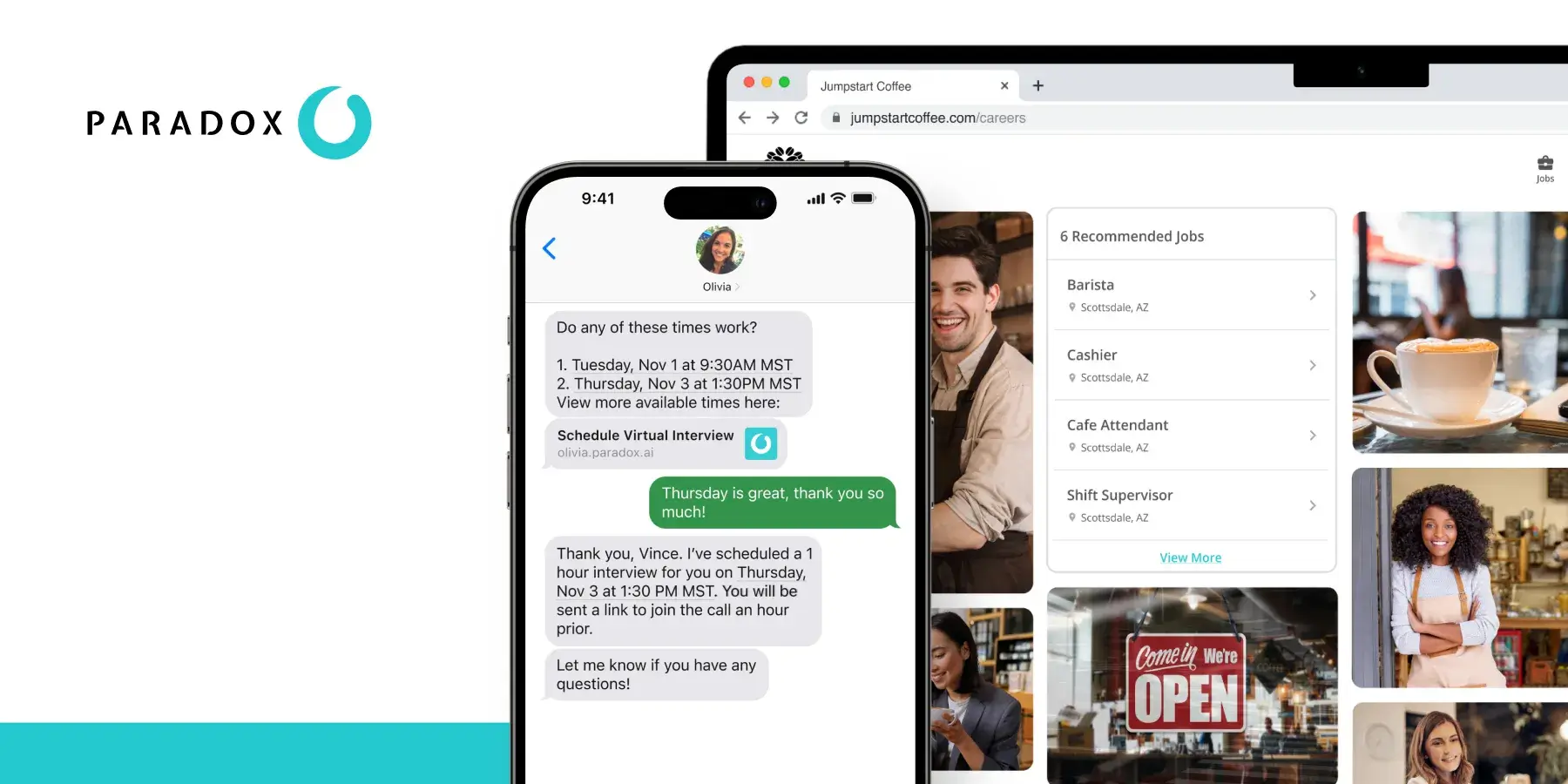
The magic is in the boring parts. Scheduling, reminders, knock-out questions, "where do I park for my interview" -- Paradox handles the back-and-forth that eats a recruiter's day. Clients like McDonald's and Nestlé use it to move thousands of candidates without adding headcount.
For an HR consultant, this is an easy win to demonstrate. Volume hiring has visible, measurable pain -- long time-to-fill, ghosted candidates, recruiter burnout -- and Paradox chips at all three. Pricing is custom and lands in the enterprise range, so it fits mid-market and up rather than a five-person shop.
2. Eightfold AI -- Skills-Based Talent Intelligence
Eightfold AI takes a different angle: instead of matching keywords on a resume, it builds a skills graph and predicts what someone could do next, not just what they've done. That matters for internal mobility and for surfacing candidates who don't have the "right" title but have the right capabilities.

It's a genuine talent intelligence platform -- sourcing, matching, internal mobility, and diversity insights in one system. The upside is that it fights the exact bias problem that keeps HR leaders up at night. The downside is that it's a heavier lift to implement and priced for larger organizations.
I'd position Eightfold for clients who are serious about internal mobility and skills-based hiring as a strategy, not a buzzword. It's the kind of platform where the consulting value is in the change management as much as the config.
3. HireVue -- Video Interviews and Skill Validation
HireVue is the best-known name in AI-assisted video interviewing and structured assessments. Candidates record answers on their own time; the platform helps standardize evaluation and validate skills so you're comparing people on the same rubric.
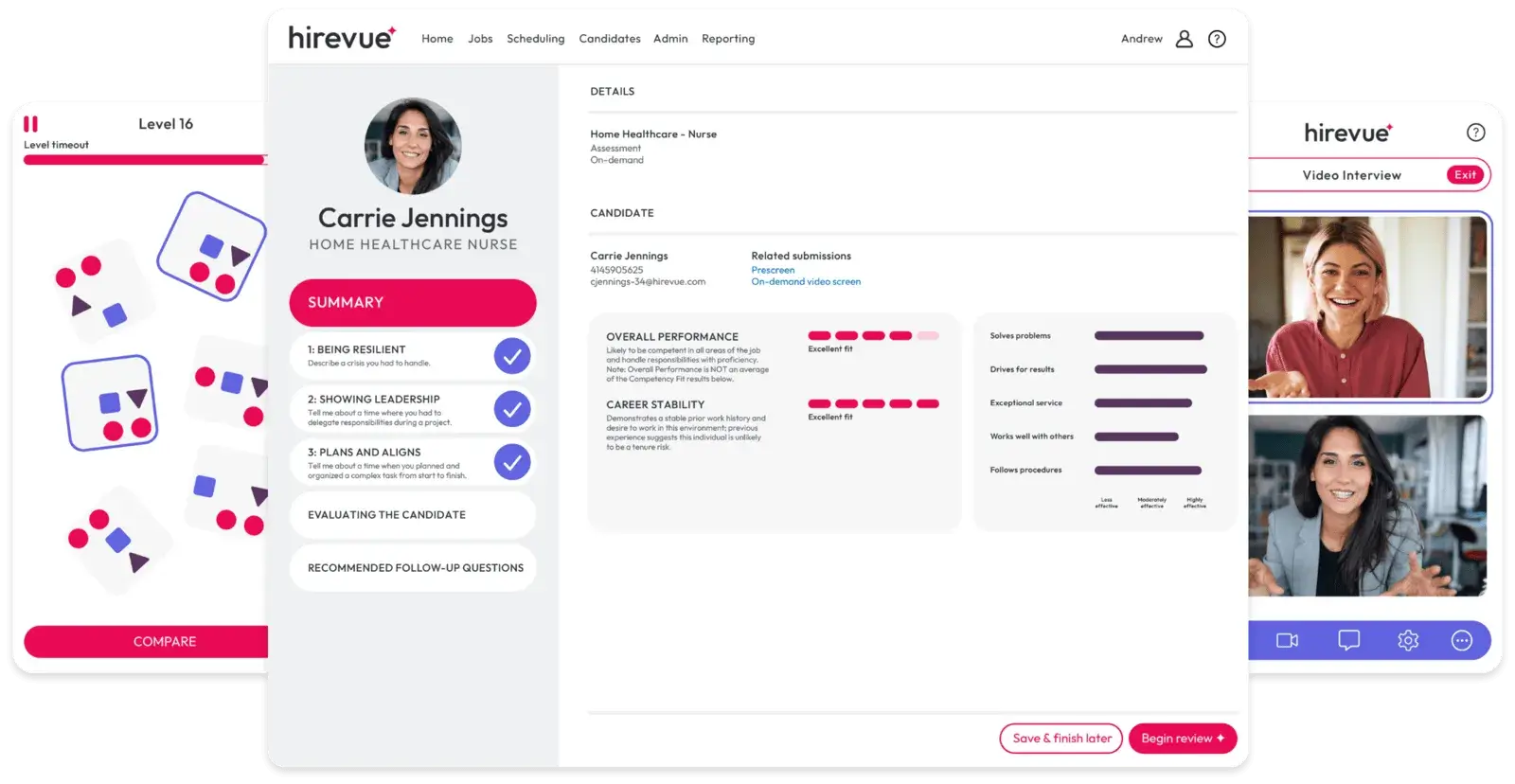
HireVue has publicly moved away from facial-analysis scoring toward validated, competency-based assessments -- a smart response to the bias and compliance concerns around AI hiring. That history is worth knowing, because clients will ask about it, and being able to speak to it credibly is part of the value you bring.
It shines for high-volume, distributed hiring where scheduling live interviews is the bottleneck. If your client is drowning in first-round screens, HireVue gives every candidate a fair, structured shot without burning recruiter hours. Pricing is custom.
4. Fetcher -- AI Sourcing on Autopilot
Fetcher is the tool I'd hand a client whose problem is the top of the funnel, not the bottom. It sources passive candidates, verifies contact details, and runs personalized email sequences automatically -- so a lean team keeps a warm pipeline without a full-time sourcer.
The blend of AI sourcing plus done-for-you outreach is the differentiator. You define the ideal profile, Fetcher finds and engages people who match, and your recruiters only step in once someone raises a hand.
For agencies and RPO-style engagements, this is a clean way to show pipeline lift fast. It pairs naturally with the workflow I described in our guide to AI agents for recruiting and staffing agencies -- Fetcher fills the top, an agent handles the middle.
Assessments & Screening
Once candidates are in the funnel, the next question is whether they can actually do the job. AI has made skills-based hiring finally practical.
5. TestGorilla -- Skills-Based Pre-Hire Testing
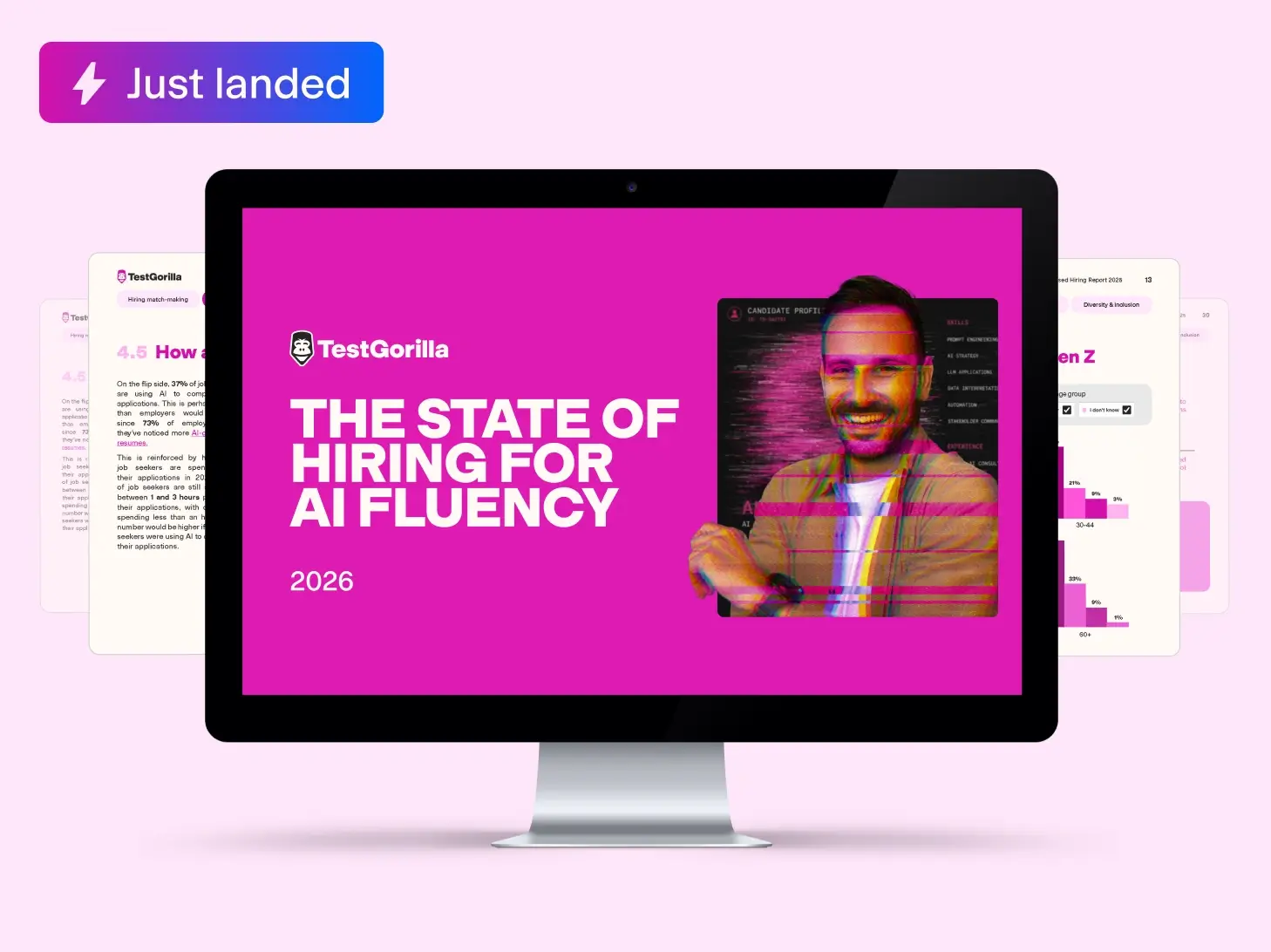
TestGorilla gives you a library of validated assessments -- cognitive ability, role-specific skills, personality, situational judgment -- so clients can screen on evidence instead of gut feel. Its 2026 messaging leans hard into "hire for real skills, ignore AI resumes," which is exactly the anxiety hiring managers have right now.
The reason I like it for consultants: it's affordable, it has a free tier, and the ROI story is easy to tell. Swap one biased resume-screen for a structured skills test and you've measurably improved quality-of-hire and defensibility at the same time.
It integrates with most ATSs and scores candidates automatically, so it drops into an existing pipeline without a big change program. For SMB clients, this is often the single highest-leverage tool on the list.
HRIS, Payroll & Onboarding
The system of record. This is where AI quietly saves the most hours -- not with flashy features, but by killing manual data entry and paperwork.
6. Rippling -- All-in-One HR, IT, and Payroll
Rippling combines HR, IT, and finance into one platform with automation running underneath. Onboard a new hire once and it provisions payroll, benefits, a laptop, and app access in a single workflow. That's the kind of end-to-end automation clients feel immediately.
Its AI layer handles policy questions, flags anomalies, and automates compliance work across the employee lifecycle. For a growing company that's stitched together five point solutions, consolidating onto Rippling is a story that basically sells itself.
Starting around $8 per user per month plus a base fee, it's priced for real businesses, and costs climb as you add modules. I'd scope it carefully with clients so the module sprawl doesn't surprise them at renewal.
7. Personio -- HR Operations for SMBs
Personio is the European counterpart -- an all-in-one HRIS built specifically for small and mid-sized businesses. It centralizes employee records, absence, payroll, and recruiting, with AI increasingly woven into the admin work.
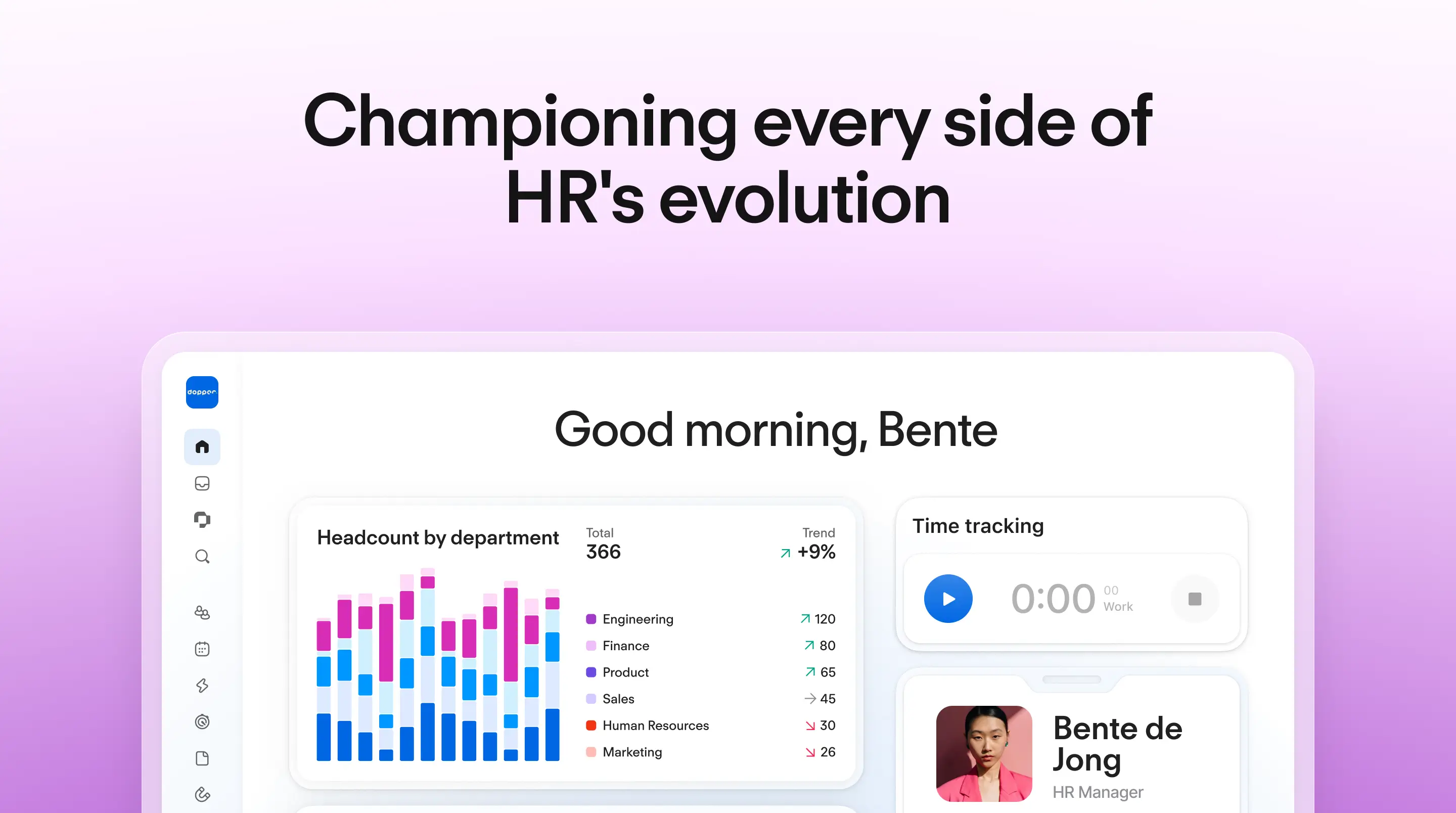
If you consult for clients in the EU or UK, Personio is often the more natural fit than the US-first platforms -- localization, data residency, and compliance are baked in rather than bolted on. At roughly $10 per employee per month, it's accessible for the SMB segment.
The consulting angle here is configuration and process design. Personio gives you the rails; a good consultant designs the workflows that ride on them.
8. Enboarder -- Onboarding People Actually Remember
Enboarder focuses on the human experience of onboarding -- the "from yes to year one" journey -- rather than just the paperwork. It uses AI to build personalized, nudge-driven journeys that keep new hires (and their managers) engaged through the critical first months.
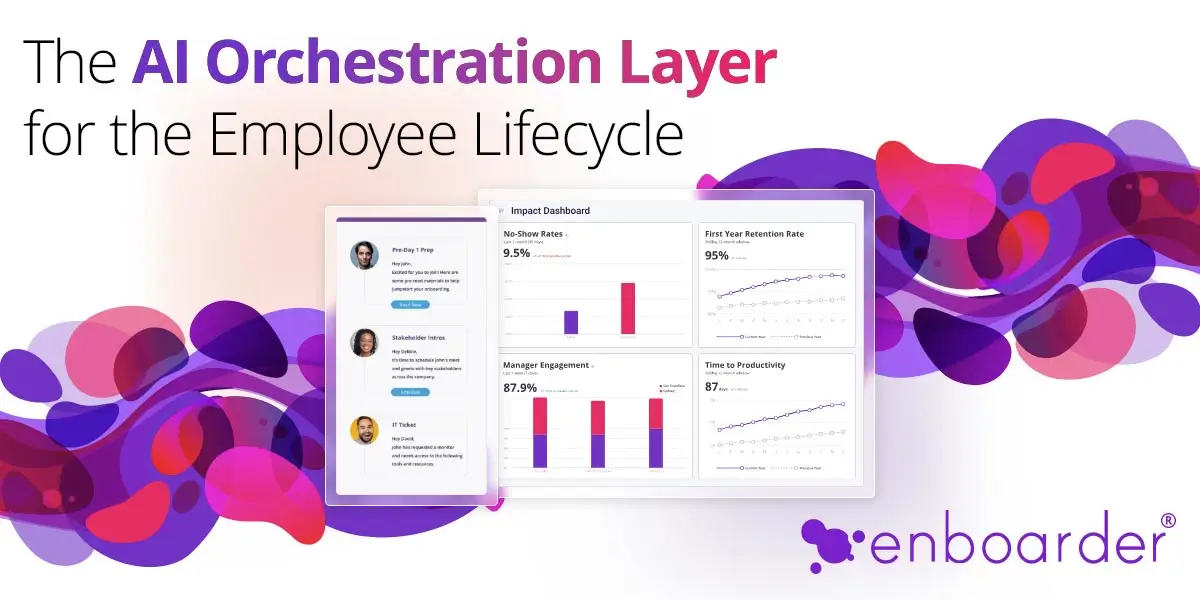
Onboarding is one of those areas where the ROI is real but under-measured. Early attrition is expensive, and most of it traces back to a cold, form-heavy first week. Enboarder turns that into a sequence of well-timed, human moments.
For consultants, this pairs beautifully with a client-facing onboarding agent -- something we walk through in how to build an AI agent for client onboarding. Enboarder handles the journey design; an agent answers the "how do I..." questions along the way.
Performance & Engagement
This is the category where AI's "surface the signal" superpower earns its keep -- pulling trends out of reviews, surveys, and feedback that no human has time to read.
9. Lattice -- Performance, Goals, and Retention Risk
Lattice is the performance and people-management platform I see most often in mid-market accounts. It handles reviews, goals, 1:1s, and engagement -- and its AI surfaces performance trends and flags who's at risk of leaving before it's obvious.
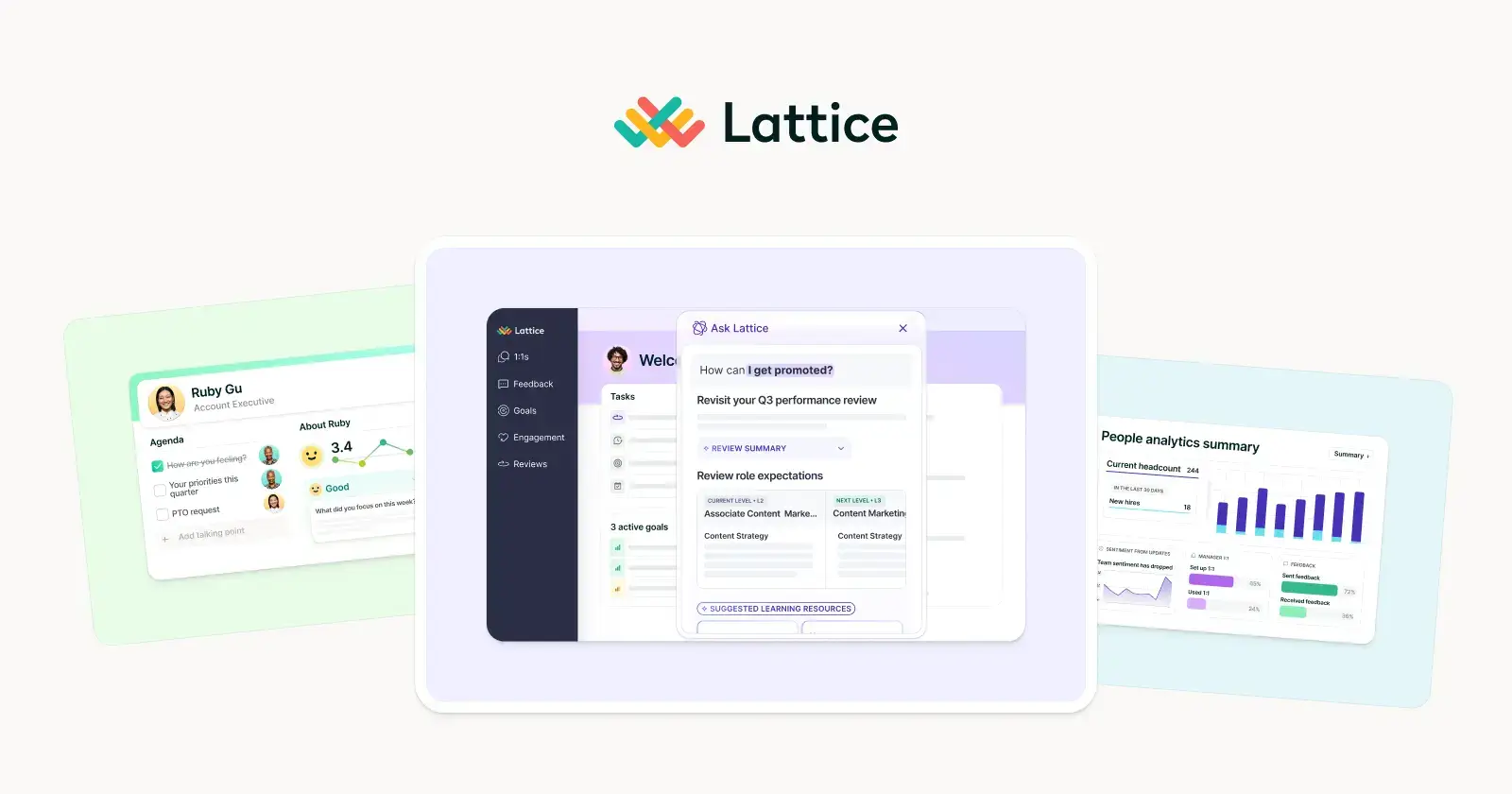
That retention-risk prediction is the headline feature. Being able to tell a client "these five people are flight risks, here's why" turns HR from reactive to proactive, which is a great look in a board meeting.
At around $11 per user per month for its talent management suite, it's mid-market friendly. I'd deploy it for clients ready to run a real performance cycle, not just an annual formality.
10. Culture Amp -- Engagement and Sentiment at Scale
Culture Amp is the specialist for employee engagement, surveys, and people analytics. Its AI reads open-text survey responses and pulls out themes, sentiment, and hotspots so you're not hand-coding thousands of comments.
The benchmarking is what makes it consultant-friendly. Culture Amp compares a client against industry norms, which gives you an instant, credible narrative: "you're in the 40th percentile on manager effectiveness, here's the plan to move it."
Priced roughly $5-12 per employee per month depending on modules, it's a strong fit for clients who take culture seriously and want data to back their people decisions.
11. Effy AI -- 360 Feedback for Smaller Teams
Effy AI is the scrappy, affordable option for performance reviews and 360 feedback. It auto-generates review summaries and coaching suggestions from feedback, which is a genuine time-saver for managers who dread writing them.
Where Lattice is a platform commitment, Effy is something a 30-person client can turn on this week. It has a free tier and paid plans starting around $85/month, and it plugs into Slack for lightweight, in-the-flow reviews.
I'd recommend Effy to smaller clients who need structure around feedback but aren't ready for a full performance-management suite. It's the 80/20 tool for this category.
Employee Support & HR Operations
Every HR team fields the same 200 questions. This is the category built to make that go away.
12. Leena AI -- The Autonomous HR Service Desk
Leena AI is an autonomous agent for employee support. It answers policy questions, processes requests, and resolves HR tickets end-to-end by plugging into a company's existing HR systems and knowledge.
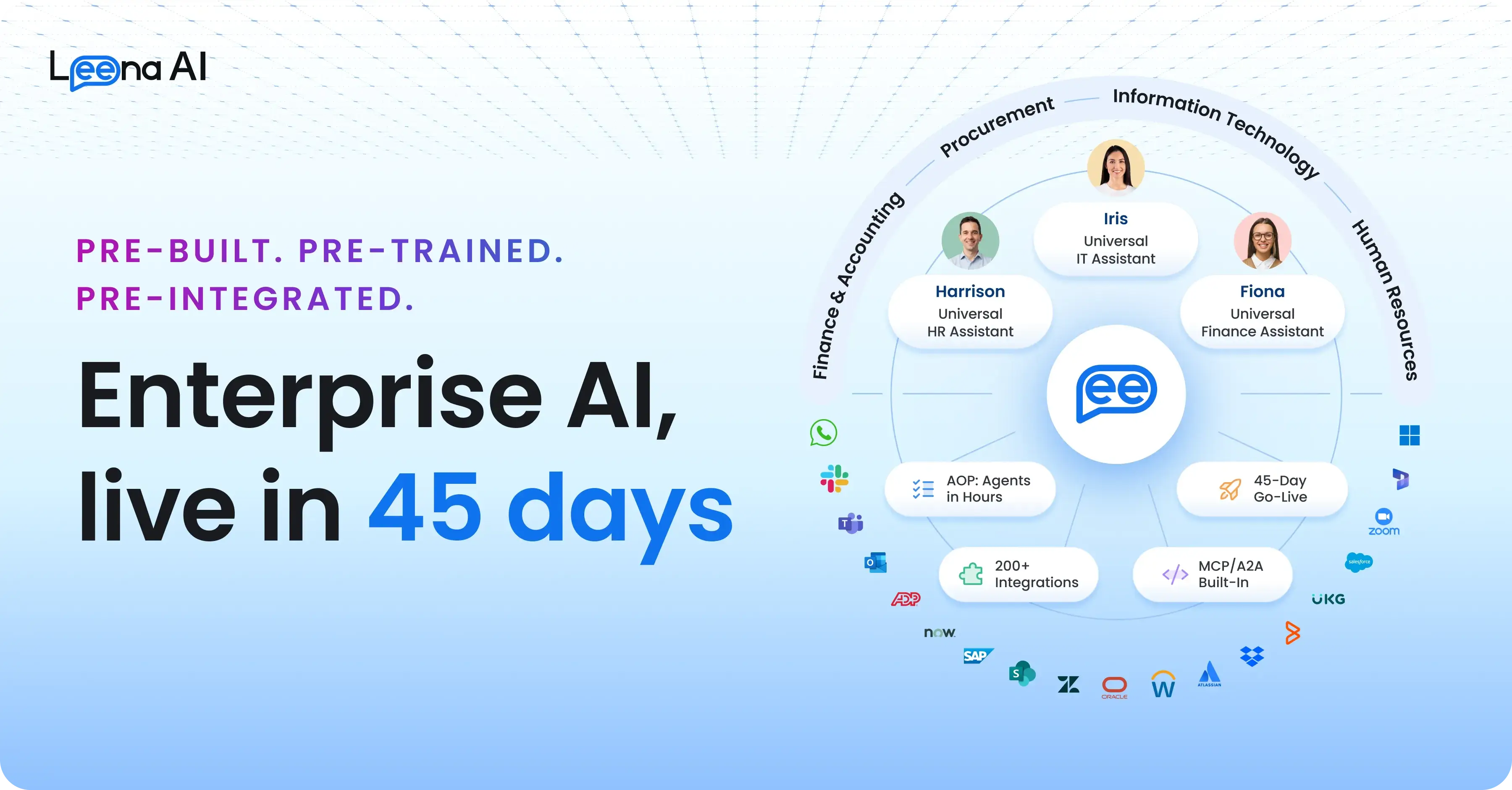
The pitch is deflection: instead of HR answering "how many PTO days do I have left" for the hundredth time, Leena handles it -- and actually completes the transaction, not just points to a policy doc. For large clients, that's a measurable reduction in HR ticket volume.
It's enterprise-priced and enterprise-scoped, so I'd position it for clients with a real HR shared-services function. For everyone smaller, a purpose-built agent (more on that below) often gets 80% of the value at a fraction of the cost.
Inclusive Writing & Communication
13. Textio -- Bias-Free Job Posts and Feedback
Textio analyzes the language in job posts and performance feedback and flags biased, vague, or exclusionary phrasing in real time. It's the AI writing coach specifically tuned for HR content.
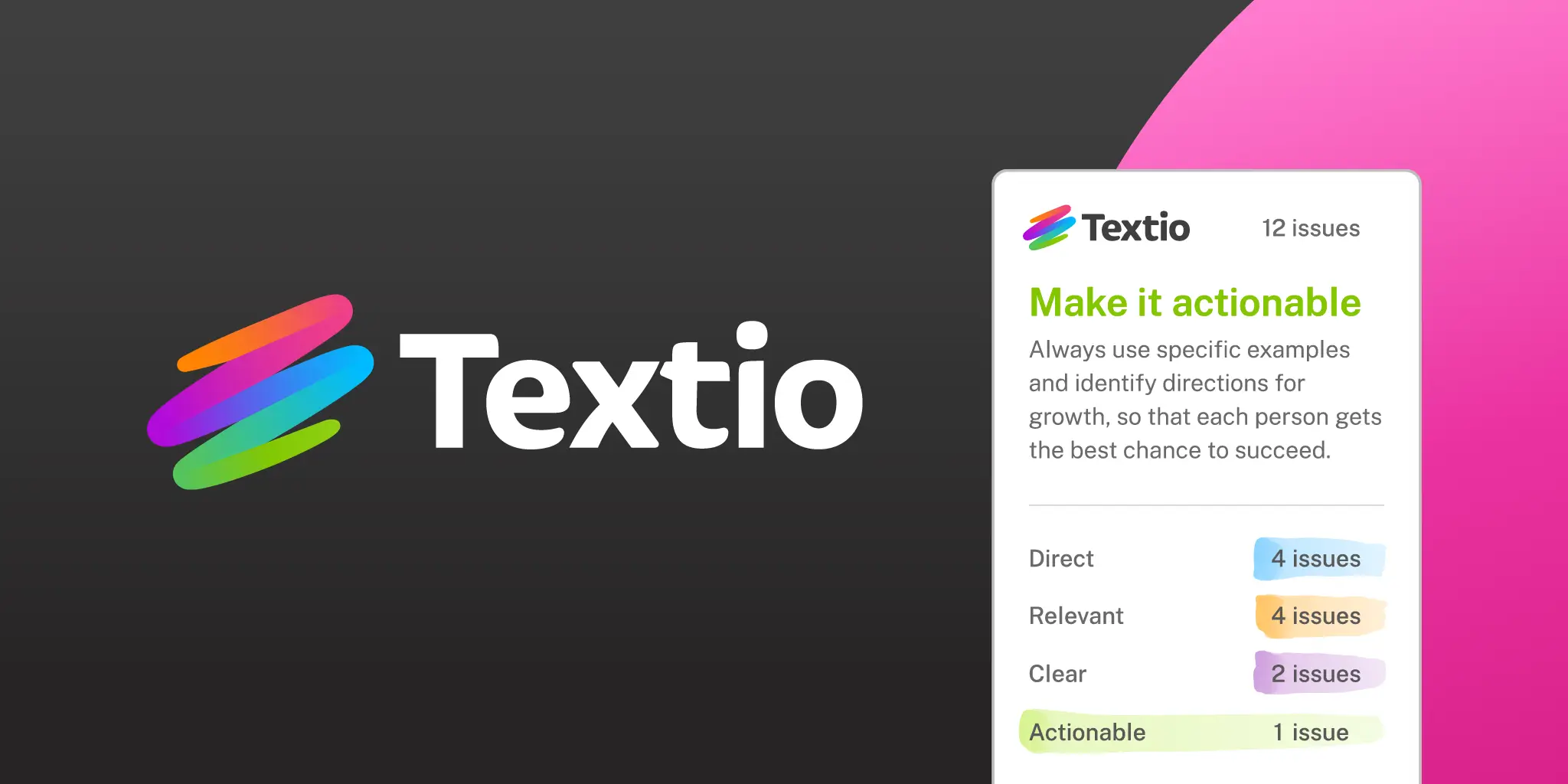
This is a small tool with an outsized compliance and brand payoff. Job posts that inadvertently skew toward one demographic quietly shrink your client's talent pool; Textio catches that before it goes live. It also helps managers write fairer, more specific performance feedback -- which matters more than ever as AI-hiring bias regulation tightens under frameworks like the EU AI Act.
I'd bundle Textio into any engagement focused on DEI or employer brand. It's an easy add that produces visibly better writing.
Research, Drafting & Building Your Own Agents
The last three tools are the ones you'll personally use every day as a consultant -- and the one that turns your expertise into a product.
14. Claude -- Your Policy and Handbook Co-Writer
Claude (Anthropic's model, and my default for HR document work) is the general-purpose AI I lean on for the writing-heavy parts of HR consulting. Drafting policies, rewriting a bloated handbook, turning meeting notes into a project plan, stress-testing a comp philosophy -- it's genuinely good at all of it.
What makes Claude a fit for HR specifically is its long context and careful, nuanced tone. You can drop an entire employee handbook in and ask it to flag inconsistencies, or have it draft a sensitive termination communication that doesn't sound like a robot wrote it.
At $20/month for Pro, it's the cheapest force-multiplier on this list. Just keep the obvious rule in mind: never paste real employee PII into a general chatbot. Use it for structure and language, not for processing confidential records.
15. Pickaxe -- Build Client-Facing HR Agents Without Code
Here's where the model flips. Every tool above is something you configure for a client. Pickaxe is how you build a branded AI agent that your client's employees interact with directly -- and put your own logo and price tag on it.
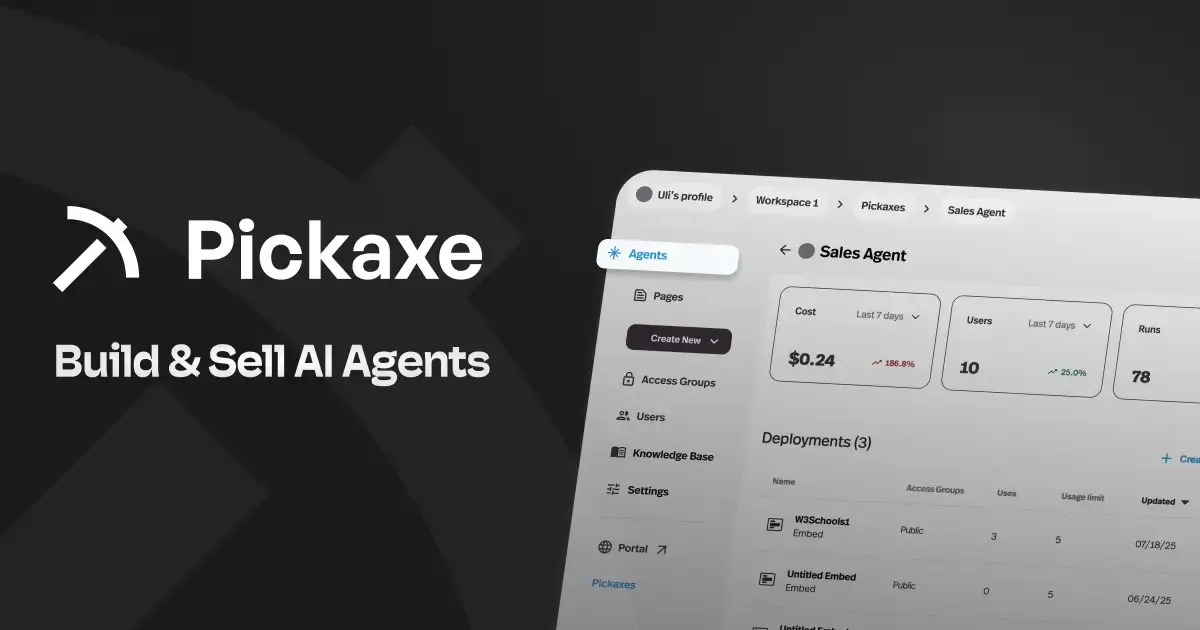
The use cases write themselves for HR: an HR policy assistant trained on a client's handbook, a benefits-explainer bot, a new-hire onboarding guide, an internal FAQ agent that deflects the repetitive questions. You train the agent on the client's knowledge base, pick your AI model, and deploy it on their website, intranet, Slack, WhatsApp, or via API. When a client is weighing that against a full intranet product, our comparison of employee portal software covers the tools they are likely already shortlisting.
Two things make it right for consultants specifically. First, it's no-code, so you can spin up a working agent in an afternoon and demo it live. Second, you can monetize it -- white-label the agent, charge a monthly retainer, and turn a one-time project into recurring revenue.
It's also built for regulated environments: Pickaxe is SOC 2, GDPR, and CCPA compliant, which matters when the agent touches HR data. Plans start at $29/month, and there's no code to write or infrastructure to babysit.
Turn your HR expertise into a product clients pay for monthly.
Build a branded HR policy or onboarding agent on Pickaxe -- no code, deploy in an afternoon.
How I'd Stack These Tools for a Client
Fifteen tools is a menu, not a shopping list. No client needs all of them. Here's how I'd assemble a stack depending on where the pain is.
For a high-volume hiring client: Paradox for conversational screening, TestGorilla for skills validation, and a Pickaxe FAQ agent to answer candidate questions. That trio attacks time-to-hire from three directions.
For a growing SMB getting its house in order: Rippling or Personio as the system of record, Enboarder for onboarding, and Lattice for performance. That's a complete people-ops backbone.
For an enterprise focused on retention: Culture Amp for engagement signal, Lattice for retention-risk flags, and Leena AI to deflect the support load. Add Textio to clean up manager feedback.
For your own consulting practice: Claude for the writing, plus Pickaxe to package your expertise into agents you can resell. This is the part most consultants skip -- and it's where the recurring revenue lives.
The through-line: don't sell a client a tool. Sell them an outcome, then pick the two or three tools that produce it. That's the same logic behind measuring results properly, which we cover in how to measure AI agent ROI.
What to Watch: Bias, Compliance, and Data
One thing every HR consultant needs to say out loud to clients: AI in HR is a compliance minefield, and "the vendor handles it" is not a defense.
Automated hiring decisions are increasingly regulated -- New York City's Local Law 144, the EU AI Act's "high-risk" classification for hiring systems, and a growing patchwork of state laws all put the employer on the hook for bias in AI tools they deploy.
That means three rules I'd build into every engagement. Keep a human in the loop on every consequential decision. Demand explainability from any vendor scoring candidates. And never feed confidential employee data into a general-purpose chatbot. If you want the full framework, our AI agent compliance checklist covers GDPR, HIPAA, and the EU AI Act in depth.
Framed right, this is a selling point, not a scary caveat. Clients want a partner who takes compliance seriously. Being the consultant who does is a differentiator.
Frequently Asked Questions
What's the best AI tool for a small HR team?
For a small team, I'd start with TestGorilla for hiring, Effy AI for reviews, and a Pickaxe agent for the repetitive policy questions. All three are affordable, quick to deploy, and produce visible results without a big platform commitment.
Can AI replace an HR consultant?
No -- and clients who think it can are the ones who end up in the 88% who see no value. AI handles the repetitive execution; the strategy, change management, and judgment are still human. If anything, AI makes a good consultant more valuable, because you can deliver more per engagement.
Are AI hiring tools legal?
Yes, but they're regulated, and the employer carries the liability. Laws like NYC Local Law 144 and the EU AI Act require bias audits, transparency, and human oversight for automated hiring. Pick vendors that support explainability and always keep a human in the loop on final decisions.
How much should I charge clients for building an HR AI agent?
It depends on scope, but the model that works is a setup fee plus a monthly retainer for hosting, updates, and support. Because tools like Pickaxe are white-label and low-cost to run, a single onboarding or policy agent can become $300-$1,500/month of recurring revenue. We break down the numbers in our guide to monetizing AI agents.
What AI skills do HR consultants need in 2026?
Less about coding, more about workflow design and prompt fluency. Knowing which tool fits which problem, how to wire tools together, how to write clear agent instructions, and how to keep deployments compliant. If you're new to the last part, our primer on what AI agents are is a good starting point.
The Bottom Line
The AI-in-HR gap is real and it's wide. Most teams have bought something. Very few have gotten value. That's not a technology problem -- it's a "right tool, right job, wired into a real workflow" problem.
Which is exactly the problem HR consultants exist to solve. The tools on this list aren't magic. But matched to the right pain and deployed with a human in the loop, any one of them can produce a result a client will happily pay for.
My advice: pick the two or three tools that hit your client's biggest time sinks, prove the ROI, and expand from there. Don't try to boil the ocean.
And if you want to move from configuring other people's software to selling your own, that's where I'd spend your next afternoon. Pickaxe starts at $29/month and lets you build a branded, client-facing HR agent -- policy assistant, onboarding guide, benefits bot -- without writing a single line of code. It's the difference between billing hours and building an asset.