

The real estate industry is in the middle of a quiet revolution. And the agents who are paying attention are the ones pulling ahead.
According to the National Association of Realtors' 2025 Technology Survey, 72% of real estate professionals now use at least one AI-powered tool in their daily workflow. That number was under 30% just two years ago. The shift isn't coming. It's already here.
I've spent time checking out and comparing every major AI tool for realtors I could get my hands on. Some of them are genuinely transformative. Some are expensive gimmicks with nice landing pages. And a few are hidden gems that almost nobody is talking about yet.
This guide is the result of that research. I'm covering 15+ AI tools across six categories, from CRM and lead generation to virtual staging, content marketing, chatbots, property search, and general-purpose AI. For each tool, I'll tell you what it actually does, what it costs, who it's best for, and whether I think it's worth your money.
No fluff. No affiliate-driven rankings. Just honest assessments from someone who has looked into all of them.
Let's get into it.
Quick Comparison: The Best AI Tools for Realtors at a Glance
Before we dive deep, here's a high-level comparison table so you can see the landscape. I'll go into detail on every tool below.
| Tool | Category | Best For | Starting Price | AI Capability |
|---|---|---|---|---|
| ChatGPT | General Purpose | Listing descriptions, emails, brainstorming | Free / $20/mo | Excellent |
| Ylopo | Lead Gen + CRM | Teams needing full-funnel lead gen | $395/mo+ | Strong |
| Roof AI | Chatbot | Brokerages wanting 24/7 lead qualification | Custom pricing | Good |
| Epique AI | Content | Solo agents needing quick listing content | Free / $29/mo | Good |
| Write.Homes | Content | MLS listing descriptions at scale | Free / $15/mo | Good |
| Virtual Staging AI | Staging + Photography | Budget-conscious staging needs | $16/image or plans | Excellent |
| AI HomeDesign | Staging + Photography | Renovation visualization for clients | $29/mo+ | Excellent |
| Realty AI | Chatbot | Brokerages needing a custom chatbot | Custom pricing | Good |
| Salesforce Agentforce | CRM | Large brokerages with complex workflows | $50/user/mo+ | Excellent |
| Follow Up Boss | CRM | Mid-size teams focused on follow-up | $58/user/mo+ | Good |
| Lofty (Chime) | CRM + AI Sales | Tech-forward teams wanting an AI sales assistant | $449/mo+ | Strong |
| Zillow AI | Property Search | Consumer-facing property discovery | Free (consumer) | Strong |
| Redfin AI | Property Search | Data-driven home search | Free (consumer) | Good |
| Canva AI | Marketing | Social media and marketing materials | Free / $13/mo | Good |
| Jasper AI | Marketing Copy | Scaling marketing content production | $49/mo+ | Strong |
| Pickaxe | Custom AI Agents | Building and deploying branded AI tools for clients | Free / $19/mo+ | Excellent |
Now let's break each one down properly.
CRM and Lead Generation: AI Tools for Realtors Who Want to Close More Deals
The CRM space in real estate has been completely transformed by AI in the last 18 months. These are the platforms that stood out to me.
1. Ylopo -- Full-Funnel Lead Generation with an AI Assistant

Ylopo is one of the most talked-about platforms in real estate tech right now, and after testing it, I understand why.
At its core, Ylopo is a digital marketing and lead generation platform built specifically for real estate teams. But what puts it on this list is its AI assistant, which Ylopo calls "rAIya." This is not your standard chatbot. rAIya engages leads via text message in a way that genuinely feels human. It asks qualifying questions, nurtures cold leads over time, and hands off warm prospects to your agents at just the right moment.
What impressed me most was the long-term nurture capability. Most real estate leads aren't ready to transact for 6-12 months. rAIya keeps the conversation going across that entire timeline without any manual effort from your team. It remembers previous conversations, follows up at intelligent intervals, and adapts its messaging based on how the lead responds.
Pros:
- AI texting assistant feels remarkably natural
- Integrated with Facebook, Google, and programmatic ad campaigns
- Long-term lead nurturing is best-in-class
- Solid IDX website included
- Deep integration with most major CRMs
Cons:
- Expensive -- plans start around $395/month and go up significantly for teams
- Learning curve is steep for non-technical agents
- Ad spend is separate and you need meaningful budget to see results
- Best suited for teams, not solo agents on a tight budget
Pricing: Starts around $395/month. Enterprise plans with full ad management can run $1,000+/month before ad spend.
Best for: Mid-to-large real estate teams that are serious about digital lead generation and want AI to handle the first 90% of the nurture process.
2. Salesforce Agentforce -- Enterprise-Grade AI for Large Brokerages
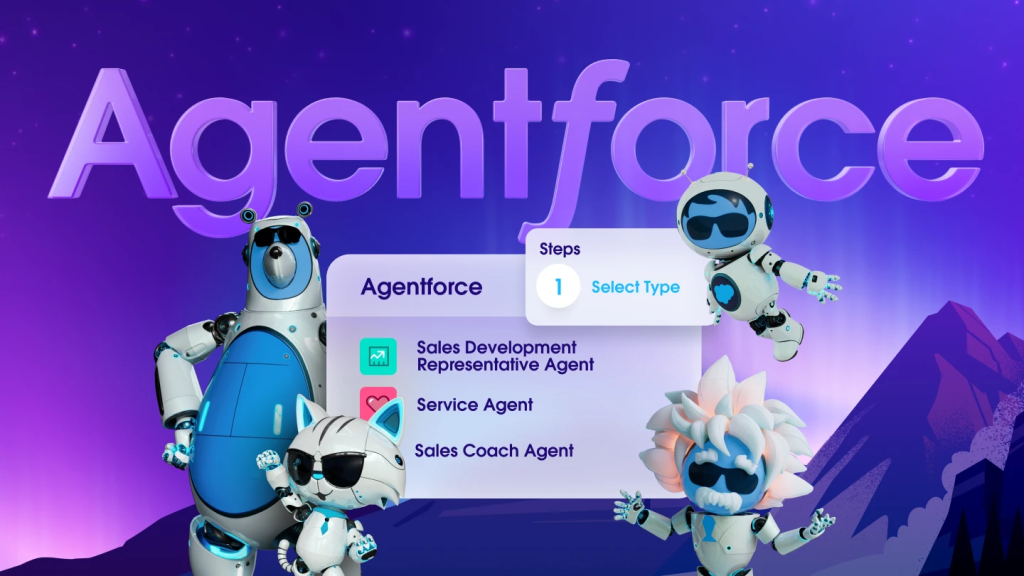
Salesforce Agentforce is what happens when the world's largest CRM company goes all-in on AI agents. Launched in late 2025, Agentforce takes the Salesforce ecosystem and adds autonomous AI agents that can handle complex, multi-step workflows.
For real estate specifically, this means AI agents that can qualify incoming leads, schedule showings, update pipeline records, generate comparative market analyses from integrated data sources, and even draft personalized follow-up sequences -- all without a human touching the CRM.
The power here is in the customizability. You can build agents that follow your exact sales process, enforce your brokerage's compliance requirements, and integrate with your existing MLS feeds and transaction management tools. The same build works on the management side of the business, and we mapped those workflows in AI agents for property managers.
Pros:
- Incredibly powerful automation capabilities
- Deep integration with the entire Salesforce ecosystem
- Highly customizable to match your specific workflows
- Enterprise-grade security and compliance
- Handles complex multi-step processes autonomously
Cons:
- Overkill for small teams or solo agents
- Requires Salesforce expertise to set up properly (or a consultant)
- Pricing adds up fast with per-user and per-conversation fees
- The Salesforce ecosystem can feel bloated if you only need CRM basics
Pricing: Salesforce starts at $25/user/month for the basic plan. Agentforce capabilities add additional costs, with AI conversations priced per interaction. Expect to pay $50-150+/user/month for a meaningful setup.
Best for: Large brokerages with 50+ agents that already use Salesforce or need enterprise-grade CRM with AI automation. If you're a solo agent, this is not the tool for you.
3. Follow Up Boss -- AI-Enhanced CRM Built for Real Estate
Follow Up Boss has been a favorite CRM among real estate teams for years, and their recent AI features make it worth reconsidering even if you looked at it before.
The standout AI feature is their smart lead routing and scoring system. Follow Up Boss analyzes lead behavior -- which listings they viewed, how often they visit your site, whether they opened your emails -- and uses that data to score leads and route them to the right agent on your team.
They've also added AI-powered action plans that automatically suggest the next best action for each lead. Instead of your agents guessing who to call next, the system surfaces the most promising opportunities.
Pros:
- Purpose-built for real estate (not a generic CRM with real estate bolted on)
- AI lead scoring genuinely works and improves over time
- Integrates with virtually every real estate lead source
- Clean, intuitive interface that agents actually enjoy using
- Excellent mobile app
Cons:
- AI features are more subtle than flashy -- don't expect fully autonomous agents
- No built-in website or IDX (you'll need a separate solution)
- Gets expensive as your team grows
- Reporting could be more robust
Pricing: Starts at $58/user/month for the Grow plan. The Team plan at $416/month (up to 10 users) is where you unlock most AI features.
Best for: Teams of 3-25 agents who want a real estate-specific CRM with solid AI lead scoring and routing. If you need a standalone CRM that just works, Follow Up Boss is hard to beat.
4. Lofty (Formerly Chime) -- The AI-Powered Sales Assistant

Lofty, which rebranded from Chime in 2023, is another all-in-one platform that's gone heavy on AI. Their differentiator is what they call an AI sales assistant that can handle inbound and outbound communication across text, email, and phone.
What caught my attention was Lofty's predictive analytics engine. It doesn't just score leads based on past behavior; it predicts which leads in your database are most likely to transact in the next 30, 60, or 90 days. For agents sitting on a database of thousands of contacts, this is incredibly valuable.
Lofty's AI assistant can also make and receive phone calls. Yes, actual voice calls. The natural language processing has gotten good enough that most leads don't realize they're talking to an AI during the initial qualification call. That said, I'd still recommend having the AI hand off to a human as quickly as possible -- the technology is impressive but not perfect.
Pros:
- Predictive analytics for identifying ready-to-transact leads
- AI voice calling is genuinely impressive
- All-in-one platform with CRM, IDX website, and marketing tools
- Strong automation workflows
Cons:
- Expensive -- base plans start around $449/month
- Long-term contracts are standard
- The all-in-one approach means some individual features aren't best-in-class
- AI voice still has occasional awkward moments
Pricing: Plans start at approximately $449/month with annual contracts typical. Pricing varies based on team size and features selected.
Best for: Tech-savvy teams willing to invest in a comprehensive platform. If you want one tool to handle your website, CRM, marketing, and AI outreach, Lofty is a strong contender.
Build Your Own: AI Tools for Realtors Who Want to Create Custom Solutions
Every tool on this list solves a specific problem. But what if you need something none of them offer? What if you want a neighborhood expert chatbot that knows your market inside and out, or a pre-qualification screener customized to your brokerage's exact criteria?
That's where building your own AI agent comes in. And it's a lot easier than you think.
5. Pickaxe -- Build and Sell Custom AI Agents for Real Estate
Full disclosure: I work with the Pickaxe team. But I'm including it here because I genuinely believe it fills a gap that no other tool on this list addresses.
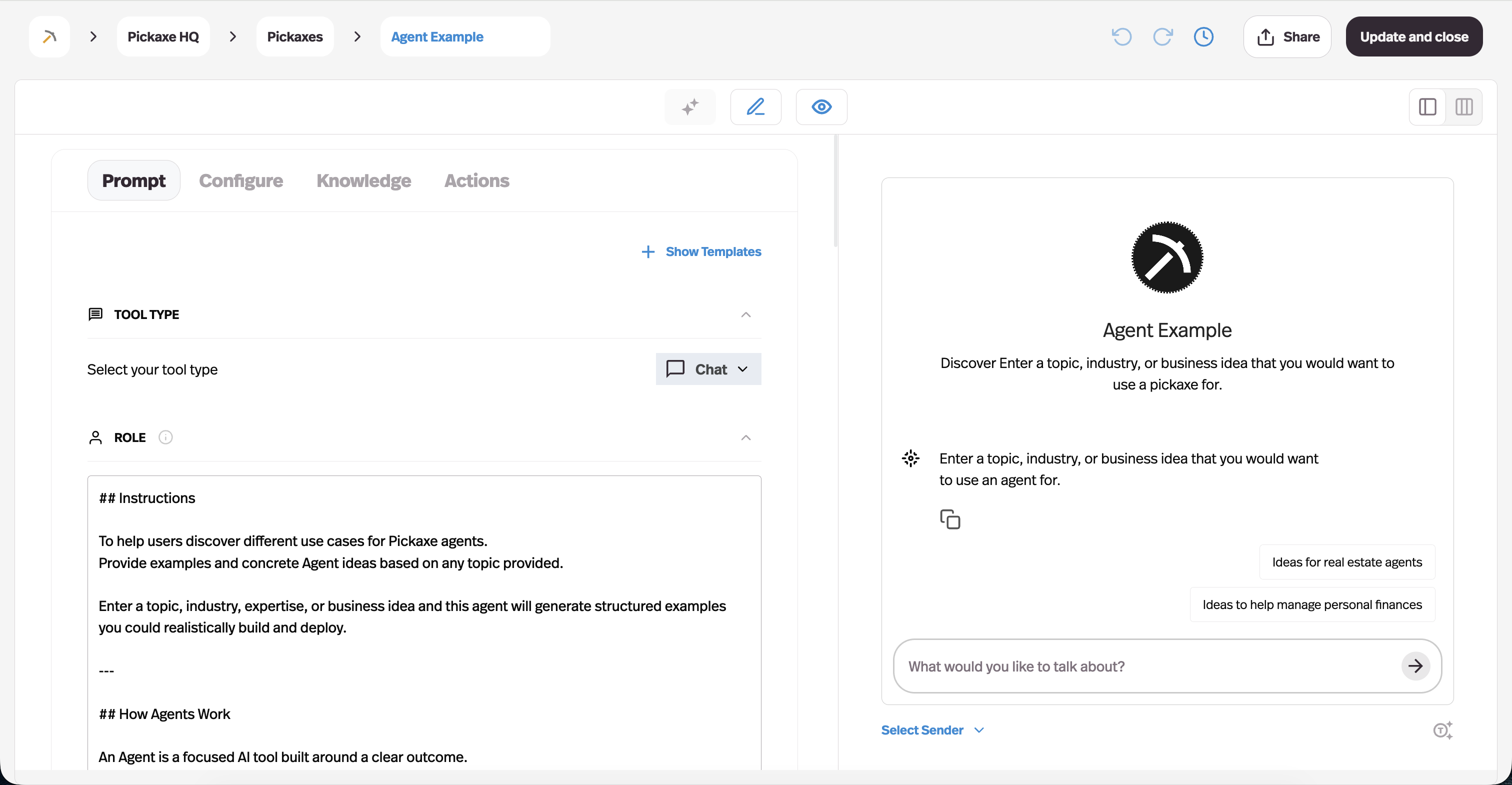
Pickaxe isn't a CRM. It's not a virtual stager. It's not a chatbot you bolt onto your website. It's a platform for building, deploying, and monetizing your own custom AI agents — without writing a single line of code.
Here's why that matters for realtors specifically.
Imagine you're a top-producing agent in Austin. You know every neighborhood, every school district, every flood zone, every upcoming development. That knowledge is incredibly valuable — but it's trapped in your head. With Pickaxe, you can turn that expertise into an AI agent that answers questions about Austin neighborhoods 24/7, trained on your own knowledge base.
Or imagine you run a brokerage and you want to offer white-labeled AI tools to your agents — branded to your brokerage, with your domain, your colors. A listing description generator. A buyer pre-qualification bot. A relocation guide that covers your specific markets.
That's exactly what Pickaxe enables.
What Makes Pickaxe Different from Other AI Tools for Realtors
Most tools on this list are pre-built solutions — you configure them, but you can't fundamentally change what they do. Pickaxe flips that model. You're the builder.
- Visual agent builder — no coding required. Drag, drop, configure.
- Train on your own data — upload documents, market reports, neighborhood guides, MLS data, and your agents learn from it.
- Choose your AI model — use GPT-4o, Claude, Gemini, or others depending on the task.
- Deploy anywhere — embed on your website, share via a link, or create a branded portal.
- Monetize it — charge subscriptions, per-use fees, or one-time payments through built-in Stripe integration.
- White-label everything — your brand, your domain, your pricing. Clients never see "Pickaxe" unless you want them to.
Real Estate Use Cases I've Seen Work
- Neighborhood expert agent — trained on local market data, school ratings, walkability scores, and upcoming developments. Buyers interact with it on your website 24/7.
- Listing description generator — feed it property details and it writes MLS-ready descriptions in your voice and style.
- Buyer pre-qualification screener — asks buyers the right questions before they ever reach you, so you only spend time on serious prospects.
- Relocation guide bot — for agents who work with relocation clients, an agent that knows everything about settling into your market.
- Open house follow-up agent — automatically follows up with open house visitors, answers their questions, and books showings.
- Agent training bot — for brokerages, a bot trained on your playbooks, scripts, and processes that new agents can query anytime.
The agents who will dominate the next decade aren't just using AI tools — they're building AI tools for their clients, their teams, and even other realtors. I've seen agents create neighborhood bots and charge other agents in the same market $50/month for access. That's a real revenue stream from your existing expertise.
Pros:
- Build truly custom AI solutions tailored to your specific market and niche
- No coding required — visual builder with drag-and-drop interface
- Built-in monetization lets you turn AI tools into a revenue stream
- White-label deployment means everything is branded to your brokerage
- Multi-model support — pick the best AI brain for each use case
- Free tier available to get started
Cons:
- Requires more setup time than a plug-and-play tool (you're building, not just configuring)
- Knowledge base training works best when you have quality source material
- You're responsible for the content and accuracy of your agents
Pricing: Free tier available. Pro plans start at $19/month. Enterprise options for brokerages.
Best for: Realtors and brokerages who want to build custom AI tools for their clients, create new revenue streams from their expertise, or offer white-labeled AI solutions to their team. If you're thinking beyond "how do I use AI?" and asking "how do I sell AI?" — this is the platform to look at.
Check Pickaxe pricing here, or walk through the builder to see how it works.
Build AI tools tailored to your real estate business
Pickaxe lets realtors create custom AI agents for lead qualification, listing descriptions, and client Q&A.
Virtual Staging and Photography: AI Tools for Realtors Who Need Better Visuals
Virtual staging used to cost $200-500 per room through traditional services. AI has absolutely demolished those prices while often delivering comparable or better results.
6. Virtual Staging AI -- The Best Bang for Your Buck

Virtual Staging AI is exactly what the name suggests: an AI tool that takes photos of empty rooms and fills them with beautiful, realistic furniture and decor. And it does this in about 30 seconds per image.
Compared to traditional virtual staging services, the results are virtually indistinguishable in most cases. There were occasional tells -- a slightly floating lamp, a shadow that didn't quite match the room's lighting -- but for MLS photos and marketing materials, the quality is more than sufficient.
The speed is the real differentiator. Traditional virtual staging takes 24-48 hours per room. Virtual Staging AI takes seconds. When you're trying to get a listing live quickly, that turnaround time matters enormously.
Pros:
- Incredible value -- staging a room costs a fraction of traditional services
- Results in seconds, not days
- Multiple style options (modern, traditional, farmhouse, luxury, etc.)
- Quality is consistently high for MLS and marketing use
- No subscription required -- you can pay per image
Cons:
- Occasional artifacts in complex room layouts
- Doesn't handle outdoor spaces as well as interiors
- You need decent base photography for the best results
- Some luxury listings may still warrant traditional staging for the premium look
Pricing: Pay-per-image options start around $16/image. Subscription plans with bulk discounts available starting at $39/month.
Best for: Any realtor who wants to stage listings without spending hundreds per room. Solo agents will find this especially valuable since the per-image pricing means you only pay for what you use.
7. AI HomeDesign -- Renovation Visualization That Sells
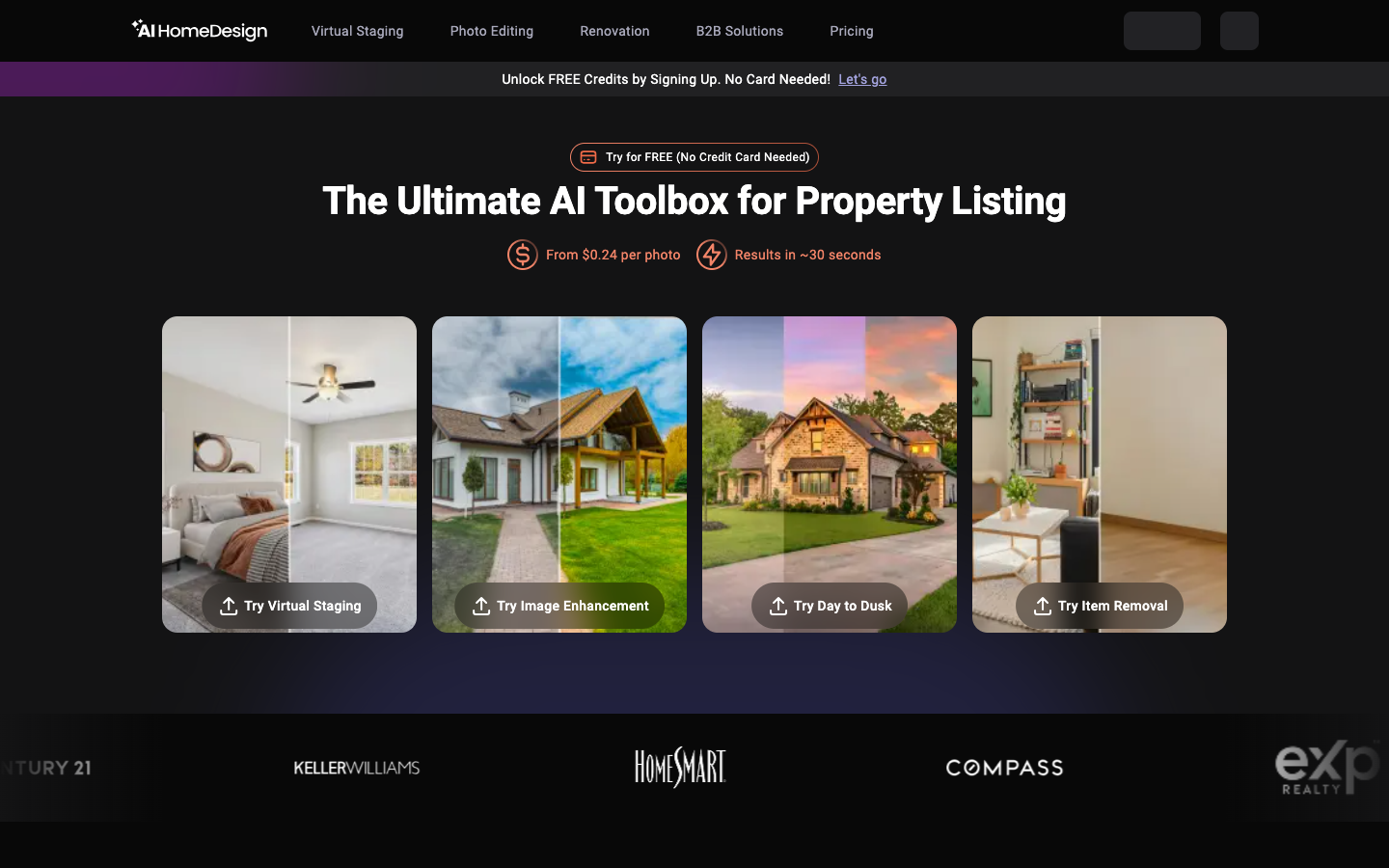
AI HomeDesign takes a slightly different approach than pure staging tools. While it can do virtual staging, its strength is in renovation visualization. Upload a photo of a dated kitchen, and it will show what that kitchen could look like after a modern renovation.
This is a killer feature for working with buyers who are looking at fixer-uppers. Instead of asking them to "use their imagination," you can show them exactly what the space could become. Agents have reported that this single tool has helped them close deals on properties that buyers were on the fence about.
The platform also includes tools for virtual furniture removal (taking existing furniture out of photos), room redesign (changing wall colors, flooring, fixtures), and exterior renovation visualization.
Pros:
- Renovation visualization is a unique differentiator
- Helps buyers see potential in properties they'd otherwise pass on
- Multiple design styles available
- Exterior and interior capabilities
- Results are realistic enough for client presentations
Cons:
- More expensive than pure staging-only tools
- Complex renovations can sometimes look unrealistic
- Processing time can be longer than simpler staging tools
- Learning curve to get the best results
Pricing: Plans start at $29/month with limited renders. Pro plans at $69/month offer more generous usage limits.
Best for: Agents who frequently work with fixer-uppers, flippers, or buyers who need help visualizing potential. Also valuable for listing agents who want to show what a dated property could look like post-renovation.
Content and Marketing: AI Tools for Realtors Who Need to Create More, Faster
Content creation is where most realtors first encounter AI, and for good reason. Writing listing descriptions, social media posts, blog articles, and email campaigns is time-consuming work that AI handles remarkably well.
8. Epique AI -- Built by Realtors, for Realtors
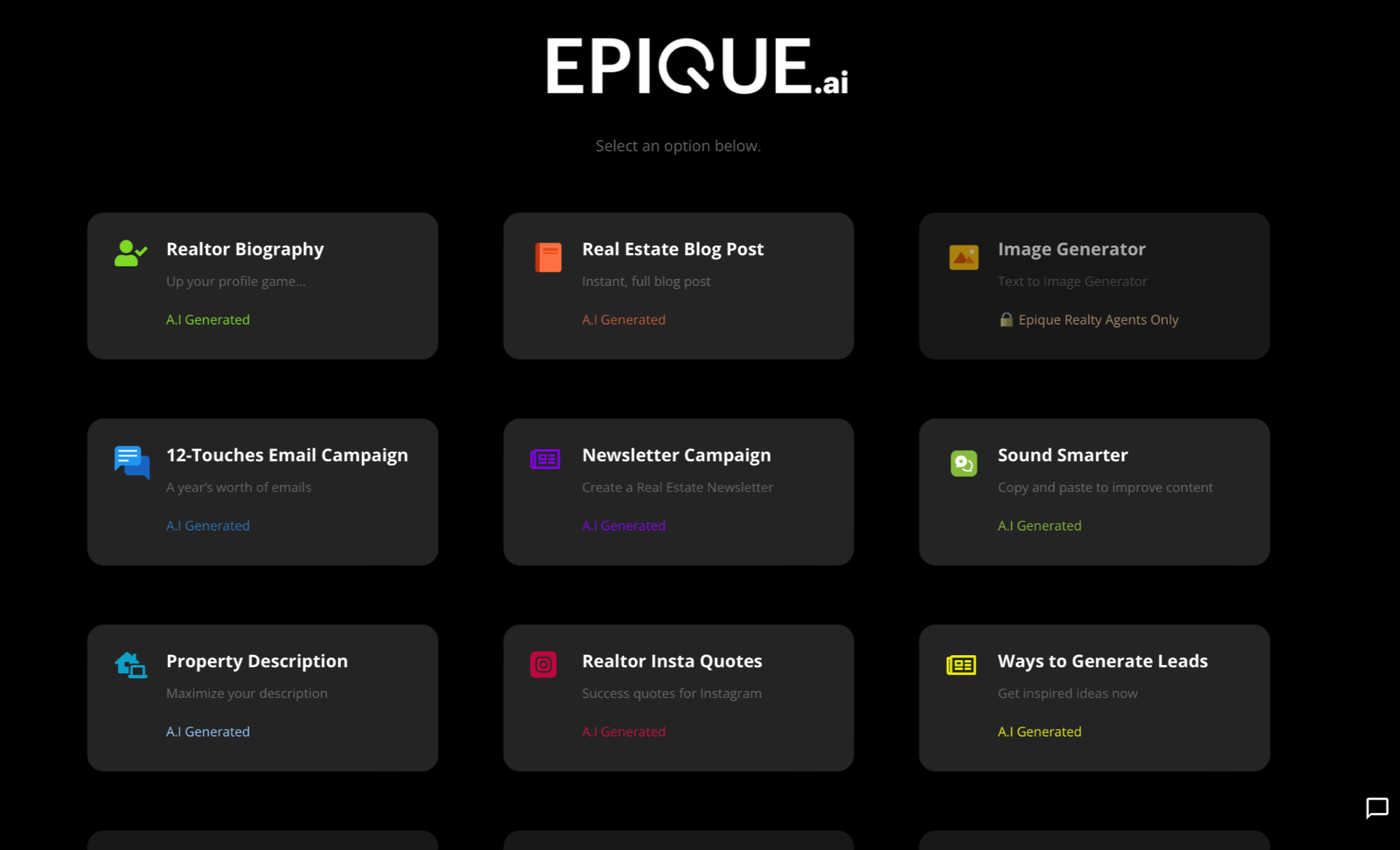
Epique AI is a platform designed specifically for real estate professionals. It's not a generic AI writing tool with a real estate template bolted on -- the entire product is built around the specific content needs of agents and brokerages.
The platform includes tools for listing descriptions, buyer and seller emails, social media posts, blog content, and even transaction-related documents. What I appreciated was how real estate-savvy the output was out of the box. You don't have to spend ten minutes prompting it to "act like a real estate agent." It already knows the language, the compliance considerations, and the market context.
Epique also includes a neighborhood analysis tool that pulls in local data to help you create area guides and marketing content. For agents who want to position themselves as the local expert, this is genuinely useful.
Pros:
- Purpose-built for real estate -- no generic AI awkwardness
- Free tier is generous enough to actually use
- Listing descriptions are well-structured and MLS-ready
- Neighborhood analysis tool is unique and valuable
- Clean interface that's easy for non-technical agents
Cons:
- Output quality is good but not exceptional -- you'll still want to edit
- Limited customization compared to general-purpose AI tools
- Some features feel thin compared to more established competitors
- Content can feel formulaic if you use the same templates repeatedly
Pricing: Free tier available with basic features. Premium plans start at approximately $29/month.
Best for: Solo agents who want a quick, easy way to generate real estate-specific content without learning complex AI prompting. The free tier makes it a no-risk option to try.
9. Write.Homes -- MLS Listing Descriptions on Autopilot
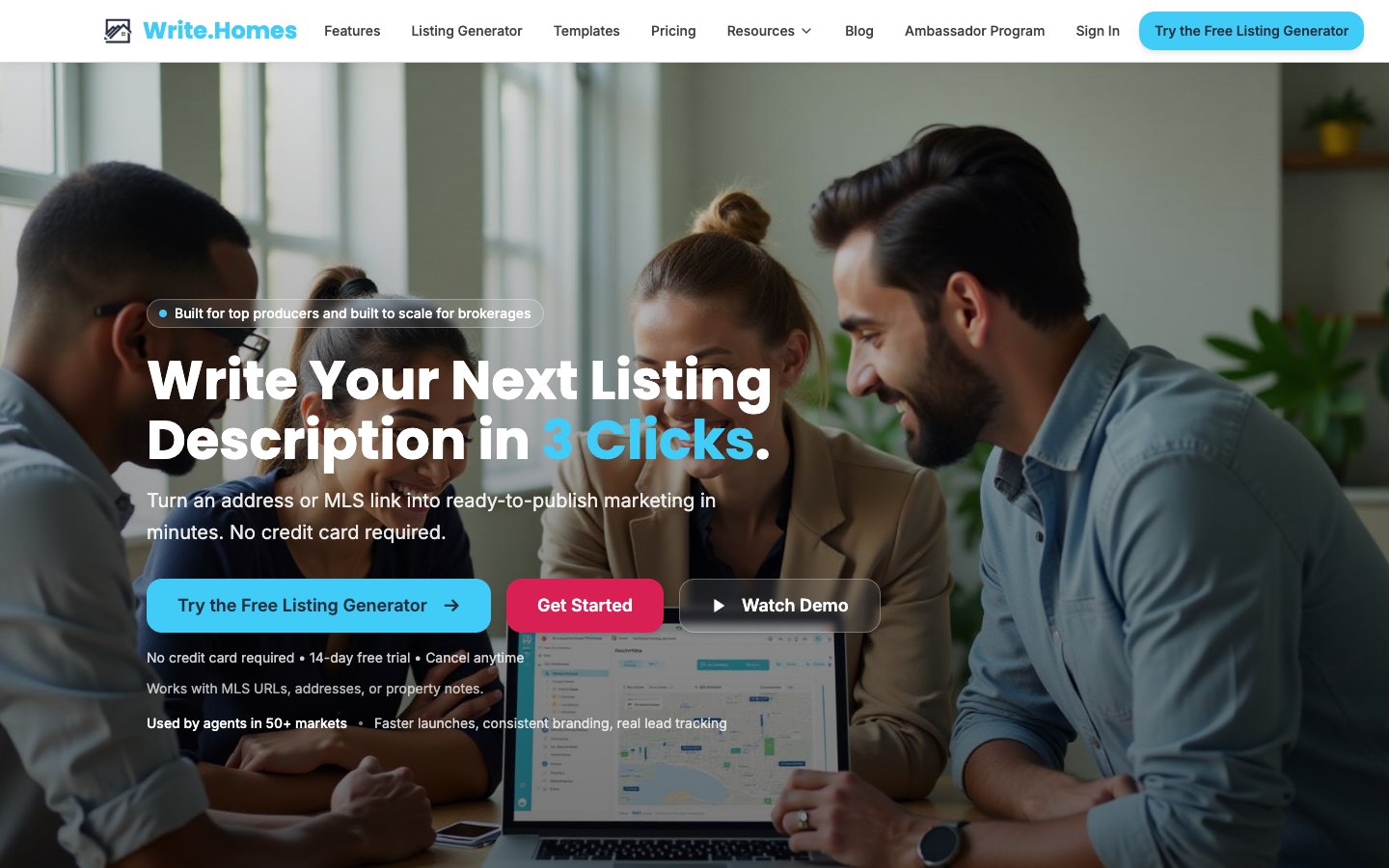
Write.Homes does one thing and does it well: it generates MLS listing descriptions. You plug in the property details -- bedrooms, bathrooms, square footage, notable features, neighborhood highlights -- and it produces a polished, ready-to-submit listing description in seconds.
Where Write.Homes impressed me was in the variation. It can generate multiple versions of the same listing description in different tones and styles, so you can pick the one that best matches the property and your brand. Luxury waterfront condo? It adjusts the language accordingly. Starter home in the suburbs? Different tone entirely.
The tool also supports multiple languages, which is increasingly important in diverse markets where your sellers or buyers might prefer content in Spanish, Mandarin, or other languages.
Pros:
- Extremely focused -- does listing descriptions better than any general-purpose tool
- Generates multiple variations to choose from
- Multi-language support
- MLS compliance awareness built in
- Very affordable
Cons:
- Only does listing descriptions -- nothing else
- You still need to fact-check every output
- Some descriptions can be overly enthusiastic
- Limited customization of voice and style beyond presets
Pricing: Free tier with limited generations. Premium starts at approximately $15/month for unlimited descriptions.
Best for: High-volume listing agents who write dozens of MLS descriptions per month. At $15/month for unlimited descriptions, it pays for itself after a single listing.
10. Canva AI -- Marketing Materials Without a Design Degree
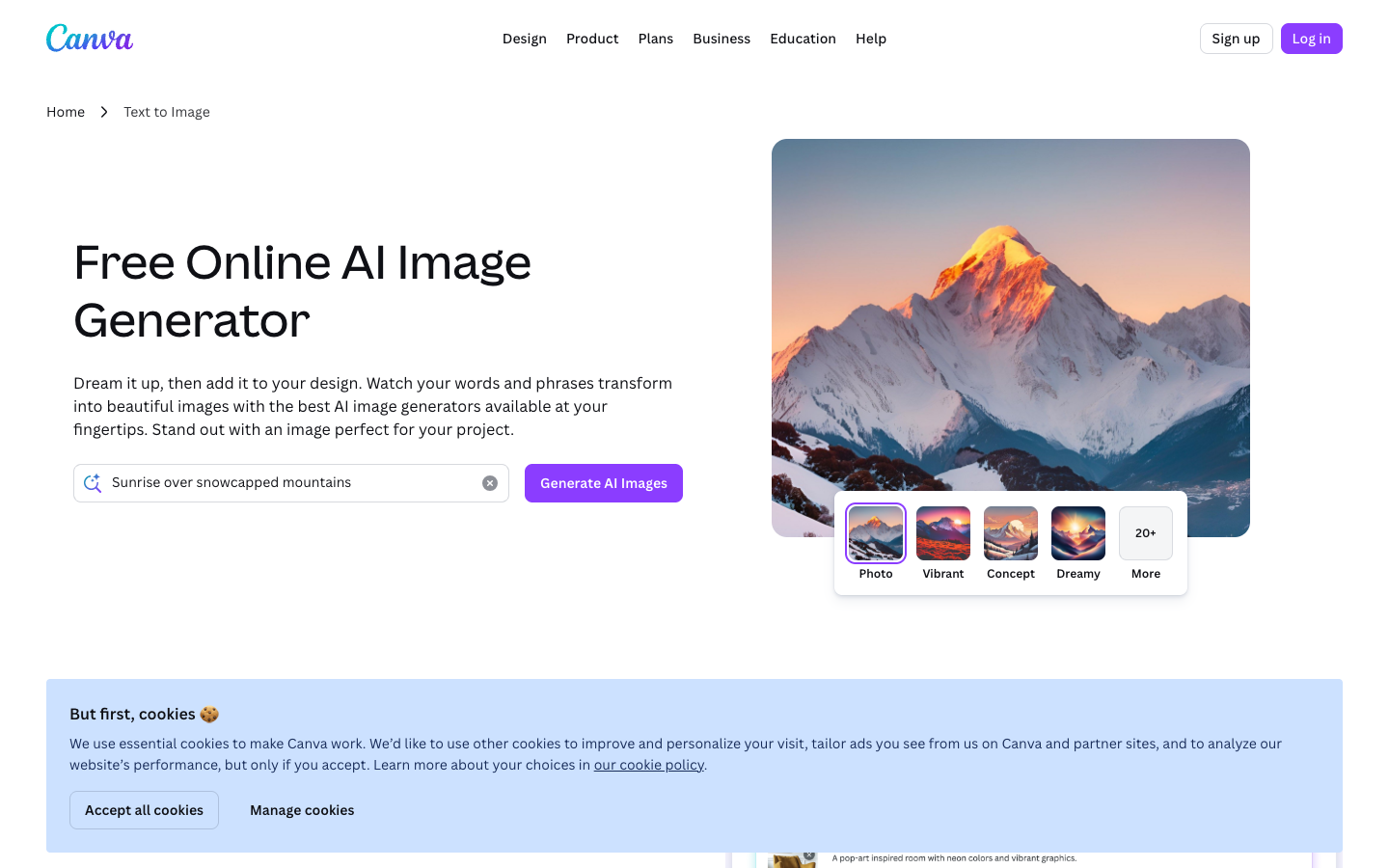
Canva isn't real estate-specific, but its AI features have made it an indispensable tool for realtors who need to create marketing materials without hiring a graphic designer.
The Magic Design feature is what changed the game. Describe what you want -- "a luxury open house invitation for a 4-bedroom waterfront property" -- and Canva generates multiple design options instantly. It also includes AI image generation, background removal, text rewriting, and brand kit application that automatically applies your brokerage colors, fonts, and logo to any design.
For social media specifically, Canva's AI can resize a single design for every platform (Instagram post, Instagram story, Facebook cover, Twitter header) in one click. That alone saves hours per week for agents who are active on social media.
Pros:
- Magic Design makes creating professional materials shockingly easy
- Massive template library with real estate-specific options
- AI-powered resizing for every social media platform
- Brand kit keeps everything consistent
- Free tier is usable; Pro tier is very affordable
Cons:
- Not real estate-specific -- you need to find or adapt templates
- AI image generation is good but not photorealistic
- Can create a "Canva look" if you rely too heavily on templates
- Advanced design work still requires a professional
Pricing: Free tier available. Canva Pro at $13/month (billed annually) unlocks most AI features.
Best for: Every realtor. Seriously. If you're not using Canva for at least some of your marketing materials, you're working harder than you need to. The combination of templates, AI features, and affordability makes it a must-have.
11. Jasper AI -- Scaling Your Content Marketing Machine
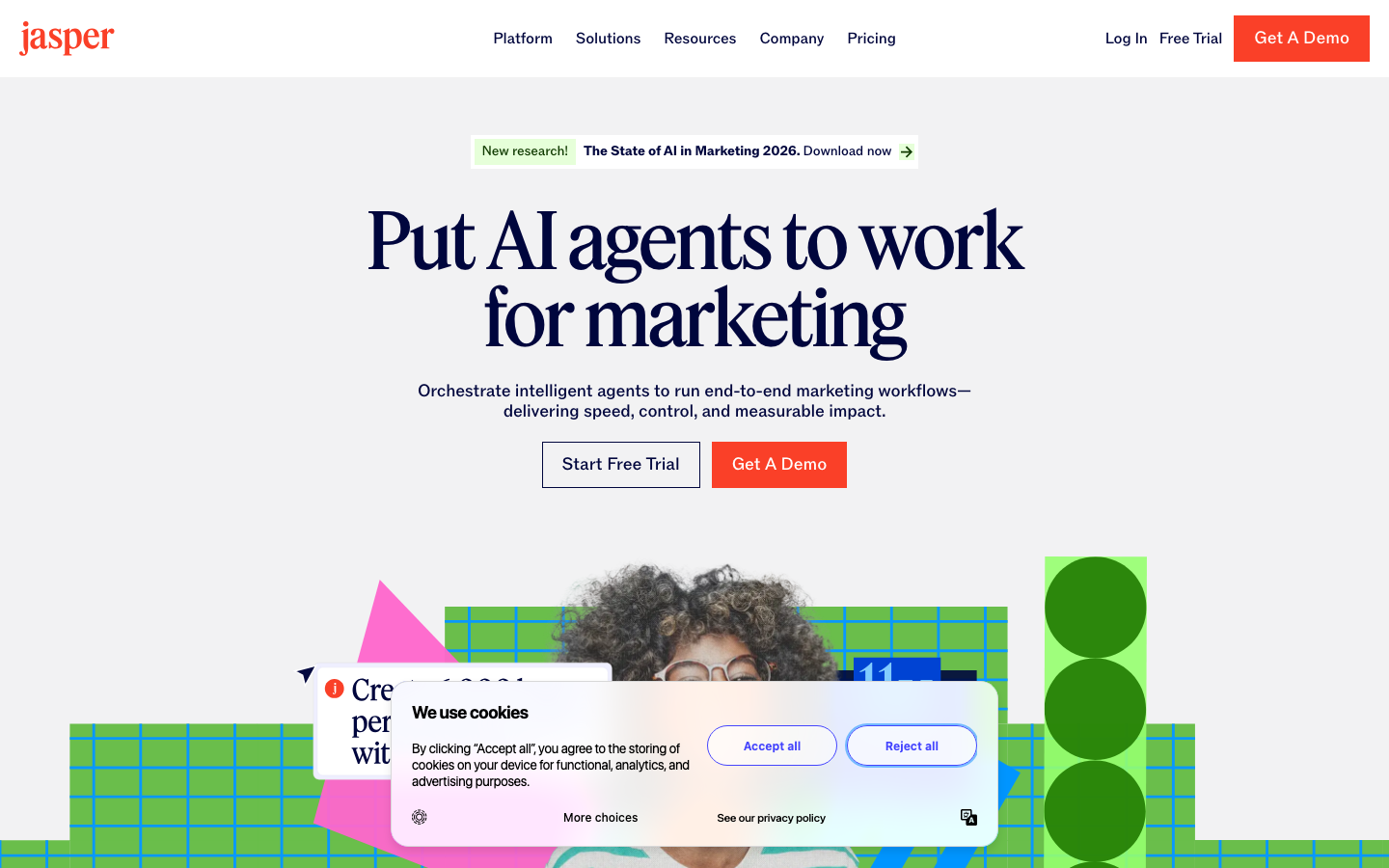
Jasper AI is one of the most established AI writing platforms, and while it's not real estate-specific, its versatility makes it excellent for agents and teams that produce a lot of marketing content.
Where Jasper shines is in brand voice training. You can feed it examples of your existing content -- past blog posts, listing descriptions, social media posts -- and it learns your specific voice and style. The output then sounds like you, not like a generic AI.
Jasper also has strong SEO features that help you create content designed to rank in search engines. For realtors who maintain a blog or produce neighborhood guides, this is extremely valuable for driving organic traffic. If you want to learn more about using AI to drive website traffic, I'd recommend reading how to use AI chatbots for traffic and leads.
Pros:
- Brand voice training produces genuinely on-brand content
- Excellent for long-form content like blog posts and guides
- Built-in SEO optimization tools
- Supports team workflows with collaboration features
- Integrates with many marketing tools
Cons:
- Expensive compared to real estate-specific alternatives
- Not real estate-specific -- requires setup time to dial in
- You're paying for capabilities you might not use
- Learning curve for getting the most out of advanced features
Pricing: Creator plan starts at $49/month. Pro plan at $69/month adds more features. Business plans available for teams.
Best for: Teams and brokerages that produce significant volumes of marketing content. If you write weekly blog posts, daily social media content, and regular email campaigns, Jasper's brand voice training and workflow tools justify the price.
Chatbots and Client Communication: AI Tools for Realtors Who Can't Be Available 24/7
Here's a stat that should keep every realtor up at night: research from the NAR shows that the average lead response time in real estate is over 15 hours. But studies consistently show that responding within 5 minutes makes you 21 times more likely to qualify that lead.
AI chatbots solve this problem. They respond instantly, 24/7, without you needing to be glued to your phone.
12. Roof AI -- The Brokerage-Level Chatbot
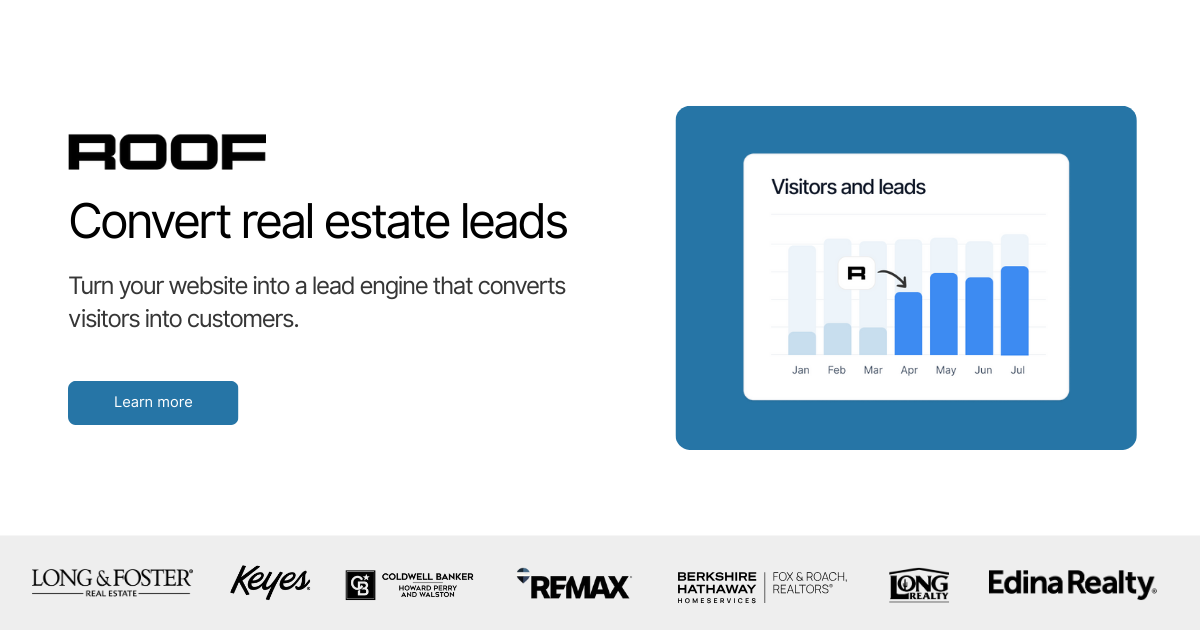
Roof AI has positioned itself as the chatbot platform for larger brokerages. Its core product is an AI assistant that lives on your website and engages every visitor in a natural, conversational way.
What differentiates Roof AI from generic chatbot tools is its real estate intelligence. It understands property searches, can pull in listing data, schedule showings, and route qualified leads to the right agent on your team based on geography, specialization, or availability. The AI doesn't just answer questions -- it actively works to convert visitors into leads and leads into appointments.
The platform also includes lead management features that track each conversation, score the lead's readiness, and provide your agents with context before they pick up the phone. No more calling a lead cold without knowing what they've been looking at.
Pros:
- Real estate-specific conversation intelligence
- Excellent lead routing for teams
- Can schedule showings directly within the chat
- Detailed conversation analytics
- Works across website, Facebook Messenger, and SMS
Cons:
- Pricing is not transparent -- requires a sales conversation
- Best suited for larger teams and brokerages
- Setup and customization take time
- The AI can occasionally misunderstand complex property requirements
Pricing: Custom pricing based on brokerage size and needs. Expect to pay several hundred dollars per month minimum.
Best for: Brokerages with significant website traffic that want to maximize lead capture and qualification. If you're getting hundreds or thousands of monthly visitors and losing them because nobody responds fast enough, Roof AI is worth exploring.
13. Realty AI -- Custom Chatbots for Real Estate Brands
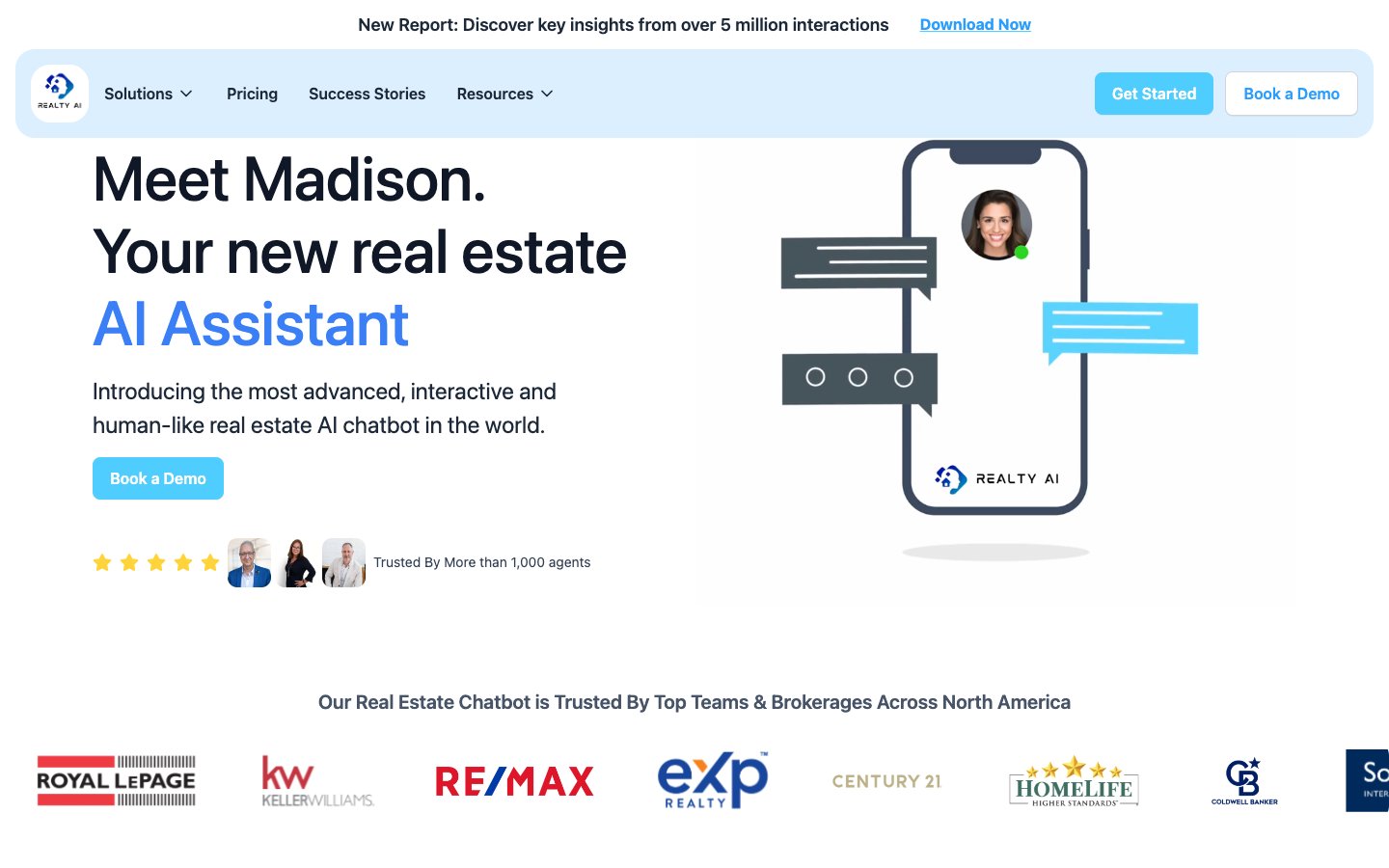
Realty AI takes a different approach from Roof AI. Rather than providing a plug-and-play chatbot, it offers a customizable chatbot platform where you can build AI agents tailored to your specific brand, market, and workflows.
The platform allows you to train the AI on your listings, your neighborhood knowledge, and your preferred communication style. This means the chatbot doesn't just answer generic real estate questions -- it answers them the way you would, using your local market expertise.
For agents and teams who have spent years building local expertise, this is a compelling proposition. You're essentially cloning your knowledge into an AI that can represent you 24/7. If you're interested in this approach, embedding AI chatbots on your website is easier than you might think.
Pros:
- Highly customizable to match your brand and expertise
- Can be trained on your specific listings and market knowledge
- Flexible deployment options (website, social, messaging apps)
- Better personalization than plug-and-play solutions
Cons:
- Requires more setup effort than turnkey solutions
- Custom pricing makes it hard to budget
- The quality of the chatbot depends heavily on the quality of your training data
- Ongoing maintenance needed to keep listings and info current
Pricing: Custom pricing. Contact for a quote based on your requirements.
Best for: Agents and brokerages with strong local expertise who want to differentiate their chatbot experience from generic solutions. If your competitive advantage is your local knowledge, Realty AI lets you encode that into an always-available AI assistant.
Property Search and Valuation: AI Tools Changing How Buyers Find Homes
The consumer-facing side of real estate AI is evolving rapidly. As a realtor, you need to understand these tools because your clients are already using them.
14. Zillow AI -- Natural Language Property Search
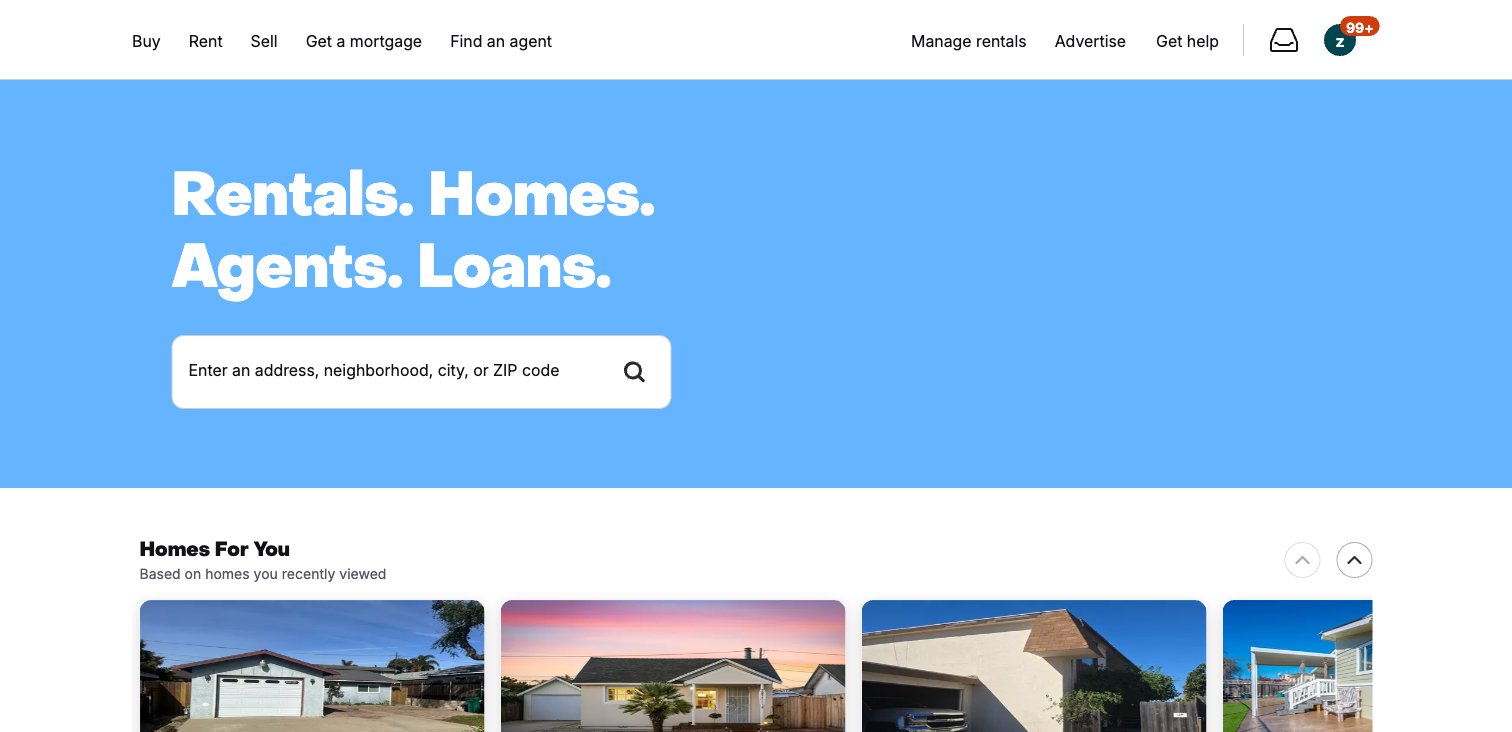
Zillow's AI-powered search has fundamentally changed how consumers browse listings. Instead of checking boxes and adjusting sliders, buyers can now describe what they want in plain English: "a three-bedroom house near good schools with a big backyard under $400,000 in the Austin area."
The AI interprets that query, weighs the various factors, and returns relevant results that a traditional filter-based search would miss. It understands concepts like "close to downtown," "quiet neighborhood," and "good for entertaining" in ways that simple database queries never could.
For realtors, the implication is significant. Your clients are arriving at conversations with more refined expectations because they've already had an AI help them narrow down what they want. Understanding how these tools work helps you serve buyers who are increasingly AI-informed.
Zillow has also expanded its Zestimate algorithm with more AI-driven factors, including neighborhood trend analysis, renovation impact estimates, and more granular comparables. While Zestimates remain imperfect, they're getting more accurate over time and remain the most widely cited automated valuation model in the industry.
Pros:
- Natural language search is genuinely intuitive for consumers
- Massive listing database
- Zestimate provides a useful (if imperfect) starting point for valuation conversations
- AI-driven recommendations improve over time based on user behavior
Cons:
- Zestimates can set unrealistic price expectations
- Zillow's AI serves the consumer, not necessarily the agent
- Lead quality from Zillow can be inconsistent
- Agent-facing tools are secondary to the consumer experience
Pricing: Free for consumers. Zillow Premier Agent advertising is a separate (and expensive) investment.
Best for: Understanding what your buyers are already using. Every realtor should be familiar with Zillow's AI search so you can have informed conversations with clients who reference it.
15. Redfin AI -- Data-Driven Home Search and Market Analysis
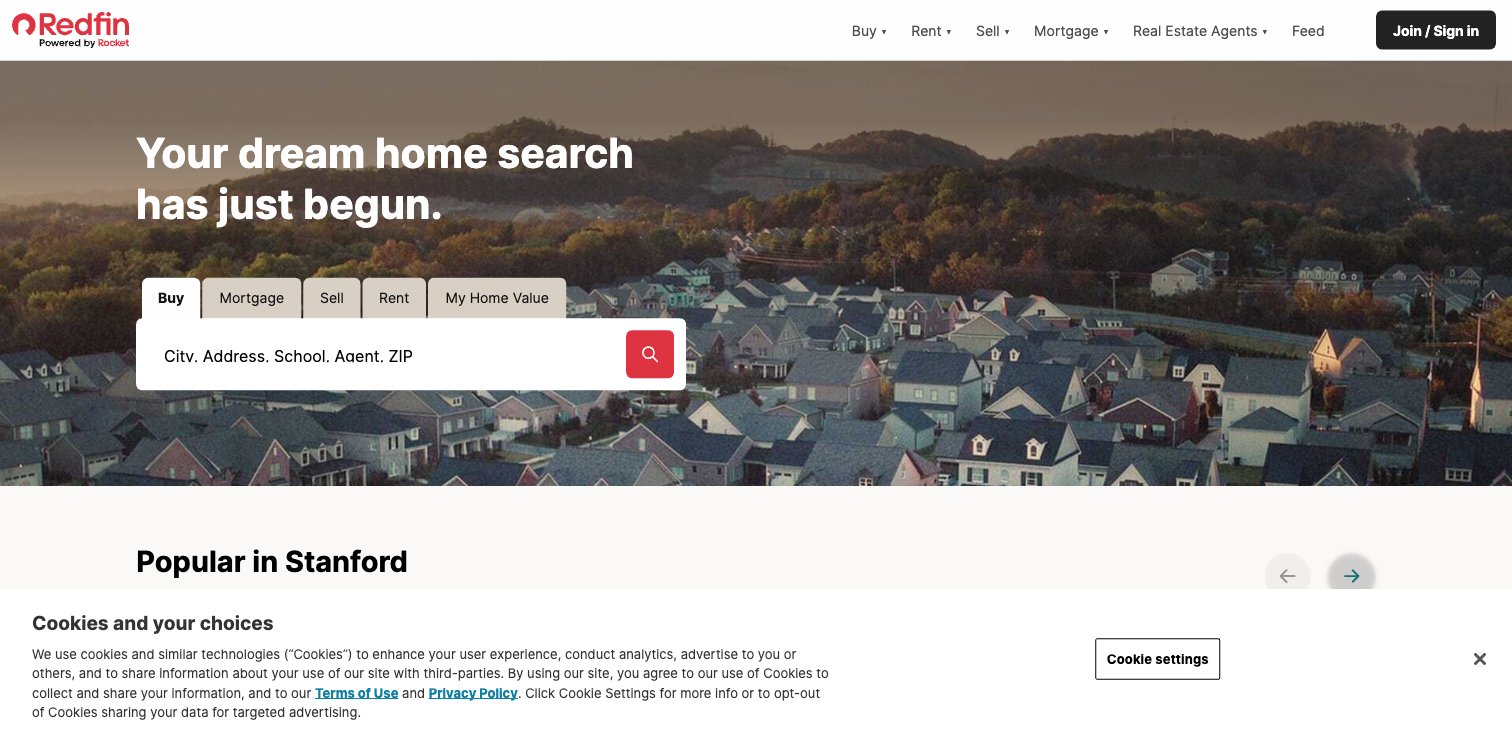
Redfin has taken a more data-driven approach to AI in real estate search. Their AI-powered deal scores, market forecasts, and competitive analysis tools give buyers a clearer picture of whether a property is fairly priced and how quickly they need to act.
Redfin's "Hot Homes" algorithm, powered by AI, predicts which listings are likely to sell quickly based on factors like pricing relative to comparables, listing timing, neighborhood demand, and property characteristics. For buyers in competitive markets, this can mean the difference between getting an offer in early and missing out entirely.
The platform also uses AI to generate personalized market reports that track trends in a buyer's target neighborhoods -- price changes, inventory levels, days on market, and seasonal patterns. This gives clients a data-driven foundation for their search decisions.
Pros:
- Strong data-driven approach to property analysis
- Hot Homes algorithm helps buyers act quickly on competitive listings
- Transparent about their AI's methodology and limitations
- Solid integration between search, valuation, and agent services
Cons:
- Market coverage varies by region
- Like all AVM tools, estimates can miss property-specific factors
- The platform's business model can create tension with traditional agents
- Some markets have limited inventory compared to Zillow
Pricing: Free for consumers. Redfin agent services are separate from the consumer search tools.
Best for: Data-savvy buyers and the agents who work with them. If your clients value numbers and analysis over narrative, Redfin's AI tools complement your expertise well.
Create AI agents your clients will love
Design AI-powered tools with your listings data, market knowledge, and personal brand.
General Purpose AI: The Swiss Army Knives Every Realtor Needs
Sometimes the best AI tool for realtors isn't a real estate-specific product at all. General-purpose AI platforms are incredibly versatile, and with the right prompting, they can outperform specialized tools in many real estate applications.
16. ChatGPT -- The Tool That Started It All
ChatGPT remains the most widely used AI tool in real estate, and frankly, in every industry. According to NAR research, it's the first AI tool most realtors try, and for many, it's the only one they need for day-to-day content creation.
For realtors, ChatGPT excels at listing descriptions, client emails, market analysis summaries, social media posts, blog content, and virtually any written communication. With the right prompts, it can adapt its tone from luxury high-rise to cozy suburban cottage in seconds.
The introduction of GPT-4o's multimodal capabilities has been particularly useful for real estate. You can upload a property photo and ask it to write a listing description based on what it sees. You can feed it a spreadsheet of comparables and ask for a market analysis. You can upload a floor plan and ask it to highlight the selling points.
What makes ChatGPT particularly powerful for realtors is the ability to create Custom GPTs. You can build a specialized GPT trained on your market data, your brand guidelines, and your preferred communication templates. This turns a general-purpose tool into something that functions like a real estate-specific assistant that knows your business intimately.
If you're interested in taking this concept further and actually monetizing your AI prompts and tools, there are platforms that make it straightforward to package your expertise into client-facing AI agents. More on that in a moment.
Pros:
- Incredibly versatile -- handles almost any content task
- Multimodal capabilities (text, images, voice, files)
- Custom GPTs let you build specialized agents
- Constantly improving with frequent updates
- Massive ecosystem of prompts and templates shared by the community
- Free tier is surprisingly capable
Cons:
- Not real estate-specific -- requires good prompting to get great output
- Can hallucinate facts, especially about specific properties or markets
- Custom GPTs lack advanced deployment options (no white-labeling, limited monetization)
- No built-in MLS or real estate data integration
- Output needs careful review for compliance with real estate advertising rules
Pricing: Free tier available. ChatGPT Plus at $20/month. Team plans at $25/user/month.
Best for: Every realtor as a baseline tool. If you only adopt one AI tool in 2026, make it ChatGPT. Then learn to prompt it well and explore which AI models work best for different tasks.
How to Choose the Right AI Tools for Your Real Estate Business
With 15+ tools on this list, the question isn't "should I use AI?" -- it's "which combination makes sense for my business?"
Here's how I'd think about it based on where you are in your career.
If You're a Solo Agent Just Getting Started with AI
Start simple. ChatGPT + Canva + one content tool (either Epique or Write.Homes) will cover 80% of what you need. Total cost: $20-50/month.
Use ChatGPT for listing descriptions, client emails, and market summaries. Use Canva for social media posts and marketing materials. Use your content tool of choice for quick MLS descriptions when ChatGPT feels like overkill.
Add Virtual Staging AI on a per-image basis when you need it -- no subscription required.
If You're a Team Leader with 5-15 Agents
You need a CRM with AI capabilities. Follow Up Boss is my top pick for teams this size. Pair it with Jasper AI for content production and Roof AI or a custom chatbot solution for your website.
Consider building custom AI agents for your team's specific workflows. A pre-qualification bot, a showing scheduler, or a client FAQ agent can save your team hours every week.
If You're a Brokerage with 50+ Agents
Look at Ylopo for lead generation, Salesforce Agentforce or Lofty for CRM, and build a comprehensive AI strategy that covers every stage of the client journey. At this scale, the cost of these tools is dwarfed by the cost of missed leads and inefficient workflows.
The Real Estate AI Landscape: What's Coming Next
Before I wrap up, a few predictions about where AI tools for realtors are heading over the next 12-18 months.
AI agents will handle entire transactions. We're already seeing the early stages of this. Within 18 months, expect AI agents that can manage the entire flow from initial lead capture through closing coordination, pulling in humans only when judgment calls are needed.
Voice AI will become standard. Lofty is already doing AI phone calls. By 2027, most real estate CRMs will include AI voice capabilities for initial lead outreach and follow-up.
Personalization will reach a new level. AI tools will create individualized property presentations, neighborhood guides, and market reports for each buyer based on their specific preferences and behavior. Generic marketing blasts will feel increasingly dated.
Compliance-aware AI will emerge. The real estate industry has strict advertising rules that vary by state. Expect AI tools to build in compliance guardrails that flag potential Fair Housing violations, inaccurate claims, and state-specific regulatory issues before content goes live.
The agents who adapt will thrive. A recent McKinsey report on real estate technology estimates that AI-enabled agents will handle 30-40% more transactions than their peers by 2027 -- not because they work more hours, but because they work dramatically more efficiently.
Final Thoughts: The Best AI Strategy for Realtors in 2026
I've checked out all 15+ tools on this list and here's what I keep coming back to.
The best AI strategy isn't about finding the single perfect tool. It's about building a stack that covers your core needs without creating complexity that slows you down.
Start with a general-purpose AI (ChatGPT). Add a real estate-specific tool for your biggest pain point. Then expand from there as you get comfortable.
And if you really want to differentiate yourself -- not just use AI, but offer AI-powered experiences to your clients -- platforms like Pickaxe let you build and deploy custom agents that reflect your expertise, your brand, and your market knowledge. No coding required. The agents who start building these assets now will have a meaningful competitive advantage over those who wait.
The real estate industry has been relatively slow to adopt technology throughout its history. But AI is different. The barrier to entry is lower than ever, the tools are more accessible than ever, and the ROI is more immediate than ever.
The question isn't whether AI will transform real estate. It's whether you'll be the one using it or the one it leaves behind.