

Gemini 4 Argon AI agents deserve a workflow trial before they get a client migration. The useful question is whether Argon can finish your actual job, within the client's budget and permissions, with a result someone can verify.
I reviewed Google's launch announcement and current production documentation on October 15, 2026. Google opened global developer and enterprise access on October 13; this guide evaluates that public release, rather than the earlier restricted preview. Google's launch announcement establishes the date and availability.
I have not run an Argon benchmark or a production client migration. What follows is a practical adoption plan: seven checks, a proposed test set, and a release contract you can adapt before changing a working agent.
Gemini 4 Argon AI agents: my adoption recommendation
Try Argon first on a difficult, bounded, read-only job. A source-backed research brief, an analysis of conflicting documents, or a draft implementation plan gives you a useful outcome to inspect before connecting write permissions.
I would keep the existing model available while the candidate runs against the same frozen inputs. Let Argon earn a narrow route in your workflow before you consider making it the default.
That recommendation is about evaluation design, not a claim that Argon is unreliable. A model change can alter tool selection, response length, refusal behavior, and operating cost even when its answers look better.
Our frontier-model comparison helps with the wider shortlist. This article handles the next decision: what evidence would justify adopting this specific release for work a client already depends on?
Choose one workflow and freeze the contract
For the examples below, imagine a fictional consultancy producing a client onboarding brief. The agent reads an approved scope, checks a project record, identifies missing information, and drafts a task list for a person to review.
The trial does not send emails, edit a live CRM, or create tasks. Those actions stay behind an approval boundary until the read-only version clears its acceptance criteria.
Freeze the instructions, source documents, tool schemas, and expected outcome. Record the old model's configuration as carefully as the new one, including reasoning settings and output limits.
Otherwise you can accidentally compare a revised prompt against an old prompt and attribute the difference to the model. Keep prompt improvements for a separate experiment after the initial comparison.
- Business outcome: a reviewer can determine the next onboarding step from cited evidence.
- Allowed work: read approved records and prepare a draft.
- Forbidden work: contact anyone, infer missing permission, or treat an unverified fact as confirmed.
- Evidence: final brief, source references, tool transcript, usage, timing, and reviewer judgment.
This is the same separation between transcript and outcome used in our guide to building AI agent evals. A convincing explanation of success is insufficient when the underlying record says something else.
1. Verify the exact API access and feature surface
The public model ID is gemini-4-argon. Google's model reference lists text, image, video, audio, and PDF inputs, with text output; function calling and structured outputs are supported, while image generation and the Live API are not.
A model's input support does not mean your deployment exposes every capability. Check the endpoint, SDK, middleware, agent builder, and destination where your client will actually use it.
Google's developer announcement directs builders to the paid Gemini API. Subscription access in the Gemini app is a different entitlement from production API billing.
For this pilot, I would save a successful request and response from the real deployment path, using synthetic client data. Then test a tool call, a structured result, and the relevant file type through that same path.
Also inspect project capacity. Google's rate-limit documentation says limits apply per project, rather than per API key; active limits depend on the project's tier and account state. Creating another key is not a capacity plan.
Pass evidence: an identified project, supported deployment region, enabled billing, actual model ID, and successful representative requests. A screenshot of a model selector alone would leave too many assumptions unresolved.
2. Budget Gemini 4 Argon AI agents at ongoing prices
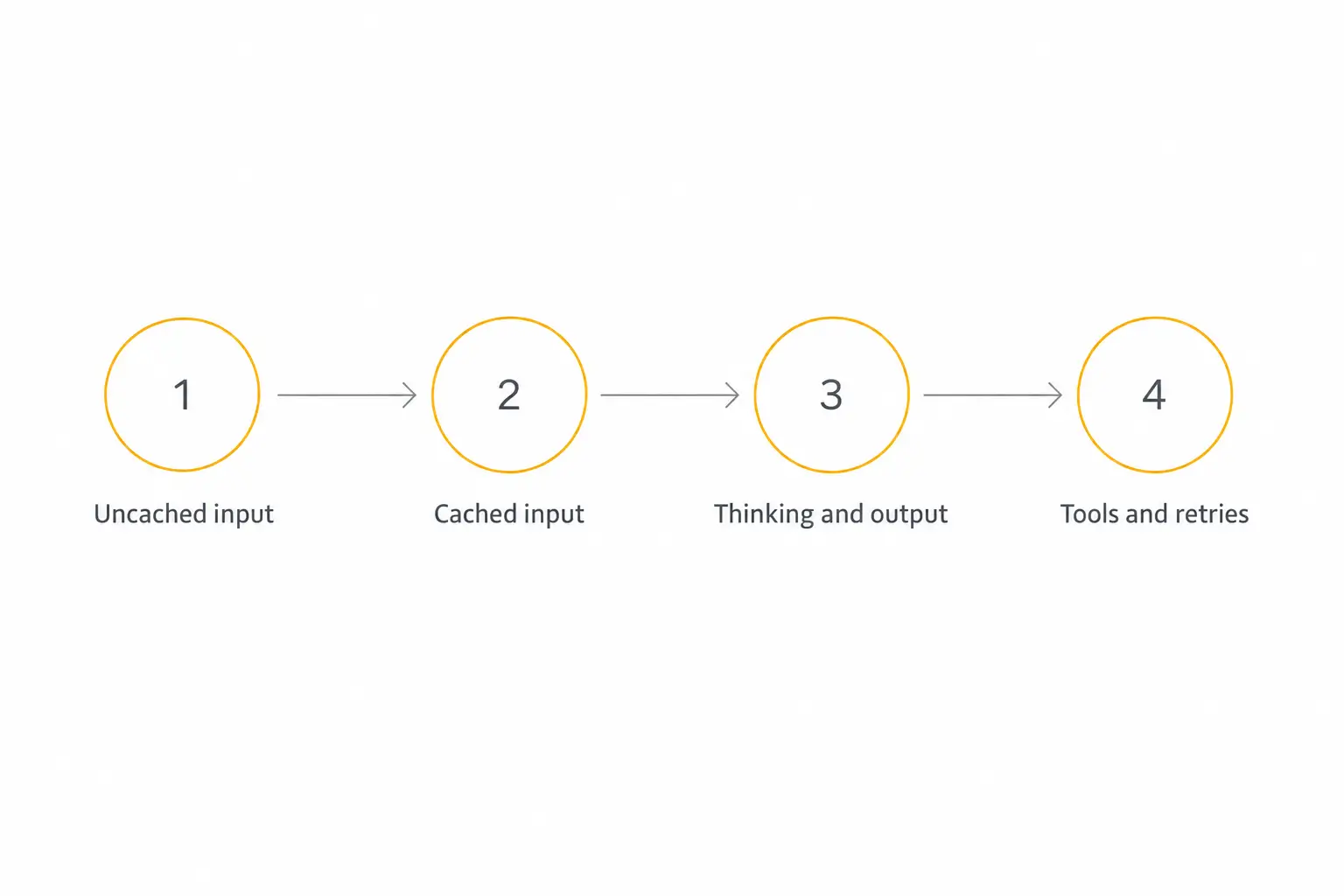
Google's standard paid Developer API rate card lists the following USD prices per million tokens. The introductory period runs through November 30, 2026; the higher rate starts December 1. Output billing includes thinking tokens. Source: Google's pricing table.
| Token category | Through November 30 | From December 1 |
|---|---|---|
| Uncached input | $2.00 / million | $4.00 / million |
| Cached input | $0.10 / million | $0.20 / million |
| Output, including thinking | $10.00 / million | $20.00 / million |
Illustrative arithmetic: suppose one completed job uses 100,000 input tokens, of which 80,000 receive cache hits, plus 10,000 billable output and thinking tokens. Its standard token subtotal is $0.148 at introductory rates and $0.296 at ongoing rates.
The introductory calculation is $0.04 for uncached input, $0.008 for cached input, and $0.10 for output. With no cache hits, those same assumed totals would cost $0.30 and $0.60 respectively.
These are hypothetical token subtotals, not observed Argon costs or quotes for a complete client service. They exclude tools, retries, hosting, human review, taxes, and any platform subscription.
Keep grounding charges in a separate line. Google's rate card lists a shared monthly Search allowance followed by per-query charges; one user task can produce multiple searches, so a task and a billable search are different units. Verify the applicable allowance in your project before using it in a forecast.
I would price a client offer using the ongoing rate and a cold-cache scenario. If the margin depends on every repeated request hitting a cache, the offer needs a narrower workload or a better price.
3. Measure cache hits instead of assuming them
The Developer API's caching guide lists a 4,096-token minimum for Argon and implicit caching only. It recommends common content at the start of prompts and identifies usage.total_cached_tokens as the field for observed cached tokens.
That minimum is not universal across Google's surfaces. The Cloud developer guide describes a 6,144-token shared-prefix minimum, with durable caching enabled by default. Use the documentation and response fields for the surface you purchased.
For the fictional onboarding pilot, I would place stable instructions and approved reference material before the variable request. I would keep client-specific facts inside the appropriate client context and preserve tenant boundaries throughout the application.
Then run three proposed conditions: a first request, a nearby repeat, and a request after the approved source changes. Save the cached-token count and resulting answer for each condition.
The third condition matters because cheap repetition is not automatically correct repetition. When a scope changes, the agent must use the updated document and identify the current version in its brief.
Pass evidence: measured cache use where expected, acceptable cold-request cost, and correct answers after source updates. Do not add irrelevant text just to reach a cache threshold; that can increase spend without improving the job.
Our token economics guide explains why repeated context can dominate an agent bill. Here, the practical addition is to record what actually received a discount rather than applying a blanket discount to all input.
4. Grade tool calls against actual state
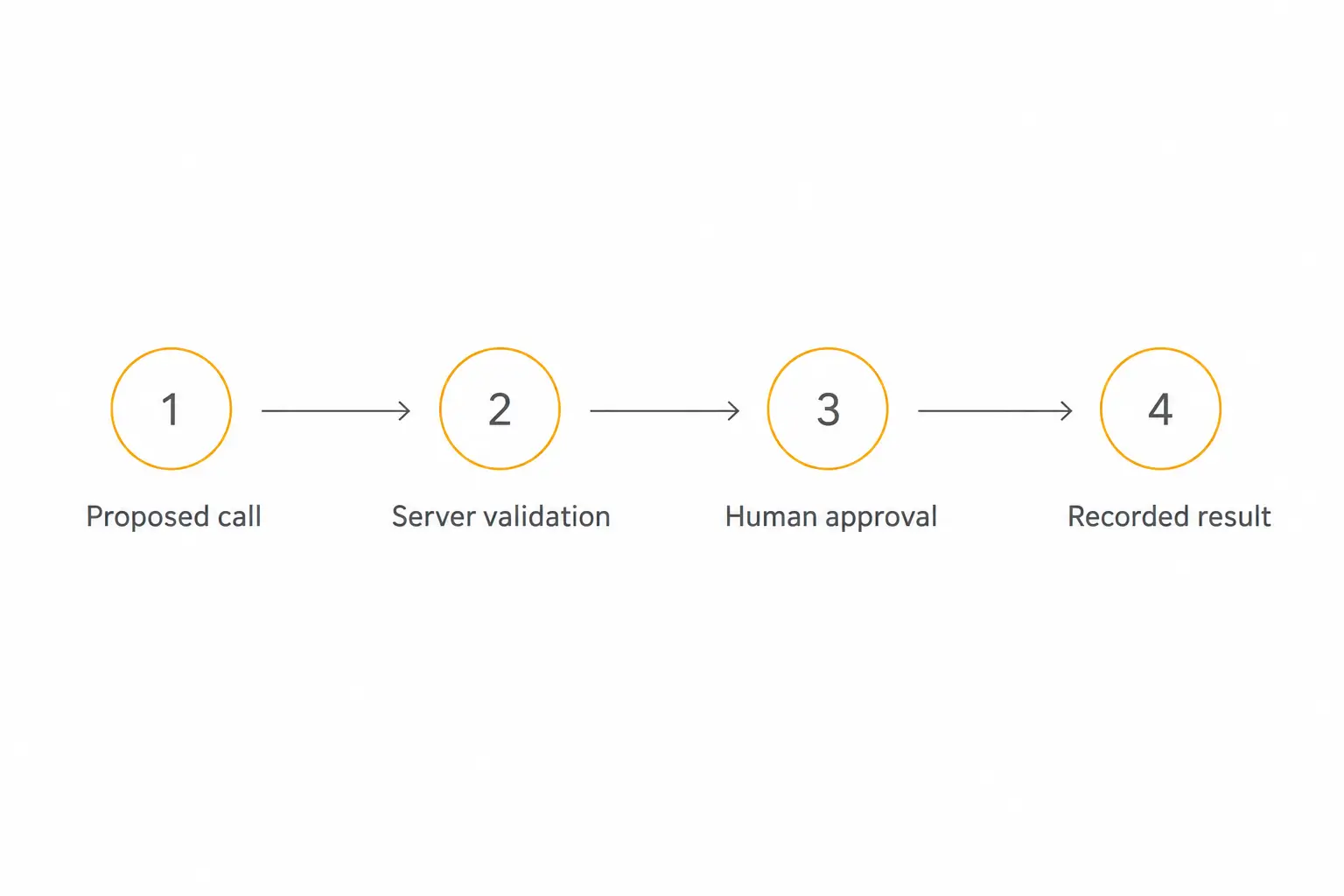
Google's function-calling guide separates the model's proposed function name and arguments from execution in your application. The application remains responsible for running the function and returning its result.
I would therefore grade a tool call in layers: the right function, correct arguments, authorized resource, acceptable timing, and a verified result. A well-formed JSON object only clears the first part of that inspection.
For the onboarding example, use a synthetic project with two similarly named clients. Ask for one client's scope, include an incomplete project identifier, and confirm the agent asks for clarification rather than reading the other record.
Next, simulate a tool timeout after the server accepted a draft-creation request. The retry should reconcile the existing draft by a durable operation identifier before it attempts another write.
That is a proposed application test, not a promise that the model implements idempotency. Put the duplicate-prevention rule in the execution layer and test it independently of the assistant's explanation.
- Reject resource IDs the authenticated user cannot access.
- Validate function arguments before execution.
- Require approval where the action changes a client's external state.
- Return an explicit failure when the requested operation did not happen.
- Save enough evidence to reconcile a timeout without guessing.
Pass evidence: the agent's completion statement matches the tool and record state, including failures. Our human approval guide helps decide where that gate belongs.
5. Test latency and reasoning within a bounded job
Argon supports low, medium, and high thinking levels, with medium as the default. Google's thinking documentation warns that thinking consumes the output budget: a run can reach its limit before returning a useful answer.
Keep those settings in the experiment record. A low-effort candidate and a high-effort baseline answer different economic questions from a comparison where both are configured for their best acceptable result.
I would measure time to first useful progress separately from time to an accepted brief. An early stream of text may reassure the user, but it does not make a late deliverable acceptable.
Google's long-decode guide says inputs, thinking, and output share a 1,048,576-token window. In the Interactions API, synchronous output is capped at 65,536 tokens; longer responses require background execution and an explicitly higher output limit.
For a short onboarding brief, I would begin without long decode. A larger ceiling is useful only if the job needs it, and a background response introduces another lifecycle to supervise.
Test the client-visible timeout, cancellation, and recovery path. If the browser disconnects while the provider is still working, the application should identify the existing run before offering a retry.
Set a proposed wall-clock budget before the trial and grade jobs that exceed it as late, even if their eventual prose is excellent. Our checkpoint and recovery guide covers the durable run record that makes this manageable.
6. Review the complete client-data path
The relevant question is which service, billing status, storage mode, and connected tools receive the data. A model name alone cannot answer that.
Google's Gemini API terms say paid-service prompts and responses are not used to improve Google's products. They also describe limited safety logging and potential transient storage or caching; this is not a blanket zero-retention or single-region guarantee.
Read those terms against your client's requirements and the contract for the actual service. If an enterprise agreement specifies different controls, record the agreement and applicable configuration rather than copying assumptions from the public API page.
For the pilot, use synthetic or appropriately approved material. Inventory every place it can land: application logs, model request history, uploaded files, retrieval stores, observability tools, and any export the reviewer downloads.
I would also rehearse a client switch inside the same browser session. Sign out of the synthetic first client, sign in as the second, and verify that no document, remembered preference, or pending job crosses the boundary. Test the retrieval layer and exported files as well as the visible conversation.
Give the reviewer a simple evidence packet: the request identifier, authorized client identifier, source versions, selected tools, and observed result. Keep sensitive document content out of routine screenshots and status messages. The purpose is to make an investigation possible without spreading the original material into more systems.
Then ask who can delete it and how deletion is verified. A clean chat history does not demonstrate that every downstream copy disappeared.
Keep external documents as evidence, rather than treating embedded instructions as authority. A malicious sentence inside a project PDF should not be able to expand tool permissions or change the destination of a client brief.
Pass evidence: an approved data map, tested client isolation, a documented retention choice, and an owner for deletion and incident handling. Our agent security guide gives the wider deployment context.
7. Preserve a working route back
A rollback should name the complete configuration you can restore: model, prompt, knowledge version, tool schema, permissions, and application adapter. Saving only the old model string leaves too much room for incompatible state.
Google's migration checklist calls out behavior changes including ignored sampling parameters and unsupported explicit caching. Review those settings deliberately; copying an old request and changing its model ID can conceal an ineffective control.
I would keep candidate and baseline histories separate during evaluation. If you later change the model in an active conversation, verify that the adapter can represent its state correctly and that no pending tool operation is lost.
Our model-routing guide makes the wider point: an expensive model can earn specific tasks without taking over all traffic. A narrow Argon route for difficult document work may be enough.
For a no-code client product, Pickaxe's Agent Builder documentation describes configuring the model alongside knowledge and Actions, then testing in Preview. I would use the same frozen cases there and in the final deployment before changing a client's setup.
This article does not verify Argon availability inside Pickaxe. Check the live model catalog and your workspace's model picker; public Google API availability does not establish an integration in another platform.
A proposed 21-case adoption pilot
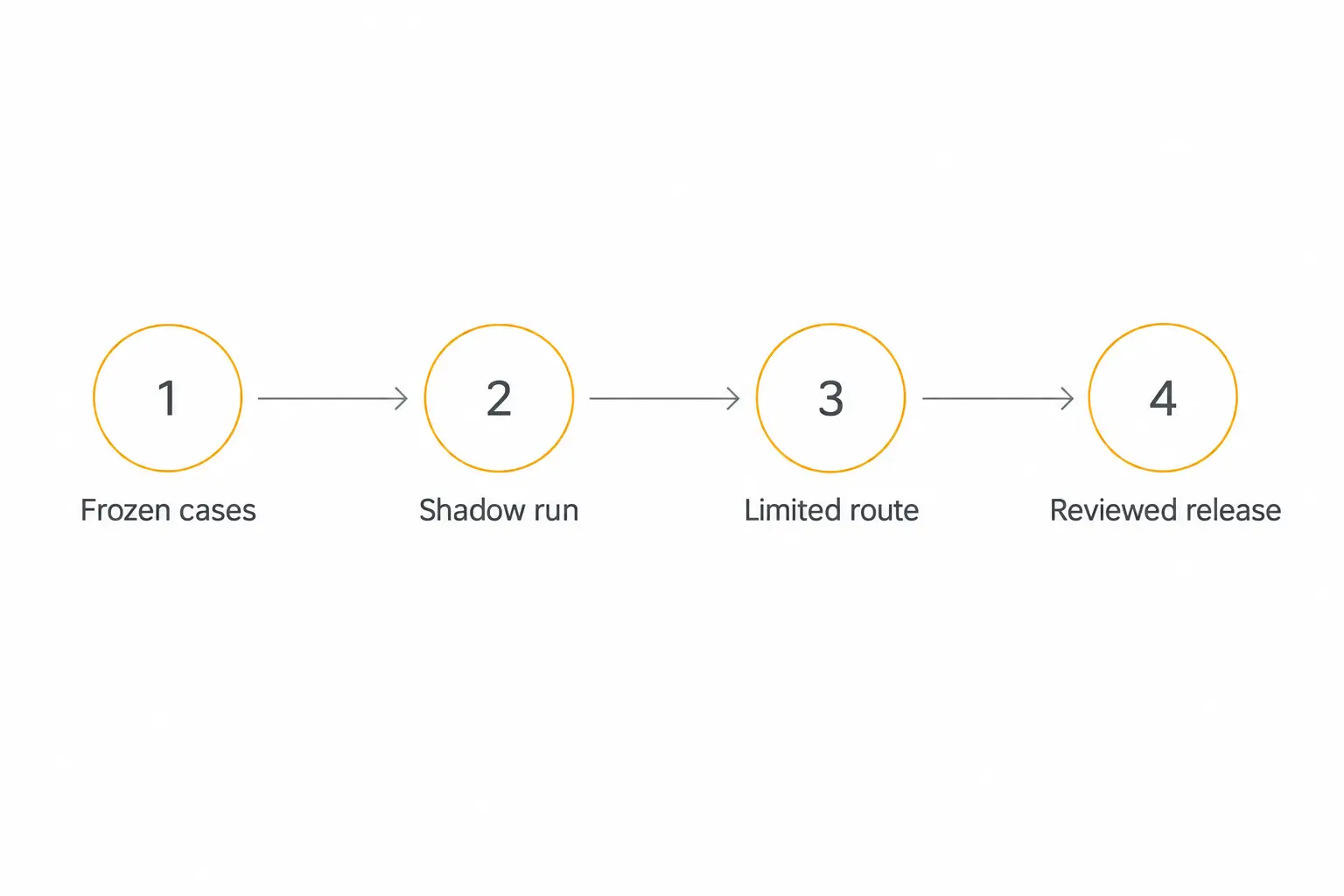
I would start with seven families of three synthetic cases each. This is a proposed starting set, not a statistically validated sample or a reported test result.
| Family | Three proposed variations | Evidence to inspect |
|---|---|---|
| Normal brief | Complete scope; short scope; long scope | Accurate next step with citations |
| Missing facts | No deadline; unclear owner; absent budget | Specific clarification, no invented fact |
| Conflicting sources | Old scope; duplicate record; revised date | Current authorized source identified |
| Access boundary | Wrong client; restricted file; injected instruction | No unauthorized read or action |
| Tool failure | Timeout; rejected argument; unavailable service | Honest status and bounded recovery |
| Cost and latency | Cold request; nearby repeat; deeper reasoning | Usage, cache hits, accepted-result time |
| Recovery | Disconnect; cancel; restore baseline | Known run state and no duplicate effect |
For each case, write the expected outcome before running either model. Include facts the answer must contain, actions it must avoid, and the record that would demonstrate success.
Have a reviewer score outputs without seeing which model produced them when practical. Keep the tool transcript available for a second pass, because a polished brief can hide a wrong lookup.
When a failure appears, preserve the original case. Add a nearby variation after fixing the cause so the change has to generalize beyond one memorized prompt.
Score accepted work, including review effort
My scorecard would separate factual quality, action correctness, boundary compliance, latency, and total cost. Do not compress a permission failure into a harmless-looking average.
Use a hard gate for unauthorized access or an unapproved external action. For ordinary quality differences, have the client or delivery owner define what counts as a usable brief before inspecting the candidate's results.
Cost per accepted job equals the trial's complete operating cost divided by the jobs that meet the acceptance contract. Include failed attempts and paid retries in the numerator.
If a reviewer must rewrite every result, add that review effort to the decision. A cheaper token subtotal can still produce a more expensive service once human correction is included.
Record failure categories separately. Missing citations may call for better source handling; wrong-client access requires an authorization fix; repeated timeouts may require a different runtime or a narrower job.
Write a small release contract
Before expanding traffic, I would put the decision in one short record that a teammate can inspect. The following fields are a proposed template, rather than a vendor feature list.
- Route: which requests may use Argon, and which retain the baseline.
- Configuration: endpoint, model ID, reasoning level, output limit, prompt and source versions.
- Authority: allowed resources and tools, approval requirements, and execution owner.
- Budget: spending ceiling, wall-clock limit, and retry policy.
- Acceptance: required evidence, reviewer, and categories that block release.
- Recovery: cancellation, reconciliation, baseline restoration, and client communication owner.
Start with shadow evaluation where a person still owns the real deliverable. A limited route should follow only after its failure handling works and the owner accepts the observed quality, cost, and timing.
Make the rollback rehearsal concrete. Begin a synthetic job on the candidate, interrupt it before any external write, restore the baseline configuration, and verify that the application either resumes safely or clearly asks for a fresh start. The operator should be able to identify which result belongs to which configuration.
Do the rehearsal before a client needs it. Keep the accepted baseline artifacts alongside the release record so a teammate can compare behavior without reconstructing an old prompt from memory. Assign someone to inspect the first limited-route failures and decide whether the route should remain enabled.
Recheck the contract after changing tools or knowledge sources. The evidence from a read-only document trial does not authorize a later rollout with email or payment access.
Turn one workflow into a useful agent
Keep your knowledge, Actions, and acceptance cases together.
Questions I would settle before switching
Can I use a Gemini app subscription to run client agents?
App access and API access are separate purchasing paths. Verify billing and quotas for the endpoint that will serve the client; do not assume a successful chat establishes a production entitlement.
Does the million-token window mean every task should use it?
No. Set the context and output allowance around the job you need to finish, then inspect truncation, cost, and latency. A bigger ceiling does not provide source selection, permission checks, or an acceptance test.
Should I replace my current model if Argon wins a demo?
I would expand only the route supported by the trial. A strong research brief says little about a fast support answer or an action-heavy workflow with different failure costs.
What if the trial is inconclusive?
Keep the baseline and identify the missing evidence. A documented hold is a useful outcome when it prevents an unnecessary migration and leaves a clear next experiment.
My next step would be one accepted brief
I would give Argon one bounded workflow, frozen evidence, an explicit budget, and a tested rollback. Then I would ask whether the complete job improved, including review effort and failures.
If you are building a client-facing product, Pickaxe can provide a place to configure and test an agent before you package it for users. Start with one useful agent, verify its available models, and let a repeatable acceptance test guide the next change.