

Here's a number that should get every marketer's attention: 78% of marketers are now using AI tools in their daily workflow. That's according to HubSpot's 2026 Marketing Trends Report. If you're still doing everything manually, you're not just behind — you're competing against people who reclaim 6+ hours every week with AI.
But here's the thing. Most "AI tools for marketers" listicles just dump 50 tools on you with zero context. They don't tell you which ones are actually worth your time, which ones overlap, or which ones make sense for your specific workflow.
I went through the major AI tools relevant to marketers right now — content creation, SEO, email, social, video, automation, and analytics. Some of these are purpose-built for marketing teams. Others are general-purpose tools that happen to be incredibly useful for marketing work.
This is my honest breakdown of the top 15 AI tools for marketers in 2026, organized by what they actually do for your campaigns. No filler. No tools that sound cool but don't deliver.
Quick Comparison: Top 15 AI Tools for Marketers
Here's the overview so you can jump straight to what matters for your workflow.
| Tool | Category | Best For | Starting Price |
|---|---|---|---|
| Pickaxe | AI Agent Builder | Building & monetizing client-facing AI marketing tools | Free / $16/mo |
| Jasper | AI Content Creation | Marketing copy at scale with brand voice | $39/mo |
| ChatGPT | General AI Assistant | Brainstorming, research, first drafts | Free / $20/mo |
| Surfer SEO | Content Optimization | On-page SEO scoring and content briefs | $79/mo |
| Semrush | SEO Suite | Keyword research, competitive analysis, content marketing | $139/mo |
| HubSpot | Marketing CRM | AI-powered CRM, email, and campaign management | Free / $20/mo |
| Klaviyo | Email Marketing | AI-driven email and SMS campaigns | Free / $20/mo |
| Canva | AI Design | Graphics, social posts, presentations | Free / $13/mo |
| Gumloop | AI Automation | Building LLM-powered workflows without code | Free / $97/mo |
| Zapier | Workflow Automation | Connecting 7,000+ apps with AI actions | Free / $20/mo |
| Buffer | Social Media | AI-assisted scheduling and analytics | Free / $5/mo |
| Runway | AI Video | Video generation and editing for ads | Free / $12/mo |
| Brand24 | Social Listening | Brand monitoring and sentiment analysis | $79/mo |
| Clay | Data Enrichment | AI outreach, lead scoring, personalization | Free / $134/mo |
| Notion AI | AI Workspace | Project management, content planning, team knowledge | Free / $10/mo |
Now let's dig into each one.
1. Pickaxe — Build AI Marketing Agents You Can Actually Sell
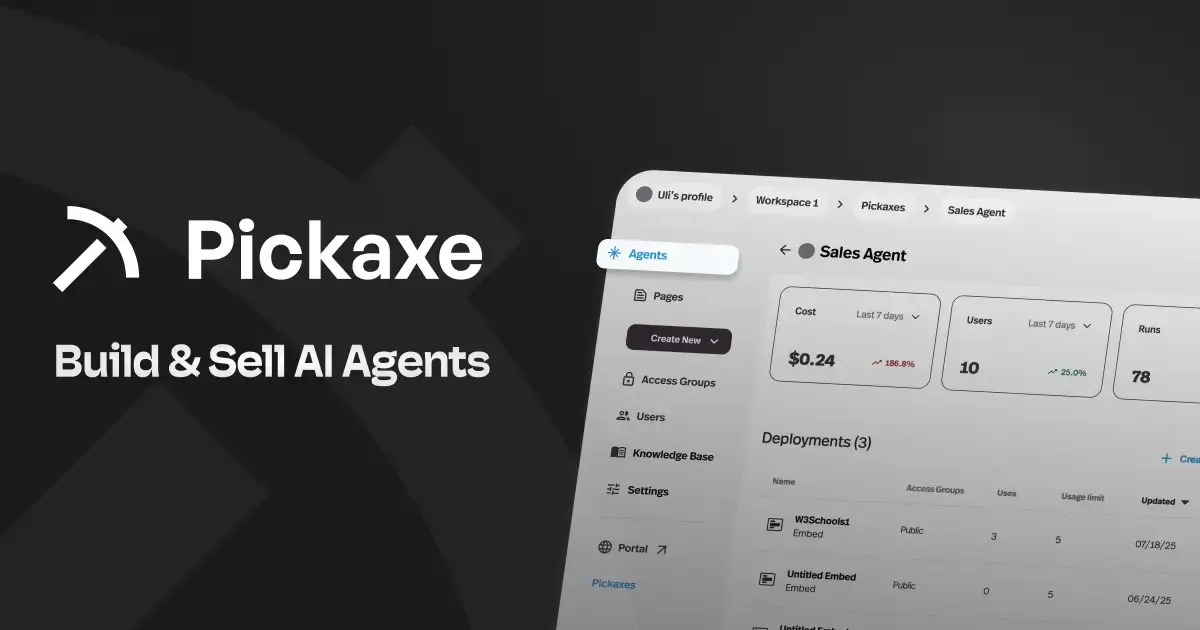
Most of the tools on this list help you use AI. Pickaxe helps you build and sell AI-powered marketing tools — which is a completely different game.
Think of it as the Shopify for AI agents. You create custom AI agents (like a brand voice generator, a content brief builder, or a lead qualifier) and deploy them through branded portals. No code required.
What makes it relevant for marketers specifically is the monetization layer. If you're a consultant or agency, you can package your marketing expertise into AI tools and charge for access — subscriptions, pay-per-use, or one-time payments. Billing, access control, and usage tracking are built in.
What Stood Out
- No-code agent builder with customizable instructions, knowledge base, and actions
- Portal deployment — host multiple agents in a branded hub on your own domain
- Built-in monetization through Stripe with subscription or pay-per-use pricing
- Model-agnostic — switch between AI models without rebuilding anything
- Actions that connect to external APIs, so your agents can actually do things (send emails, update CRMs, trigger workflows)
- SOC2, GDPR, and CCPA compliant
What Could Be Better
- The learning curve is steeper than a simple chatbot builder — but that's because it does more
- Credits-based pricing takes a minute to understand
Pricing
Gold plan starts at $16/month (billed annually) and includes white-labeling, custom domains, and 3 actions per agent. Pro is $49/month for API access and unlimited features. There's also a free tier to get started.
If you're a marketing agency looking to productize your expertise, Pickaxe is worth exploring.
2. Jasper — The AI Content Engine for Marketing Teams
Jasper has been in the AI marketing space longer than most. It started as an AI copywriter and has evolved into what they call an "agent workspace" for marketing teams.
The core value prop is simple: it learns your brand voice and produces marketing content at scale. Blog posts, email campaigns, ad copy, social media — Jasper can handle the volume that would normally require a full content team.
What Stood Out
- Brand Voice feature learns your tone, style, and terminology from existing content
- 100+ AI agents for specific marketing tasks (ad headlines, product descriptions, email sequences)
- Campaign workflows that turn a brief into multi-channel content
- Integrations with Surfer SEO, Google Docs, and major CMS platforms
- Team collaboration features with role-based access
What Could Be Better
- The pricing is steep for solopreneurs — it's really built for teams
- Output quality still needs human editing, especially for technical topics
- Can feel overwhelming with so many templates and agents
Pricing
Creator plan starts at $39/month per seat. Pro is $59/month per seat with additional brand voices and team features. Enterprise pricing is custom.
3. ChatGPT — The Swiss Army Knife Every Marketer Needs
If you're a marketer and you're not using ChatGPT yet, I genuinely don't know what you're waiting for. It's the most flexible general-purpose AI tool available.
For marketing specifically, ChatGPT excels at the thinking work: brainstorming campaign angles, drafting copy, synthesizing customer research, building personas, writing email sequences, and answering the random "how do I..." questions that come up 50 times a day.
What Stood Out
- GPT-4o and o3 models handle complex reasoning, image analysis, and long-form content
- Custom GPTs let you build specialized marketing assistants (persona generators, content brief creators)
- Canvas mode for collaborative document editing
- Web browsing and image generation built in
- Plugin ecosystem for extending capabilities
What Could Be Better
- No native brand voice training — you have to prompt it every time (or use custom instructions)
- Output can be generic without very specific prompting
- No built-in team collaboration or workflow features
Pricing
Free tier available. Plus is $20/month for GPT-4o access. Team plan is $25/month per user. Enterprise pricing is custom.
4. Surfer SEO — Make Your Content Actually Rank
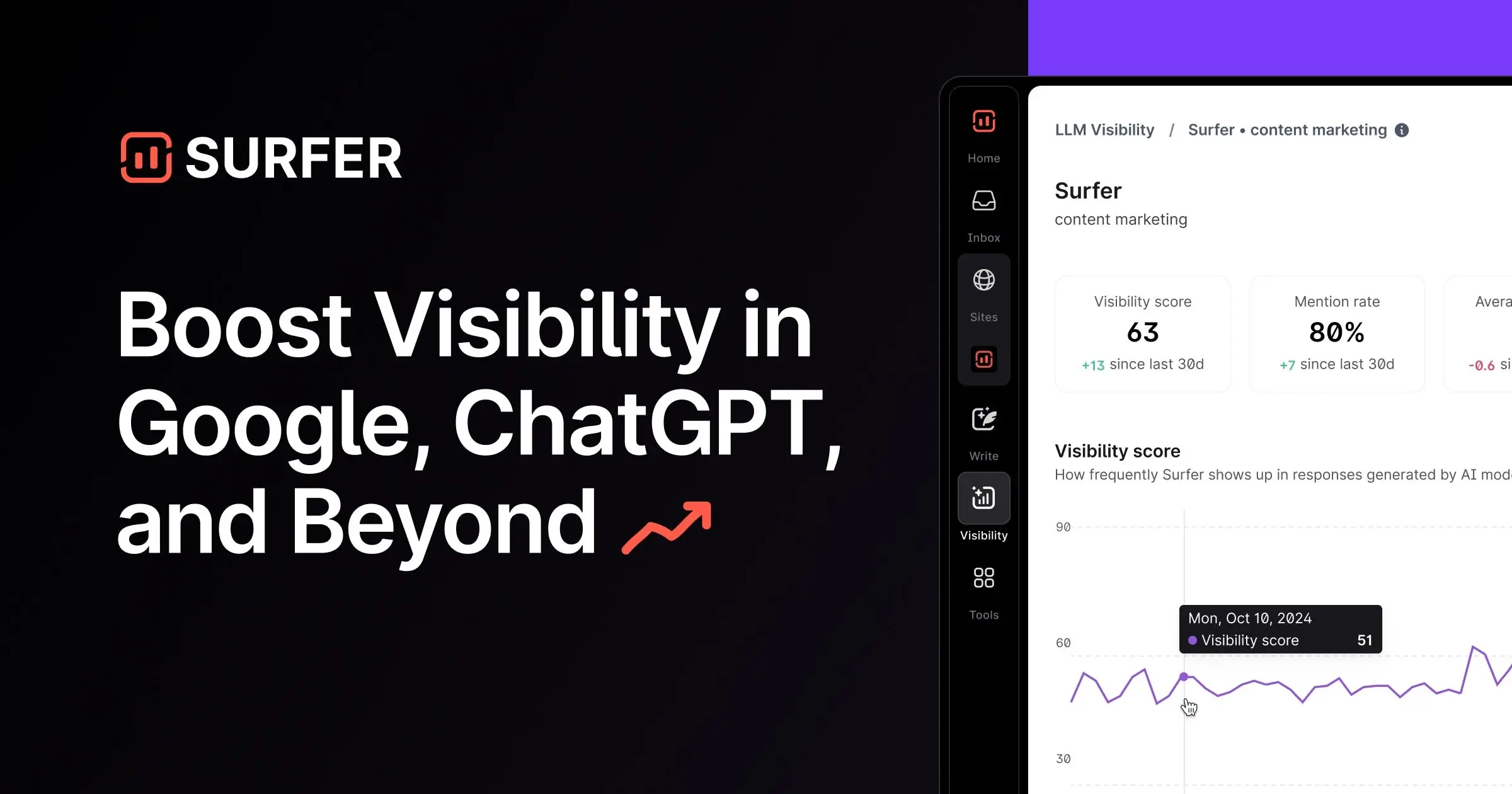
Writing great content is only half the battle. Surfer SEO handles the other half — making sure it actually shows up in search results.
Surfer analyzes the top-ranking pages for your target keyword and gives you a real-time content score as you write. It tells you exactly what terms to include, how long your article should be, and how to structure your headings. It's like having an SEO consultant watching over your shoulder.
What Stood Out
- Content Editor with real-time SEO scoring as you write
- SERP Analyzer that breaks down what's working for top-ranking pages
- AI-generated outlines based on competitive analysis
- Integrates directly with Jasper, Google Docs, and WordPress
- Audit tool for optimizing existing content (not just new articles)
What Could Be Better
- Pricing can add up quickly if you're publishing high volumes
- Keyword suggestions can sometimes feel formulaic — use judgment alongside the tool
- The AI writing feature isn't as strong as dedicated AI writers
Pricing
Essential plan starts at $79/month for 30 articles. Scale is $175/month with more articles and audits. Enterprise is custom.
5. Semrush — The All-in-One SEO and Content Marketing Suite
Semrush is the toolkit that marketing teams tend to keep renewing year after year. It's not cheap, but it consolidates keyword research, competitive analysis, content planning, and technical SEO into one platform.
Their AI features have gotten significantly better in 2026. ContentShake AI generates SEO-optimized articles with built-in Semrush data, and their AI-powered keyword clustering helps you build content strategies instead of chasing individual keywords.
What Stood Out
- Keyword Magic Tool with AI clustering for topic strategy
- ContentShake AI — generates full articles using Semrush's keyword and competitor data
- Competitive intelligence — see what competitors rank for, their ad spend, and their backlinks
- Position tracking with AI-powered insights on ranking changes
- Content marketing toolkit for planning, writing, and measuring
What Could Be Better
- The price tag is heavy for small businesses — starts at $139/month
- Interface can be overwhelming with so many features
- ContentShake AI articles still need significant editing
Pricing
Pro starts at $139/month. Guru is $249/month with content marketing features. Business is $499/month for agencies and large teams.
6. HubSpot — AI-Powered Marketing That's Actually Integrated

If you already use HubSpot for your CRM, the AI features they've baked in are genuinely useful. Breeze AI is their intelligence layer that connects across marketing, sales, and service hubs.
The key advantage is context. Because HubSpot has your contacts, your email history, your deals, and your content — the AI recommendations are grounded in your actual data, not generic suggestions.
What Stood Out
- Breeze AI for content generation, email writing, and social media posts
- AI-powered lead scoring based on your CRM data
- Predictive analytics for campaign performance forecasting
- AI chatbot builder for website lead capture
- Content remix — turn blog posts into social posts, emails, and landing pages automatically
What Could Be Better
- The best AI features require higher-tier plans
- You're locked into the HubSpot ecosystem to get the most value
- AI content generation isn't as sophisticated as dedicated tools like Jasper
Pricing
Free CRM with basic AI features. Marketing Hub Starter is $20/month. Professional is $890/month. Enterprise is $3,600/month.
7. Klaviyo — AI Email Marketing That Knows Your Customers
Klaviyo is the email marketing platform that e-commerce brands tend to swear by. What sets it apart from Mailchimp or ConvertKit is the depth of its AI-powered personalization.
It doesn't just send emails. It predicts when each subscriber is most likely to buy, segments audiences automatically, and generates personalized product recommendations based on browsing and purchase behavior.
What Stood Out
- Predictive analytics — CLV prediction, churn risk, and next purchase date per customer
- AI-powered segmentation that updates dynamically based on behavior
- Smart send time optimization per subscriber
- AI subject line and content generation
- SMS + email from one platform with unified data
What Could Be Better
- Most powerful features are geared toward e-commerce — less useful for B2B
- Gets expensive as your list grows
- The learning curve for advanced flows is steep
Pricing
Free for up to 250 contacts. Email plan starts at $20/month and scales with list size. SMS is additional.
8. Canva — AI Design for Marketers Who Aren't Designers
Canva has always been the go-to design tool for non-designers. But their AI features in 2026 have turned it into something much more powerful — it's now a full creative suite with AI generation, editing, and brand management.
For marketers, the biggest win is speed. Need a set of social media graphics, a presentation deck, or an email banner? Canva's AI can generate, resize, and brand-match designs in minutes.
What Stood Out
- Magic Design — describe what you need and Canva generates multiple options
- Magic Resize — adapt one design to every platform format instantly
- Brand Kit with AI-enforced consistency across all designs
- Background remover, AI image generation, and text-to-video
- Massive template library with 250,000+ marketing templates
What Could Be Better
- AI-generated images can look generic — fine for social posts, not ideal for hero visuals
- Pro features require the paid plan
- Complex designs still need a real designer
Pricing
Free plan with basic features. Canva Pro is $13/month per person. Teams plan is $10/month per person (min 3). Enterprise is custom.
9. Gumloop — AI Workflow Automation That Actually Makes Sense
Gumloop is the tool I think most marketers haven't heard of yet — but should. It lets you connect any LLM (ChatGPT, Claude, Gemini) to your tools and build AI-powered workflows without writing code.
Think of it as what happens when Zapier meets ChatGPT. You can build things like automated content pipelines, lead enrichment workflows, competitor monitoring bots, and SEO analysis automations — all with drag-and-drop.
What Stood Out
- Visual workflow builder with LLM nodes — chain AI steps together
- MCP integration for connecting to thousands of tools
- Web scraping built in — pull competitor data, pricing pages, social posts
- Continuous agents that run on schedule
- Used by teams at Webflow, Instacart, and Shopify
What Could Be Better
- Still relatively new — community and documentation are growing
- Pro pricing ($97/mo) is a jump from the free tier
- Complex workflows take time to set up and debug
Pricing
Free plan available. Pro starts at $97/month. Enterprise pricing is custom.
Build AI marketing tools tailored to your brand
Pickaxe lets marketing teams create custom AI agents with brand voice, knowledge bases, and campaign workflows.
10. Zapier — The OG Automation Platform, Now With AI
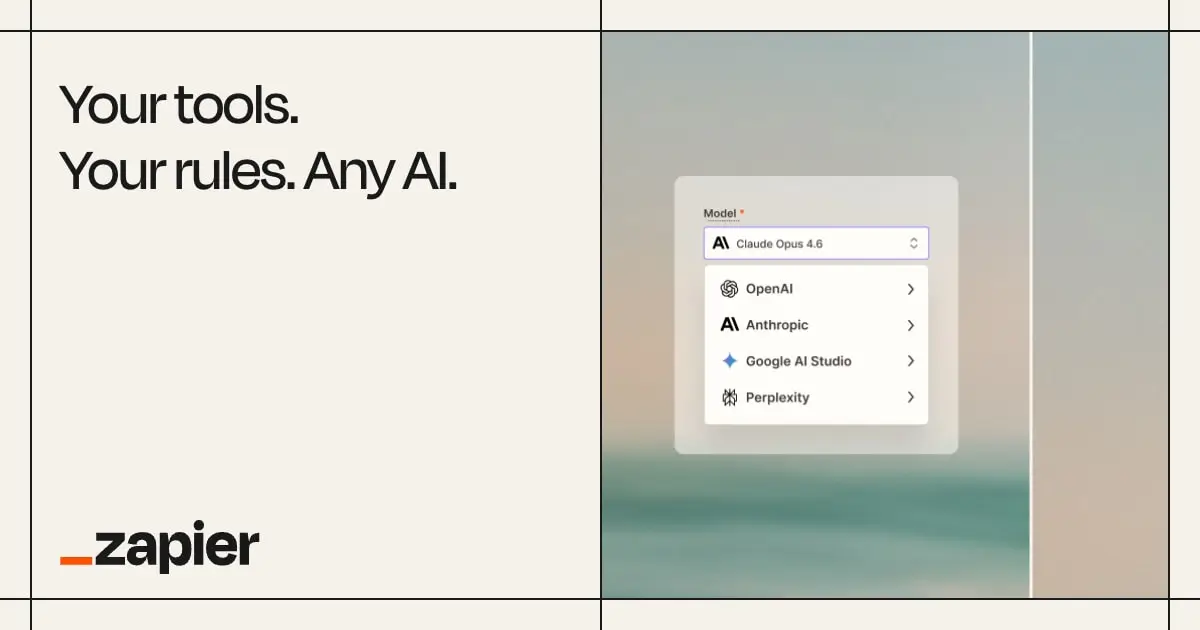
Zapier doesn't need much introduction. It connects 7,000+ apps and lets you automate the repetitive tasks that eat up your day. What's new is the AI layer they've added on top.
Zapier's AI features now let you build automations using natural language, add AI processing steps to any workflow, and create AI-powered chatbots that connect to your entire tool stack.
What Stood Out
- 7,000+ integrations — if you use it, Zapier connects to it
- AI actions that add GPT processing to any automation step
- Natural language automation builder — describe what you want and Zapier builds it
- Tables feature for lightweight database + automation combos
- Proven, reliable infrastructure — this isn't a startup beta
What Could Be Better
- Task-based pricing can get expensive for high-volume workflows
- AI capabilities are still catching up to dedicated tools like Gumloop
- Complex multi-step zaps can be fragile and hard to debug
Pricing
Free plan with 100 tasks/month. Starter is $20/month for 750 tasks. Professional is $49/month. Teams and Enterprise plans available.
11. Buffer — AI Social Media Management That Stays Simple
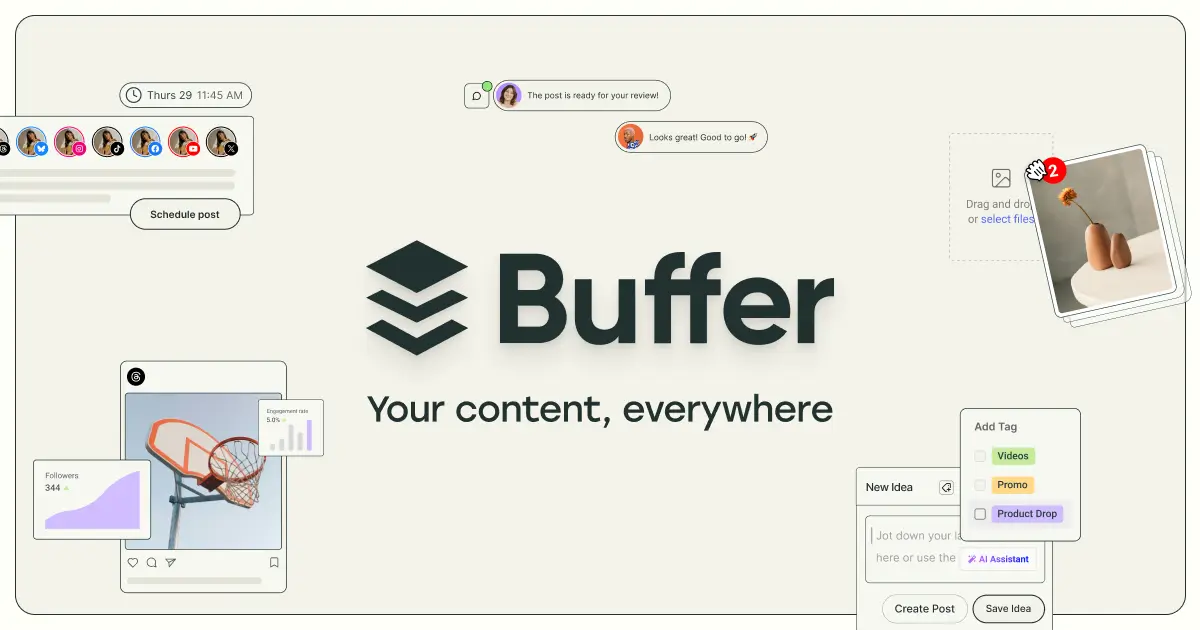
Buffer is the social media management tool for marketers who don't want enterprise complexity. It's clean, focused, and their AI assistant genuinely helps with the hardest part of social — coming up with what to post. Reddit is its own problem, since generic promotional copy gets removed fast — building a Reddit post generator covers how to write for each subreddit instead.
Where bigger platforms like Hootsuite or Sprout Social try to be everything, Buffer stays in its lane. Schedule posts, analyze performance, and use AI to generate content ideas and repurpose existing content.
What Stood Out
- AI Assistant generates post ideas, rewrites for different platforms, and suggests hashtags
- Start Page — a simple link-in-bio builder (no extra tool needed)
- Clean analytics with AI-powered best-time-to-post suggestions
- Supports Instagram, TikTok, LinkedIn, X, Facebook, Pinterest, Threads, Bluesky, and YouTube
- Affordable — legitimately useful even on the free plan
What Could Be Better
- No social listening or monitoring features
- Analytics are basic compared to enterprise tools
- No inbox management for responding to comments/DMs
Pricing
Free plan for 3 channels. Essentials is $5/month per channel. Team is $10/month per channel.
12. Runway — AI Video That Doesn't Require a Film Degree

Video content drives the highest engagement across almost every platform. The problem? Creating quality video is expensive and time-consuming. Runway is changing that equation.
Runway's Gen-4 model can generate video from text prompts, images, or existing video clips. For marketers, this means you can prototype ad creatives, create social video content, and produce product demos without a video team.
What Stood Out
- Gen-4 text-to-video and image-to-video — the quality has gotten surprisingly good
- Video editing suite with AI-powered tools (background removal, motion tracking, green screen)
- Act-One — generate expressive character performances from a single reference
- Great for prototyping ad concepts before investing in full production
- Exports in multiple formats and aspect ratios
What Could Be Better
- Generated video still has a "that's AI" quality for careful viewers
- Limited generation credits on lower plans
- Not a replacement for professional video production — more of a supplement
Pricing
Free plan with limited credits. Standard is $12/month with 625 credits. Pro is $28/month. Enterprise is custom.
13. Brand24 — AI-Powered Social Listening That Catches What You'd Miss
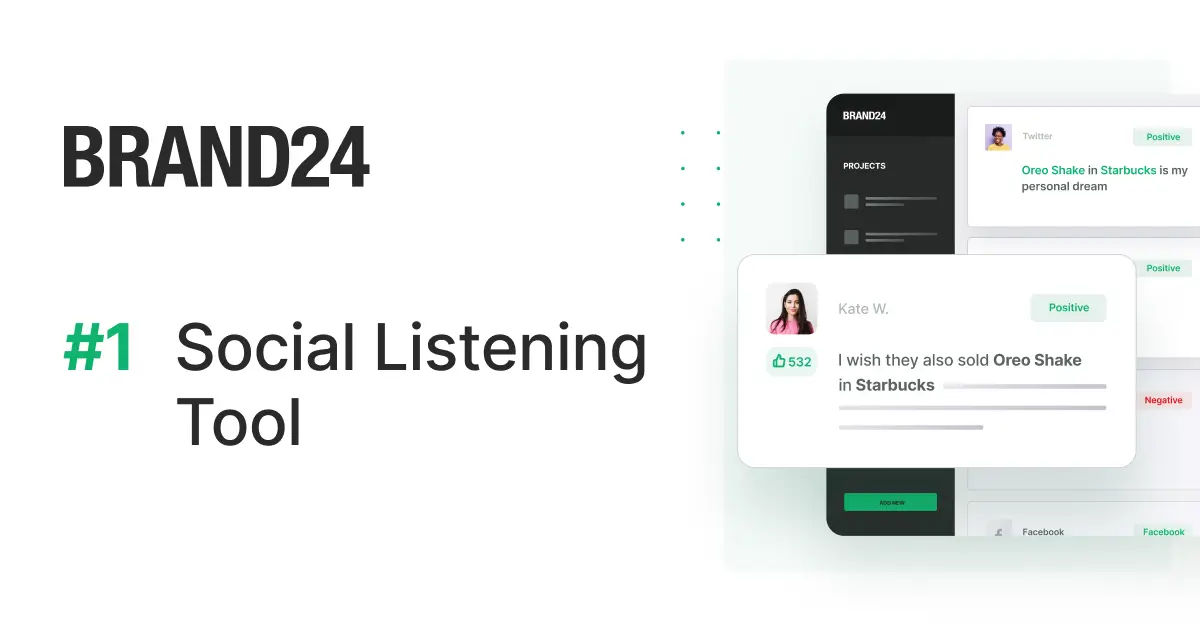
You can't respond to what you don't see. Brand24 monitors mentions of your brand, competitors, and industry keywords across social media, blogs, news sites, forums, podcasts, and review sites — and uses AI to surface what actually matters.
The AI features go beyond simple alerts. Sentiment analysis tells you how people feel. Anomaly detection flags sudden spikes. And the AI insights feature summarizes trends so you don't have to read through thousands of mentions.
What Stood Out
- AI-powered sentiment analysis across all mention sources
- Anomaly detection — instant alerts when mention volume or sentiment changes dramatically
- AI Topic Analysis that groups conversations by theme
- Influencer identification — find who's talking about your space
- Competitor tracking and share-of-voice analysis
What Could Be Better
- Pricing is based on mention volume — can get expensive for popular brands
- Historical data is limited on lower plans
- Some social platforms limit the data Brand24 can access
Pricing
Individual plan starts at $79/month. Team is $149/month. Pro is $199/month. Enterprise is $399/month.
14. Clay — AI Data Enrichment and Outreach on Steroids
Clay is what happens when you give marketers a spreadsheet that can pull data from 100+ sources, enrich it with AI, and power hyper-personalized outreach campaigns.
It's particularly powerful for B2B marketers and growth teams. Instead of manually researching leads, Clay automatically enriches contact data with company info, tech stack, funding status, social profiles, and more — then uses AI to write personalized first lines for outreach.
What Stood Out
- 100+ data enrichment providers in a waterfall model (tries each source until it finds the data)
- AI research agent that can browse the web and summarize findings per lead
- AI message writer for personalized email and LinkedIn outreach at scale
- Integrates with Outreach, Apollo, HubSpot, Salesforce, and most CRMs
- Spreadsheet-style interface that's intuitive for marketers
What Could Be Better
- Credit-based pricing can burn through fast if you're enriching large lists
- Learning curve for advanced Clay tables and formulas
- Some data sources are more reliable than others
Pricing
Free plan with 100 credits/month. Starter is $134/month. Explorer is $314/month. Pro is $720/month.
15. Notion AI — Your AI-Powered Marketing Command Center
Notion was already the productivity darling of marketing teams. With Notion AI layered on top, it's become something closer to a marketing command center that can actually think.
The AI features work across your entire workspace. Ask questions about data in your docs, databases, and wikis. Auto-fill tables with AI-generated content. Summarize meeting notes. Draft content briefs. It's not a separate tool — it's intelligence woven into your existing workflow.
What Stood Out
- Q&A across your workspace — ask questions about anything in your Notion
- AI autofill in databases for content calendars and campaign tracking
- Writing assistance — summarize, translate, improve tone, extract action items
- Connected wikis — build a team knowledge base that AI can search
- Templates for marketing calendars, campaign briefs, and content pipelines
What Could Be Better
- AI add-on costs extra on top of the base plan
- AI responses are limited to what's in your workspace — no web browsing
- Can slow down with very large databases
Pricing
Free plan with limited AI. Plus is $10/month per member. Business is $18/month per member. AI add-on is included in paid plans.
How to Choose the Right AI Tools for Your Marketing Stack
Fifteen tools is a lot. You don't need all of them. Here's how I'd think about building your stack:
If you're a solo marketer or freelancer: Start with ChatGPT for ideation, Canva for design, Buffer for social, and Surfer SEO if content is your primary channel. That's a powerful stack for under $120/month. If your freelance work runs wider than marketing, the full freelancer tool list adds proposals, invoicing and client comms on top.
If you're running a marketing team: Jasper or ChatGPT Team for content, Semrush for SEO strategy, HubSpot or Klaviyo for email (depending on whether you're B2B or e-commerce), and Zapier to glue everything together.
If you're an agency or consultant: Everything above plus Pickaxe for building AI-powered tools you can white-label and sell to clients. Clay is also invaluable for outreach and lead enrichment.
If automation is your biggest need: Gumloop for complex AI workflows, Zapier for simple integrations, and Brand24 for automated monitoring.
AI Marketing Tool Trends to Watch in 2026
A few patterns I noticed while researching this:
The shift from content generation to content orchestration. The tools winning right now aren't just the ones that write faster — they're the ones that help you plan, distribute, and measure across channels. Jasper's campaign workflows and HubSpot's content remix features are good examples.
Agentic AI is replacing simple automation. Tools like Gumloop and AI integration platforms are moving beyond "if this, then that" toward AI agents that can make decisions, browse the web, and execute multi-step tasks. This is a fundamental shift for marketing operations.
Personalization at scale is finally real. Klaviyo's predictive analytics, Clay's AI research agent, and HubSpot's AI lead scoring are making it possible to deliver personalized experiences to thousands of prospects without an army of SDRs.
The marketing agency model is evolving. Platforms like Pickaxe let agencies white-label AI tools for clients, creating recurring revenue streams beyond traditional retainers. If you're running an agency, the AI agent agency playbook is worth a read.
FAQ: AI Tools for Marketers
What is the best AI tool for marketing in 2026?
There's no single "best" — it depends on your needs. Jasper is the best for content creation at scale. Surfer SEO is the best for content optimization. Klaviyo is the best for e-commerce email. For a versatile starting point, ChatGPT covers the most ground. We sorted the wider field by the job you are actually doing in our roundup of the top AI writing tools.
How much do AI marketing tools cost?
You can build a solid AI marketing stack for $50-200/month. Many tools offer free tiers. A full enterprise stack with Semrush, HubSpot, and Jasper can run $500-1,000/month or more.
Will AI replace marketers?
No. AI replaces tasks, not roles. Marketers who use AI will replace marketers who don't. According to recent research, AI campaigns launch 75% faster and generate 47% better click-through rates — but they still need human strategy, creativity, and judgment.
What AI tools do marketing agencies use?
Most agencies combine Jasper or ChatGPT for content, Semrush for SEO, HubSpot for CRM, Zapier for automation, and increasingly Pickaxe for building white-labeled AI tools they can sell to clients as managed services.
How do I start using AI in my marketing?
Start with your biggest time sink. If it's content, try Jasper or ChatGPT. If it's SEO, try Surfer SEO. If it's email, try Klaviyo. Don't try to AI-everything at once. Pick one workflow, automate it, measure the results, and expand from there.
Bottom Line
The AI marketing tool landscape in 2026 is genuinely impressive. The tools are more capable, more integrated, and more accessible than ever.
But the marketers winning aren't the ones using the most tools. They're the ones using the right tools in the right workflows. Start with one or two from this list, get them working well, and build from there.
If you're an agency or consultant looking to go beyond just using AI and start selling AI-powered services, Pickaxe is worth a look. It's the fastest way to turn your marketing expertise into products your clients will pay for.