

I've watched the AI sales agents category go from a novelty to a genuine budget line item in about eighteen months. In 2026, "hire an AI SDR" is a real sentence people say in real pipeline meetings.
So I went looking. I dug into the platforms everyone's talking about — the fully autonomous ones that promise to replace a human rep, the copilots that sit next to your team, and the flexible builders you shape yourself — to figure out which actually earn their keep.
Here's the honest headline up front: the best AI sales agents in 2026 aren't the ones that automate the most. Outbound volume has roughly sextupled since AI SDRs showed up, and reply rates have dropped by about a third. The tools that win are the ones that do the heavy research and signal detection at scale, then let a human add judgment before anything sends.
Below are the ten AI SDR tools I'd actually shortlist, what each is genuinely good at, where it falls short, and roughly what it costs. Then I'll show you the option most people overlook: building your own.
If the words "autonomous agent" still feel fuzzy, my guide to the levels of AI agent autonomy is the perfect companion to this piece — it's exactly the lens you need to choose between "copilot" and "full autopilot" tools below.
The Best AI Sales Agents in 2026 at a Glance
Here's the whole shortlist in one table before the deep dives.
| Tool | Best for | Autonomy style | Starting price (approx.) |
|---|---|---|---|
| 11x (Alice) | Enterprise autonomous outbound | Full autopilot | Custom / enterprise |
| Artisan (Ava) | All-in-one outbound replacement | Autopilot + copilot | ~$1,500/mo |
| AiSDR | SMBs wanting transparent pricing | Autopilot | ~$900/mo |
| Qualified (Piper) | Inbound / website conversion | Autopilot on your site | Custom / enterprise |
| Regie.ai | AI-written sequences at scale | Autopilot + copilot | Custom |
| Clay | Data enrichment + GTM engineering | Copilot / orchestration | Free; paid ~$149/mo |
| Apollo.io | All-in-one data + outreach | Copilot | Free; paid ~$49/user/mo |
| Relevance AI | Custom no-code sales agents | You choose per agent | Free; paid ~$19/mo |
| Salesforce Agentforce | Salesforce-native teams | Autopilot in-CRM | Consumption / custom |
| Amplemarket (Duo) | Human-in-the-loop copilot | Copilot | Custom |
1. 11x — Autonomous Digital Workers for Sales
11x is one of the loudest names in the category, and for good reason: its digital worker "Alice" is built to run end-to-end outbound on its own — prospecting, research, multichannel outreach, and follow-up — with minimal hand-holding.

The pitch is "digital workers, human results," aimed squarely at Sales, RevOps, and go-to-market leaders who want headcount-style output without the headcount. Alice handles the top of the funnel so your humans can focus on conversations that are actually warm.
What stood out: the breadth. This is a true full-autopilot agent, not a glorified sequencer. If you have the volume and the data hygiene to feed it, it can run a lot of pipeline motion unattended.
Where I'd be careful: 11x sits at the enterprise end on price and complexity, and fully autonomous outbound lives or dies on your list quality and guardrails. Point it at a messy list and it'll send a lot of mediocre email, fast. Pricing is custom — you're talking to sales.
2. Artisan — "Ava," the Autonomous AI BDR
Artisan made a splash with Ava, an AI BDR positioned as a full replacement for a human rep. It runs in two modes: Autopilot for hands-off outbound and Copilot for human-assisted work, with access to a massive contact database north of 300 million records.

Ava covers the full outbound arc — find prospects, research them, write and send personalized sequences, and book meetings. The two-mode design is smart: start in Copilot to build trust, flip to Autopilot once you've seen how it behaves.
What stood out: the all-in-one packaging. Data, enrichment, deliverability tooling, and the agent itself live under one roof, which is genuinely convenient versus stitching five tools together.
Where I'd be careful: platform risk is real here. LinkedIn restricted Artisan's automated outreach at the start of 2026, which pulled a core channel out of Ava's multichannel toolkit — a reminder that autonomous outreach can be one policy change away from a broken workflow. Pricing starts around $1,500/month and climbs with seats and credits.
3. AiSDR — Transparent Pricing, Purpose-Built SDR
AiSDR is a purpose-built autonomous SDR that researches prospects using LinkedIn and other signals, generates tailored messages, runs multi-step sequences, and books meetings straight into your calendar.
The thing I appreciated most is refreshingly simple: AiSDR publishes its pricing. In a category where nearly everyone hides behind "contact sales," a public number starting around $900/month makes it far easier to evaluate.
What stood out: approachability for smaller teams. You can sign up, see the cost, and get an autonomous SDR running without a six-week enterprise procurement cycle.
Where I'd be careful: like all fully autonomous SDRs, output quality tracks your inputs. It's excellent at volume and personalization-at-scale, but you still want a human reviewing tone and targeting until you trust it. Watch your reply rates, not just your send counts.
4. Qualified — "Piper," the Inbound AI SDR
Most tools on this list chase cold outbound. Qualified plays a different, smart game with Piper: an AI SDR that works your inbound — the people already on your website.

Piper greets visitors, answers questions, qualifies them in real time, and books meetings with your reps — turning your marketing site into a always-on conversion engine instead of a brochure.
What stood out: the intent is already there. Working inbound traffic is a fundamentally higher-quality motion than spraying cold email, and Piper is purpose-built for it. If you spend on demand gen, this captures more of what you already paid for.
Where I'd be careful: it only matters if you have meaningful website traffic. Low-traffic sites won't feed Piper enough to justify the enterprise-tier cost. Pricing is custom.
5. Regie.ai — AI Sequences That Don't Sound Like a Robot
Regie.ai earned one of the strongest AI scores among point solutions I looked at, with a solid G2 rating. Its core strength is content: writing email sequences, spinning up messaging variations, and generating outreach at scale that doesn't read like it came off an assembly line.
Regie runs both an Auto-Pilot agent that sources and engages prospects and a Co-Pilot mode for reps who want AI assistance while keeping their hands on the wheel.
What stood out: message quality. If your problem is "our sequences are generic and our reply rates are tanking," Regie is aimed right at that wound.
Where I'd be careful: it's strongest as a content-and-sequencing engine; you may still lean on other tools for parts of the data and orchestration stack. Pricing is custom and lands in the mid-market-to-enterprise range.
6. Clay — The GTM Data Engine Behind the Agents
Clay isn't a "hire an AI rep" tool — it's the data-and-orchestration layer that makes every other agent smarter. Think of it as a spreadsheet on steroids that enriches, researches, and triggers outreach using 100+ data providers and AI.
Clay is where the "GTM engineering" crowd lives. You build tables that pull in prospects, enrich them from dozens of sources, run AI research on each row, and then push the good ones into your outreach tool or agent.
What stood out: it's the quality lever. Since the winning 2026 play is AI-does-research-then-human-sends, Clay is the part that does the research brilliantly. Pair it with a sending tool and you've got a serious stack.
Where I'd be careful: there's a learning curve, and it's genuinely a builder's tool — powerful, not plug-and-play. It also gets pricey as you scale credits. A free plan exists; paid starts around $149/month.
7. Apollo.io — The All-in-One for Data Plus Outreach
Apollo.io is the workhorse a lot of teams already run. It bundles a huge B2B contact database, sequencing, a dialer, and increasingly capable AI features into one affordable platform.

Its AI layer helps with research, writing, and prioritization, and because the data and the sending live in one place, it's an easy on-ramp for teams that don't want a ten-tool stack.
What stood out: value. The free plan is legitimately usable, and paid tiers start around $49/user/month — a fraction of the autonomous-SDR platforms, with a big chunk of the utility.
Where I'd be careful: Apollo is more copilot than autonomous agent. It'll make your reps faster, but it won't run the whole motion unattended the way 11x or Ava aim to. For many teams, that's a feature, not a bug.
8. Relevance AI — Build Your Own Sales Agent, No Code
Relevance AI takes the flexible route: instead of a fixed AI SDR, it lets RevOps and sales leaders build custom autonomous agents — no engineers required.
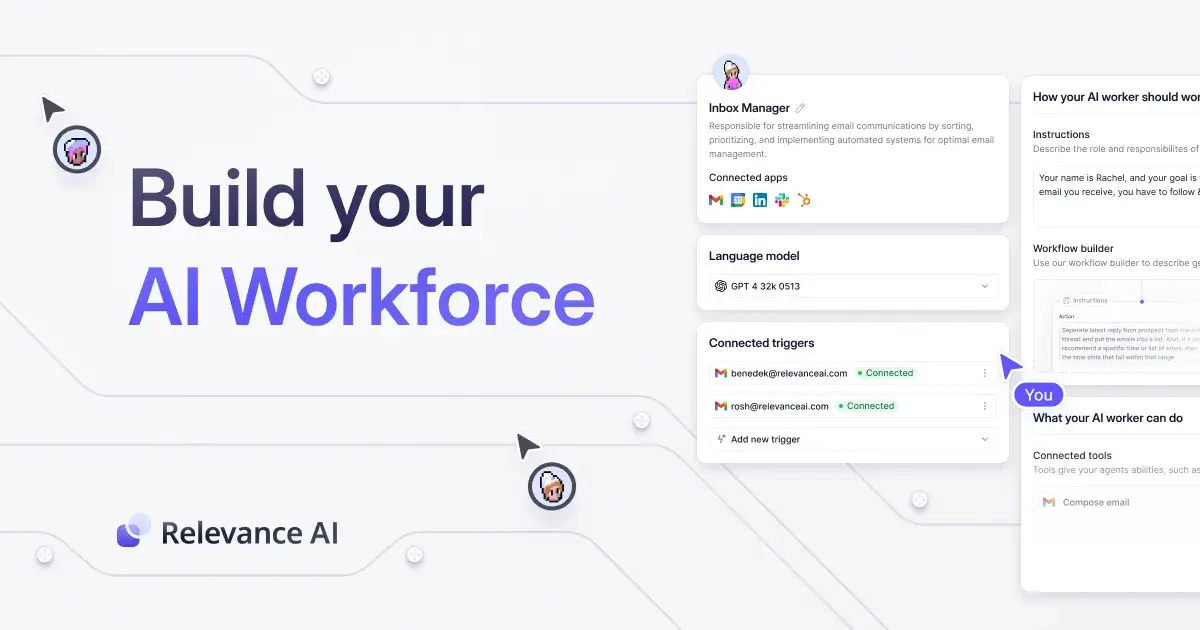
You define the jobs — prospect research, outreach drafting, LinkedIn engagement, CRM updates, lead scoring — and the platform runs those workflows autonomously. It's a fit for teams whose sales process doesn't match anyone's out-of-the-box template.
What stood out: control. You're not bending your process to a vendor's opinion of how outbound should work; you assemble the agent you actually want.
Where I'd be careful: flexibility means you own the design. You'll spend time defining and tuning agents rather than flipping a switch. There's a free tier; paid plans start around $19/month and scale up to team and enterprise pricing.
9. Salesforce Agentforce — For Teams Living in Salesforce
If your revenue org already runs on Salesforce, Agentforce is the obvious one to evaluate. It brings autonomous agents natively into the CRM you already use, acting on your live data without a separate integration project.
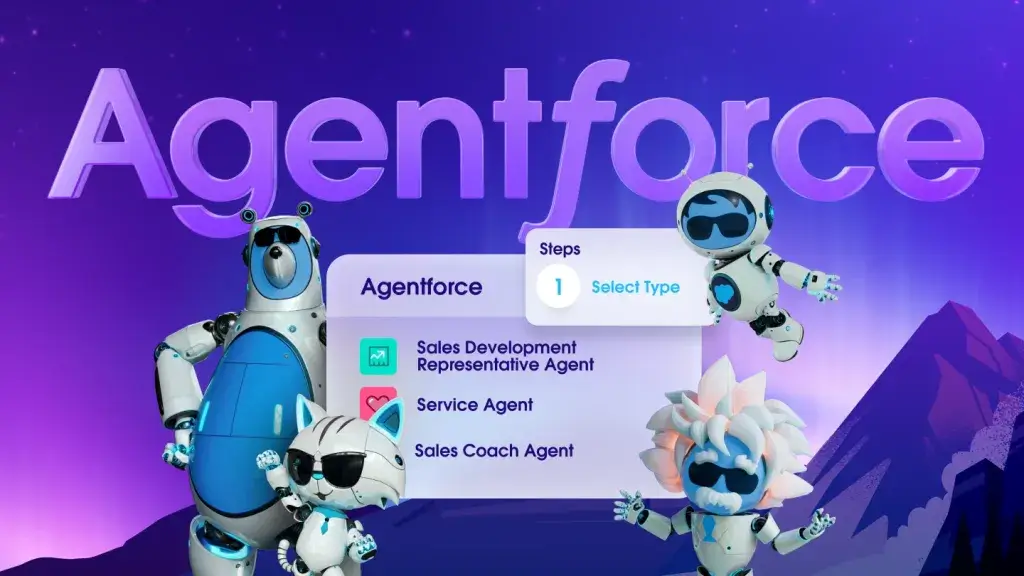
Agentforce SDR agents can engage inbound leads, answer product questions, handle objections, and book meetings — all grounded in your CRM records and business rules.
What stood out: the data gravity. An agent that already lives where your pipeline lives avoids the messy sync problems that plague bolt-on tools.
Where I'd be careful: it's a Salesforce play through and through — most valuable if you're already all-in, less compelling if you're not. Pricing is consumption-based (roughly per-conversation or per-action) and can get hard to predict at scale, so model your usage before you commit.
10. Amplemarket — The Human-in-the-Loop Copilot
Amplemarket and its "Duo" copilot topped at least one rigorous head-to-head evaluation of AI sales agents in 2026 — and notably, it did so as a copilot, not a full-replacement autopilot.
Duo handles research, signal detection, and drafting at scale, then keeps a human rep in the loop to add judgment before messages go out. That's the exact pattern the 2026 data keeps rewarding.
What stood out: it's philosophically honest. Amplemarket leans into "AI does the grunt work, humans do the judgment" instead of promising to fire your sales team. Given falling reply rates on pure autopilot, that restraint is a strength.
Where I'd be careful: if you truly want zero human touch, this isn't that (by design). Pricing is custom — you'll talk to their team.
How I Picked These
I wasn't chasing whichever tool sends the most email. I weighed four things:
- Output quality, not just volume. With reply rates down across the board, the tools that protect quality — through better research or a human checkpoint — matter more than raw throughput.
- Where the autonomy sits. Full autopilot, copilot, or build-your-own — each fits a different team. I flagged which is which so you can match it to your risk appetite.
- Total cost and transparency. Custom pricing everywhere makes comparison hard, so I gave extra credit to tools that publish real numbers.
- Platform risk. Anything that depends on a third-party channel (hi, LinkedIn) can break when that platform changes its rules. Worth knowing before you build your whole motion on it.
One theme cut across everything: the smartest 2026 setups treat the AI as a tireless researcher and drafter, and keep a person on the final send for anything that matters. If that sounds familiar, it's the same lesson from the levels of autonomy — start with a human in the loop, and earn your way to more automation.
Want a sales agent shaped exactly like your process?
Build a custom AI sales agent on Pickaxe — your data, your rules, your brand.
The Option Most Lists Skip: Build Your Own
Every tool above is someone else's opinion of how sales should work, rented to you monthly. For a lot of teams — and especially for agencies selling this as a service — the better move is to build a sales agent that fits your exact process.
That's the angle I keep coming back to with Pickaxe. Instead of paying enterprise rates for a black box, you can build a no-code AI agent that qualifies leads, answers prospect questions in your brand voice, and hands off to a human at the moment that matters.
Wire it to your CRM and tools with Actions, feed it your product knowledge, and keep a human approving the sensitive steps — the same guardrails the best platforms use, but on an agent you own. It pairs naturally with a proper lead qualification agent workflow.
And if you run an agency, this is a real business: build the agent once, then resell it to clients as a monthly service. Our guide on selling AI agents to local businesses walks through the economics, and measuring the ROI is how you keep those clients.
Frequently Asked Questions
What is an AI sales agent?
An AI sales agent (often called an AI SDR) is software that autonomously handles parts of the sales development motion — finding prospects, researching them, writing and sending personalized outreach, following up, and booking meetings — with little or no human involvement. Some run fully autonomously; others work as copilots alongside human reps.
Do AI SDRs actually work?
They work well for research, personalization at scale, and handling volume — but the 2026 data is a caution flag on pure automation. Outbound volume has surged while reply rates have fallen, so the most effective teams use AI to do the research and drafting and keep a human on the final send. Used that way, yes, they genuinely move pipeline.
How much do AI sales agents cost?
It's a wide range. Transparent tools like AiSDR start around $900/month, and data-plus-outreach platforms like Apollo start near $49/user/month. Fully autonomous enterprise platforms such as 11x, Artisan, and Qualified are typically custom-priced and can run into the thousands per month once you factor in seats, credits, and data.
What's the difference between an autonomous AI SDR and a copilot?
An autonomous AI SDR (autopilot) runs the outbound motion end-to-end on its own; a copilot assists a human rep who stays in control of what gets sent. Autopilot maximizes volume; copilot protects quality and judgment. Given falling reply rates, many teams are landing on copilot or a "human approves the send" hybrid. See our breakdown of AI agent autonomy levels for how to choose.
Can I build my own AI sales agent instead of buying one?
Yes — and for many teams it's the better call. No-code platforms like Pickaxe let you build an agent tailored to your exact sales process, connect it to your CRM and tools, keep a human in the loop, and even resell it to clients. You own the agent instead of renting someone else's template.
My Take
If I had to hand out picks: 11x and Artisan are the ones to beat for full autonomous outbound, AiSDR is the most approachable for smaller teams thanks to transparent pricing, Qualified owns inbound, and Clay plus a sending tool is the quality-first stack for teams who buy the research-then-human-send philosophy. Amplemarket is the standout copilot.
But the real 2026 lesson is the one hiding under all of them: autonomy is a dial, not a switch. Start with AI doing the research and a human on the send, watch your reply rates, and turn up the automation only as the results earn it.
And if none of these fit the way your team actually sells, build your own on Pickaxe — an AI sales agent that works like you do, that you own outright, and that you can even sell to your own clients. Start there, and the whole category stops feeling like a gamble.