

I've been deep in the AI customer service space for months now, and I have to be honest — it's simultaneously the most exciting and most confusing corner of the AI market in 2026.
The promise is straightforward: AI handles the repetitive questions so your human team can focus on the complex stuff. The reality is that there are now dozens of platforms claiming to do this, with wildly different approaches, price points, and levels of sophistication.
Some of these tools cost $29/month. Others require six-figure annual contracts and months of implementation. Some are genuinely autonomous. Others are glorified decision trees wearing an AI costume.
The numbers tell a clear story about where this market is headed. The global AI customer service market hit $15.12 billion in 2026 and is projected to reach $47.82 billion by 2030. Gartner is forecasting $80 billion in contact center labor cost savings this year. And 91% of customer service leaders feel compelled to implement AI in 2026.
But here's the part most listicles won't tell you: AI customer service fails at 4x the rate of other AI applications. Nearly 79% of consumers still prefer talking to a human for complex issues. The tools that win aren't the ones that replace your team — they're the ones that make your team superhuman.
I looked into 14 platforms across four categories: enterprise helpdesks, AI-native startups, mid-market solutions, and no-code agent builders. Here's what stood out.
Quick Comparison: Top AI Customer Service Tools in 2026
| Platform | Best For | Starting Price | AI Resolution Rate | Key Strength |
|---|---|---|---|---|
| Zendesk AI | Mid-market to enterprise | $19/agent/mo + AI add-on | ~70% | Ecosystem depth |
| Intercom (Fin) | SaaS companies | $0.99/resolution | 50%+ guaranteed | Per-resolution pricing |
| Salesforce Agentforce | Large enterprise | $125/user/mo | Enterprise-grade | CRM integration |
| Freshdesk (Freddy AI) | Mid-market teams | $49/agent/mo | ~60% | Value for money |
| Ada | High-volume support | ~$30K/year | 83% claimed | Reasoning engine |
| Sierra AI | Consumer brands | ~$150K/year | Premium | Brand voice fidelity |
| Forethought | Layering on existing helpdesk | ~$40K/year | ~65% | Triage intelligence |
| Decagon | Enterprise automation | ~$95K/year | High | Agent Operating Procedures |
| HubSpot (Breeze) | HubSpot users | $15/seat/mo | 65% | CRM unification |
| Tidio (Lyro) | Small businesses | Free / $29/mo | ~50% | Low barrier to entry |
| Gorgias | E-commerce (Shopify) | $10/mo | ~60% | Order management |
| Help Scout | Small teams | $25/user/mo | 73% | Simplicity |
| Pickaxe | Custom AI agents | Free / $29/mo | Customizable | Build + deploy + monetize |
| Botpress | Technical teams | Free / $89/mo | Varies | Conversation design |
How I Evaluated These Tools
I looked at each platform through five lenses:
- AI capability: Can it actually resolve tickets autonomously, or does it just suggest responses?
- Ease of setup: How fast can you go from signup to handling real conversations?
- Pricing transparency: Are costs predictable, or do you get surprised at scale?
- Integration depth: Does it work with your existing tools, or does it require ripping and replacing?
- Human handoff quality: When AI can't handle it, how smoothly does it escalate?
I also paid close attention to what real users are saying — not just case studies from the vendors themselves. Let's dig in.
1. Zendesk AI — Best All-in-One Enterprise Platform
If you're already on Zendesk (and millions of teams are), their AI suite is the path of least resistance — and it's genuinely gotten good.
Zendesk acquired Ultimate.ai in 2024 and has been integrating that acquisition aggressively. The result is a layered AI system: AI agents that handle front-line conversations autonomously, an AI copilot that assists human agents in real-time, and intelligent triage that routes tickets based on intent, sentiment, and language. For global support teams, our review of real-time AI translation tools compares the live language layer directly.
The knowledge base integration is where it shines. Point it at your help center articles and it immediately starts resolving common questions. No training data required — it reads your existing docs and works from there.
Pricing
- Base platform: Starts at $19/agent/month (Suite Team)
- Advanced AI add-on: $50/agent/month
- AI agent resolutions: $1.50-$2.00 per overage resolution
- Real-world cost: Most teams land at $100-300/agent/month all-in
What Stood Out
- Seamless integration if you're already in the Zendesk ecosystem
- AI copilot suggests responses, summarizes tickets, and drafts knowledge base articles
- Multi-channel support (email, chat, social, voice) with unified AI layer
- Extensive app marketplace for custom integrations
What Could Be Better
- Pricing layers get confusing fast — the headline $19/mo is misleading for AI features
- AI agent resolution costs can spike unpredictably at scale
- The platform has grown complex; newer teams may feel overwhelmed
Bottom line: Zendesk AI is the safe enterprise bet. If you're already there, turning on AI is a no-brainer. If you're starting fresh, the cost complexity might make other options more attractive.
2. Intercom (Fin AI) — Best Per-Resolution Pricing Model
Intercom took a bold swing with Fin: you only pay when the AI actually resolves a conversation. At $0.99 per resolution, it's one of the most transparent pricing models in the space.
Fin acts as your tier-1 support agent. It reads your help center, learns from past conversations, and handles incoming queries across chat, email, and social. When it can't confidently resolve something, it escalates to a human with full context attached.
The 50% automation guarantee is notable. Intercom will issue credits if Fin doesn't hit that threshold. That's confidence you don't see from most vendors.
Pricing
- Fin AI resolutions: $0.99 each
- Platform (Essential): $39/seat/month
- Platform (Advanced): $99/seat/month
- 50% resolution guarantee — credits if not met
What Stood Out
- Pay-per-resolution aligns incentives perfectly — you only pay for value delivered
- CX Score analytics give genuine insight into support quality
- Multilingual out of the box with strong quality
- Fin learns continuously from your team's behavior
What Could Be Better
- $0.99/resolution adds up fast at high volume — do the math before committing
- Platform costs on top of resolution fees means total cost can surprise you
- Less customizable than some AI-native alternatives
Bottom line: Intercom Fin is ideal for SaaS companies with moderate volume who want predictable, outcome-based pricing. The resolution guarantee removes a lot of risk from the decision.
3. Salesforce Service Cloud (Agentforce) — Best for CRM-Deep Organizations
If your company lives and breathes Salesforce, Agentforce is the AI layer that actually understands your entire customer relationship — not just the current ticket.

Salesforce's approach is uniquely powerful because it sits on top of the richest CRM data in the business. When an AI agent handles a case, it knows the customer's purchase history, their lifetime value, their previous complaints, their contract terms — everything.
The Einstein Trust Layer addresses the security concerns that keep enterprise buyers awake at night. It prevents customer data from leaking into model training and provides audit trails for every AI decision.
Pricing
- Agentforce add-on: $125/user/month
- Bundled edition: $550/user/month
- Flex Credits: ~$0.10/action for usage-based pricing
- Implementation: $50K-$150K+ (significant)
What Stood Out
- Deep CRM context means AI responses are genuinely personalized
- Einstein Trust Layer provides enterprise-grade security and compliance
- Handles predictive, generative, and agentic AI in one platform
- Autonomous case routing based on complexity and agent expertise
What Could Be Better
- Implementation costs are brutal — plan for $50K+ and months of setup
- You're locked into the Salesforce ecosystem (for better or worse)
- Overkill for teams under 50 agents
Bottom line: If you're already a Salesforce shop with enterprise budgets, Agentforce is the most data-rich AI customer service solution available. If you're not on Salesforce, this isn't the reason to switch.
4. Freshdesk (Freddy AI) — Best Value for Mid-Market Teams
Freshdesk sits in the sweet spot between enterprise complexity and startup simplicity — and Freddy AI brings genuine AI capabilities at a price that won't make your CFO flinch.
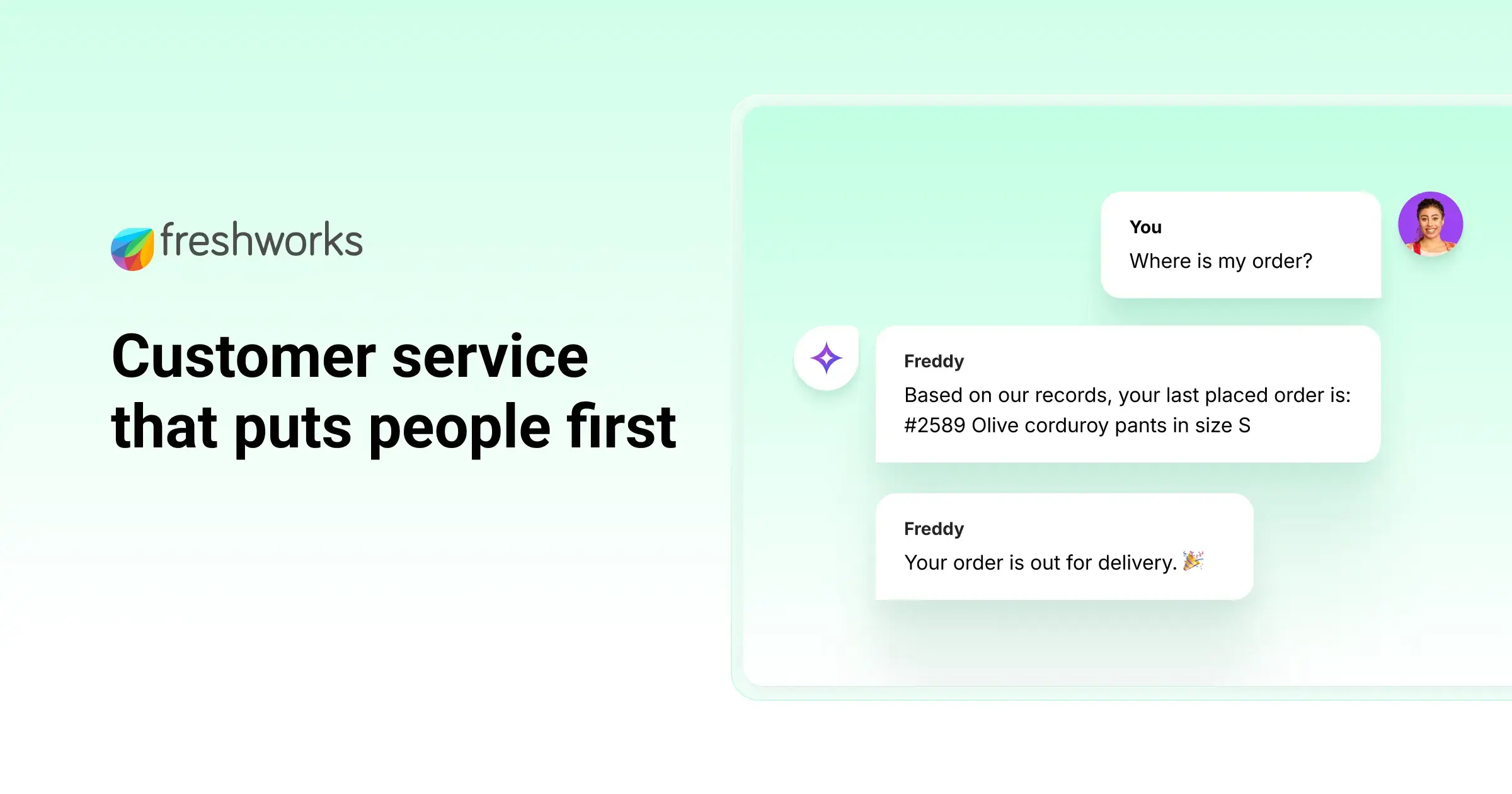
Freddy operates on two levels: an AI copilot that helps your agents draft responses, summarize threads, and surface relevant knowledge — and an AI agent that handles front-line conversations autonomously across email, chat, social, and voice.
The standout feature is the AI-powered knowledge base generation. Freddy watches your agents resolve tickets and automatically suggests new help articles based on common patterns. Your knowledge base literally builds itself over time.
Pricing
- Pro plan: $49/agent/month
- Enterprise: $79/agent/month
- AI Copilot add-on: $29-35/agent/month
- AI Agent: $0.12/session (500 free sessions included)
What Stood Out
- Significantly cheaper than Zendesk for comparable features
- Auto-generated knowledge base articles save hours of documentation work
- Clean UI that doesn't overwhelm new users
- Good omnichannel coverage without enterprise pricing
What Could Be Better
- AI capabilities still trailing Zendesk in sophistication
- Smaller integration marketplace
- Less robust analytics compared to enterprise alternatives
Bottom line: If you need AI-augmented helpdesk without enterprise pricing, Freshdesk with Freddy AI is the strongest value play in the market. Especially for teams of 5-50 agents.
5. Ada — Best for High-Volume Automation
Ada doesn't try to be a helpdesk. It's a pure AI automation layer that sits in front of your existing support stack and resolves as much as possible before anything reaches a human.

The Reasoning Engine is what separates Ada from simpler chatbots. It doesn't just pattern-match keywords — it actually reasons through multi-step problems. Combined with Playbooks (workflow automation), it can handle complex scenarios like processing returns, updating account details, or troubleshooting technical issues. For sellers balancing support with the rest of store operations, our roundup of AI tools for ecommerce covers the broader stack.
Ada claims an 83% autonomous resolution rate across their customer base. Even if real-world results vary, that's a bold benchmark that suggests this is more than a FAQ bot.
Pricing
- Quote-based: Starting around $30K/year
- Volume tiers: 10K, 50K, 100K+ conversations
- Implementation: 8-16 weeks typical
- No per-seat fees — conversation-volume based
What Stood Out
- Reasoning engine handles genuinely complex multi-step issues
- No-code builder means non-technical teams can configure workflows
- Omnichannel: chat, email, voice, SMS, social — all from one platform
- Works alongside your existing helpdesk rather than replacing it
What Could Be Better
- $30K/year minimum puts it out of reach for smaller teams
- 8-16 week implementation isn't "plug and play"
- Opaque pricing requires sales conversations to get real numbers
Bottom line: Ada is the serious automation layer for teams handling 10,000+ monthly conversations. If volume is your problem, Ada is purpose-built to solve it. If you're under 5K conversations/month, it's probably overkill.
Build a custom AI support agent for your business
Pickaxe lets you create AI customer service agents trained on your docs, FAQs, and processes.
6. Sierra AI — Best for Premium Brand Experiences
Sierra is playing a different game. While most tools optimize for deflection, Sierra optimizes for experience — building AI agents that genuinely represent your brand's voice and values.

Co-founded by former Salesforce co-CEO Bret Taylor, Sierra works with brands like SiriusXM, WeightWatchers, and Sonos. Their approach uses a constellation of LLMs (OpenAI, Anthropic, Meta) and blends generative AI with deterministic logic to ensure consistency.
The result is AI agents that can handle genuinely complex transactions — issuing refunds, modifying subscriptions, troubleshooting hardware — while maintaining the exact tone and personality the brand expects.
Pricing
- Starting point: ~$150K/year
- Year-1 budgets: Typically $200K-$350K+ including setup
- Setup fees: $50K-$200K
- Outcome-based pricing available
What Stood Out
- Brand voice fidelity is genuinely impressive — these agents sound like the company, not a generic chatbot
- Multi-LLM architecture means no single-model dependency
- Handles transactional workflows, not just informational queries
- Outcome-based pricing option aligns vendor incentives with yours
What Could Be Better
- Price tag excludes 99% of businesses
- 3-6 month deployment timeline
- Sales-led with no self-serve option — you can't even test it without committing
Bottom line: Sierra is for brands where customer experience IS the product. If you're WeightWatchers or Sonos, the investment makes sense. For everyone else, this is aspirational — but it shows where the market is heading.
7. Forethought — Best for Ticket Triage & Routing
Forethought's genius is that it doesn't ask you to rip out your existing helpdesk. It sits on top — intelligently triaging, routing, and resolving tickets before they hit your agents.
The triage intelligence is the real differentiator. Forethought analyzes incoming tickets, categorizes them by intent and urgency, and routes them to the right team with relevant context attached. For straightforward queries, it resolves them directly. For complex ones, it hands off warm.
Because it learns from your historical ticket data, it gets smarter over time. The AI literally studies how your best agents handle specific types of issues and replicates those patterns.
Pricing
- Annual contracts: ~$40K-$160K depending on volume
- Median contract: ~$59,500/year
- Implementation: $10K-$50K+
What Stood Out
- Works with your existing helpdesk (Zendesk, Salesforce, etc.) — no migration required
- Intelligent routing reduces average handle time significantly
- Real-time agent assist surfaces relevant knowledge during live conversations
- Learns from your historical data, not generic training
What Could Be Better
- Price point means it's not for small teams
- Value is hard to measure without a baseline — you need to track metrics before and after
- Dependent on quality of your existing knowledge base and ticket history
Bottom line: If your pain point is routing inefficiency and your agents are drowning in misrouted or poorly-triaged tickets, Forethought addresses the root cause without requiring a platform migration.
8. Decagon — Best for Complex Enterprise Workflows
Decagon raised $231 million and is valued at $1.5 billion. Their bet: the future of customer service AI isn't chatbots — it's autonomous agents that operate across voice, chat, and email simultaneously.
The Agent Operating Procedures concept is genuinely clever. Instead of building rigid decision trees, you describe workflows in natural language — and the AI figures out how to execute them. "When a customer asks for a refund on an order over 30 days old, check their loyalty tier, apply the appropriate policy, and process if eligible" becomes an executable workflow without traditional programming.
Their customer list (Duolingo, Chime, Rippling) suggests this actually works at scale with complex business logic.
Pricing
- Annual contracts: $95K-$590K+
- Per-conversation pricing available
- Sales-led — no self-serve
What Stood Out
- Natural language workflow definitions lower the barrier to automation
- Unified voice/chat/email — same AI across all channels
- Continuous learning improves accuracy over time
- Analytics suite helps you understand where AI succeeds and fails
What Could Be Better
- $95K+ starting price limits the addressable market significantly
- Enterprise-only positioning means no way to start small and scale
- Still relatively young — track record is shorter than established players
Bottom line: Decagon is betting that natural language workflow automation is the future. If you're running complex support operations with enterprise budgets, it's worth a conversation. If you need something this week, look elsewhere.
9. HubSpot Service Hub (Breeze) — Best for All-in-One CRM Users
HubSpot's Breeze AI brings customer service intelligence to teams that already live in HubSpot for marketing, sales, and CRM — and the integration advantage is real.
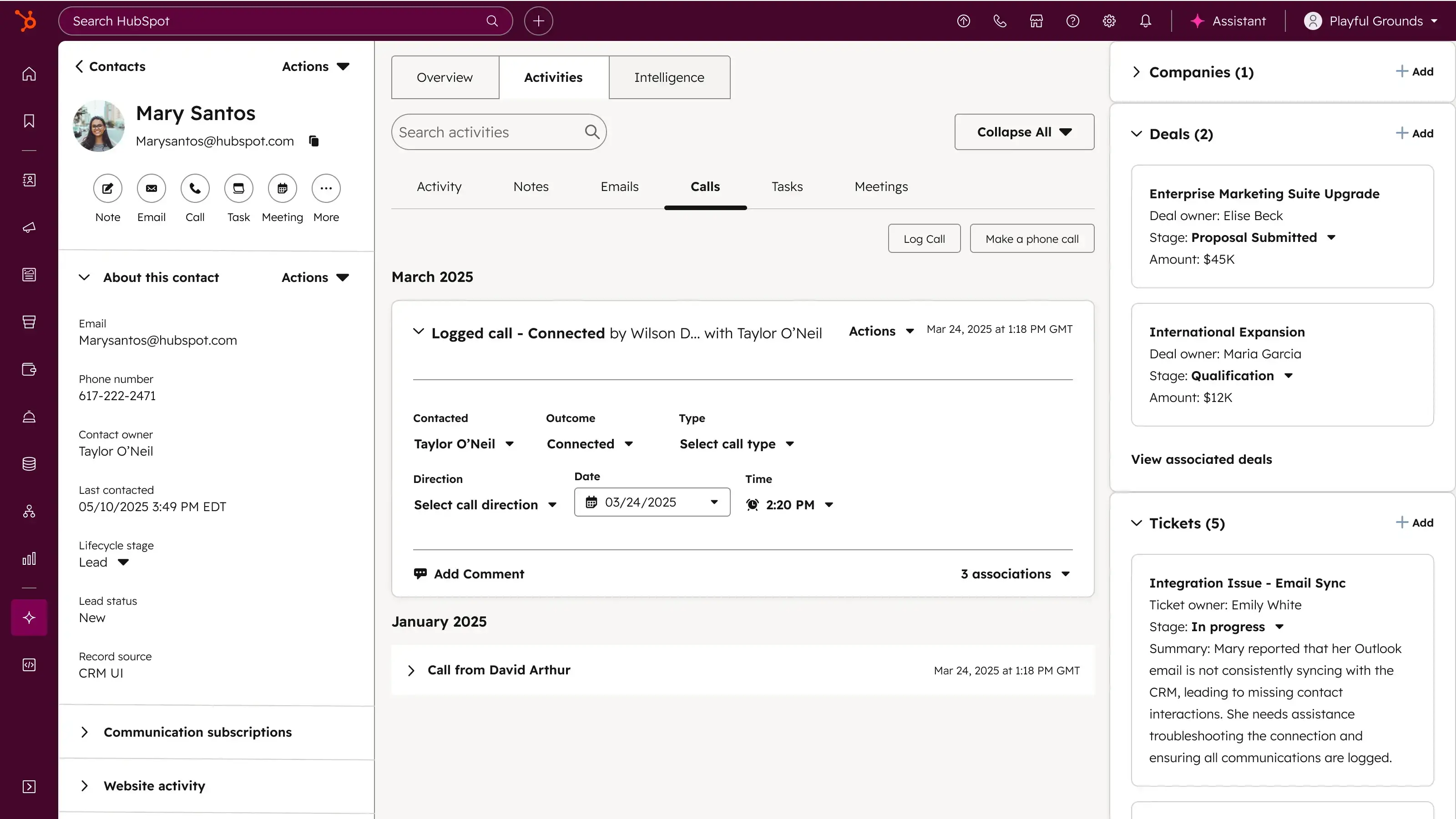
The value proposition is straightforward: your AI customer service agent already knows everything about the customer because it's the same platform handling your marketing emails, sales pipeline, and support tickets. Context flows naturally. A support interaction can reference the webinar they attended, the deal they're evaluating, and the onboarding sequence they completed.
HubSpot claims Breeze resolves 65% of conversations automatically through their AI Customer Agent. At $1 per AI conversation (100 credits at $10/1,000), it's one of the more affordable per-interaction models.
Pricing
- Starter: $15/seat/month
- Professional: $90/seat/month + $1,500 onboarding
- Enterprise: $150/seat/month + $3,500 onboarding (10 seat minimum)
- AI conversations: ~$1 each (100 credits per conversation)
What Stood Out
- Unified CRM context across marketing, sales, and support — no data silos
- AI Customer Agent resolves 65% of conversations automatically
- Cross-channel coverage: chat, email, social, voice
- Knowledge base builder helps AI learn from your content
What Could Be Better
- Service Hub is less mature than HubSpot's marketing and sales tools
- AI features locked behind Professional tier ($90/seat/mo)
- Onboarding fees for higher tiers add friction
Bottom line: If your company already runs on HubSpot, adding Service Hub with Breeze AI is the natural move. The cross-platform context is genuinely valuable. If you're not on HubSpot, this alone isn't reason enough to switch ecosystems.
10. Tidio (Lyro AI) — Best for Small Business Entry Point
Tidio is the tool I'd recommend to any small business owner who says "I want AI customer service but I don't have a huge budget or a technical team."
Lyro, their AI chatbot, combines a visual flow builder with genuine AI conversational capabilities. You can start with a free plan, add Lyro for $39/month, and have AI handling your common customer questions within hours — not weeks.
The learning curve is minimal. Point Lyro at your FAQ page or help docs, and it starts answering questions accurately. For small e-commerce shops, service businesses, and startups, this is the fastest path from "no AI" to "AI handling 50% of incoming queries."
Pricing
- Free plan: Available (limited)
- Starter: $29/month
- Growth: $59-$349/month
- Lyro AI add-on: Starts at $39/month (50 conversations)
- Plus: $749/month
What Stood Out
- Genuinely usable free tier — you can test before committing
- Setup takes hours, not weeks
- Visual flow builder is intuitive for non-technical users
- Visitor tracking and live chat alongside AI automation
What Could Be Better
- 50 AI conversations/month at the starter level is limiting
- Sophistication ceiling is lower than enterprise tools
- Scaling costs can add up as conversation volume grows
Bottom line: Tidio is the gateway drug to AI customer service. Start free, add Lyro when you're ready, and graduate to something bigger if your needs outgrow it. For businesses under 50K monthly visitors, this is often all you need.
11. Gorgias — Best for E-Commerce Support
If you're running a Shopify store and your support team is drowning in "where's my order?" tickets, Gorgias is purpose-built for exactly this problem.
Unlike general-purpose helpdesks that happen to support e-commerce, Gorgias was built from day one for online stores. The AI agent understands order statuses, shipping tracking, return policies, and product details natively. It connects directly to Shopify, Magento, and BigCommerce — pulling order data into every conversation automatically.
The ticket-based pricing (not per-seat) makes it particularly attractive for lean teams. Your entire support operation can run on Gorgias for $10/month at the starter level.
Pricing
- Starter: $10/month (ticket-based, not per-seat)
- AI Agent: ~$0.90-$1.00 per AI resolution
- No seat limits on any plan
What Stood Out
- Built specifically for e-commerce — understands orders, shipping, returns natively
- Per-ticket pricing means you're not paying for idle seats
- Deep Shopify integration with one-click order management from the inbox
- Macros and automation rules handle repetitive workflows efficiently
What Could Be Better
- Narrow focus means it's not great for non-e-commerce use cases
- AI resolution costs can add up during peak shopping seasons
- Less sophisticated than enterprise alternatives for complex issues
Bottom line: For Shopify merchants, Gorgias is almost a no-brainer. The e-commerce specialization means it handles 80% of typical store support queries out of the box. If you're not in e-commerce, skip this one.
12. Help Scout — Best for Small Teams Who Want Simplicity
Help Scout doesn't try to be everything. It's a clean, simple helpdesk that recently added genuinely useful AI features — without making the product more complex.
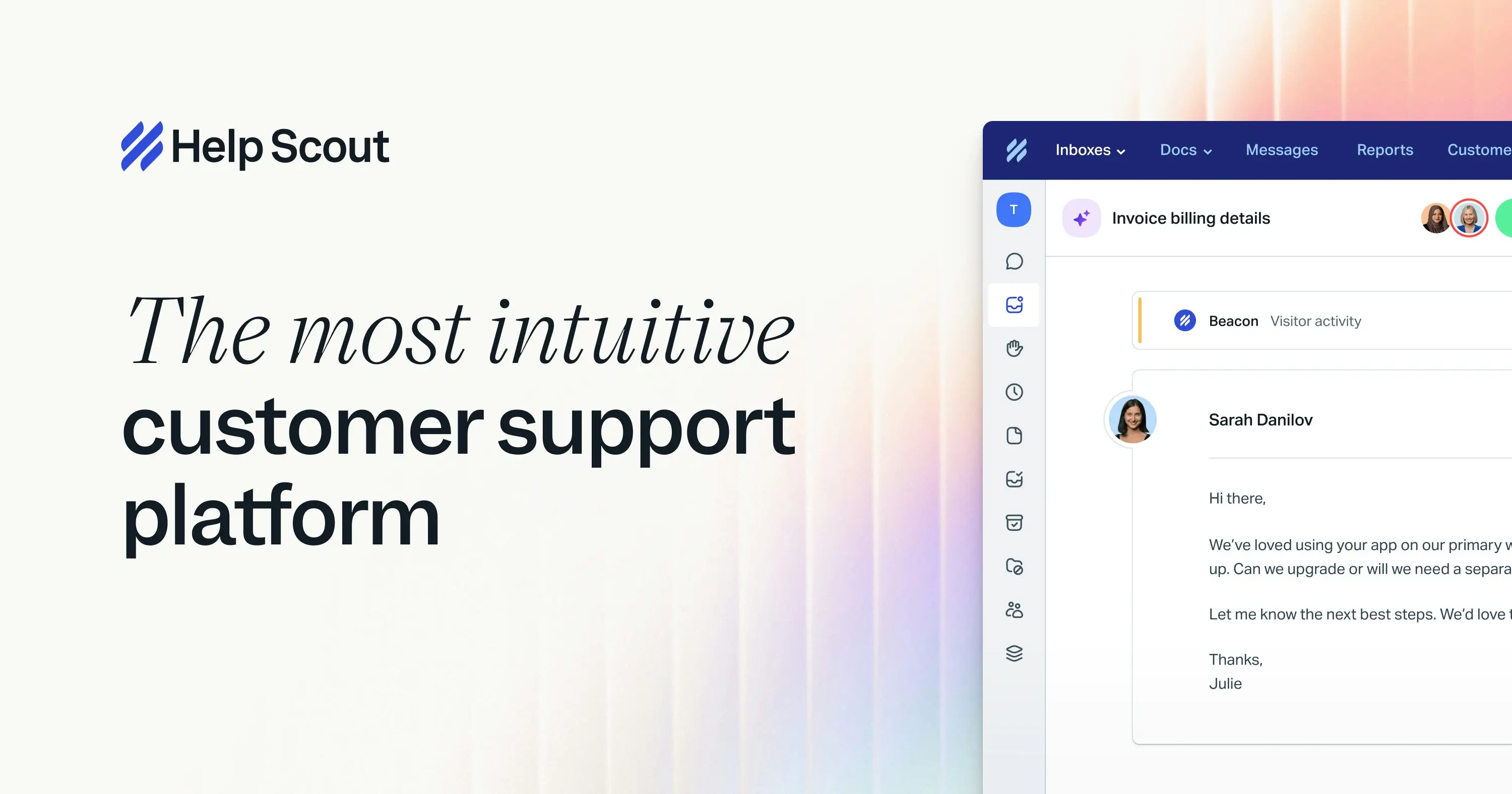
Their AI suite is four features: AI Answers (autonomous customer-facing chatbot), AI Drafts (agent response suggestions), AI Assist (tone adjustment and translation), and AI Summarize (thread summaries). Nothing flashy. All practical.
The 73% average resolution rate for AI Answers is notable — especially at $0.75 per AI-resolved conversation. For small teams who don't want complexity, Help Scout delivers AI value without requiring you to become an AI expert.
Pricing
- Standard: $25/user/month
- Plus: $45/user/month
- Pro: $75/user/month
- AI Answers: $0.75/resolved conversation
- 3 months free AI Answers for new accounts
What Stood Out
- 73% resolution rate with minimal setup effort
- Clean, intuitive interface that doesn't overwhelm small teams
- $0.75/resolution is very competitive pricing
- AI features enhance workflow without adding complexity
What Could Be Better
- Feature set is intentionally limited — growing teams may outgrow it
- No advanced workflow automation or multi-step reasoning
- Less suitable for teams handling 10K+ monthly conversations
Bottom line: Help Scout is for teams that want AI assistance without the learning curve. If "simple but effective" describes your ideal tool, Help Scout delivers exactly that. It won't wow enterprise buyers, but it'll delight small teams.
Deploy AI support that actually knows your product
Create agents with your own knowledge base, embed them on your site, and let them handle the repetitive questions.
13. Pickaxe — Best for Building Custom AI Service Agents
Here's where things get interesting. What if instead of renting someone else's AI customer service bot, you built your own — trained on exactly your knowledge, behaving exactly how you want?
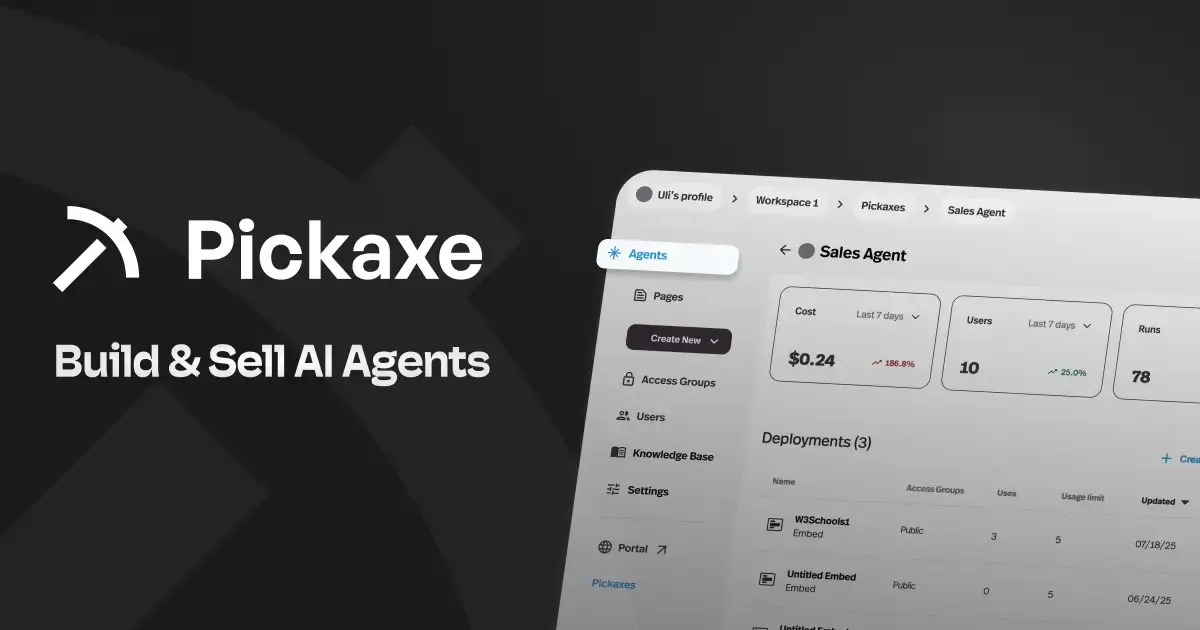
Pickaxe approaches the problem differently from every other tool on this list. It's a no-code AI agent builder that lets you create, deploy, and even monetize custom AI agents. For customer service specifically, you build an agent trained on your knowledge base, configure its behavior and personality, and deploy it wherever your customers are — website widget, Slack, WhatsApp, email.
The unique angle? Pickaxe lets you monetize your AI agents. Consultants and agencies are building customer service bots for their clients and charging monthly subscriptions for them. It's the Shopify for agent-powered businesses.
It's also model-agnostic — you can choose GPT-4, Claude, Gemini, or other models depending on what works best for your use case. No vendor lock-in to a single AI provider.
Pricing
- Free tier: Available — build and test at no cost
- Gold: $29/month
- Pro: $97/month
- Enterprise: Custom pricing
- Credit-based usage — transparent and predictable
What Stood Out
- Build once, deploy everywhere — web, Slack, WhatsApp, email
- Model-agnostic: pick the best LLM for your needs, switch anytime
- Monetization built in — charge clients for AI agents you build
- White-labeling and custom domains for agencies
- Knowledge base up to 50 documents per agent
- Actions feature connects to external APIs for dynamic responses
- SOC2, GDPR, and CCPA compliant
What Could Be Better
- Not a full helpdesk — you'll need to pair it with ticketing if you want that workflow
- Best suited for specific use cases rather than replacing an entire support operation
- Newer platform, so ecosystem is still growing
Bottom line: Pickaxe is for teams who want full ownership and control over their AI customer service experience. If you want to build something uniquely yours (or build and sell AI agents for clients), there's nothing else quite like it. Start with the free tier and see how quickly you can get an agent live.
14. Botpress — Best for Technical Teams Building Custom Bots
Botpress is the developer-friendly chatbot builder that bridges the gap between no-code simplicity and full-code flexibility. To compare that tradeoff across the category, see our guide to the best AI chatbot builders.
The visual conversation designer lets you map out complex dialogue flows while still leveraging LLMs (GPT-4, Claude, or open-source models) for the natural language understanding. It's a hybrid approach: deterministic where you need reliability, AI-powered where you need flexibility.
The autonomous node execution feature is particularly strong. You can define goals in natural language and let the AI figure out how to achieve them within guardrails you set. This means less rigid scripting and more adaptive conversations.
Pricing
- Free: 500 messages/month, 1 bot
- Plus: $89/month
- Team: $495/month
- Enterprise: ~$2,000/month
- LLM usage billed separately
What Stood Out
- Visual builder + code flexibility — best of both worlds for technical teams
- Model-agnostic — works with GPT-4, Claude, Llama, and more
- Strong developer APIs for custom integrations
- Free tier is genuinely usable for prototyping
What Could Be Better
- Learning curve is steeper than pure no-code alternatives
- LLM costs on top of platform fees make total cost less transparent
- Not a complete helpdesk — you're building a bot, not a support system
Bottom line: Botpress is ideal for technical teams and agencies who want maximum control over conversation design while still leveraging AI. If your team has developers, this is a powerful toolkit. If not, look at Pickaxe or Tidio instead.
How to Choose the Right AI Customer Service Tool
After looking at all 14 of these platforms, here's the decision framework I'd use:
Start with your budget:
- Under $100/month: Tidio, Gorgias, HubSpot Starter, or Pickaxe
- $100-$1,000/month: Freshdesk, Help Scout, Intercom, Botpress, HubSpot Professional
- $1,000-$5,000/month: Zendesk AI, Intercom (higher volume)
- $30K+/year: Ada, Forethought
- $100K+/year: Sierra, Decagon, Salesforce Agentforce
Then match your use case:
- E-commerce/Shopify: Gorgias (purpose-built for this)
- SaaS product support: Intercom or Freshdesk
- Enterprise with Salesforce: Agentforce
- Enterprise with Zendesk: Zendesk AI add-ons
- HubSpot ecosystem: Service Hub with Breeze
- High-volume deflection: Ada or Forethought
- Premium brand experience: Sierra or Decagon
- Build your own custom agent: Pickaxe or Botpress
- Small team, simple needs: Help Scout or Tidio
And consider these factors:
- Conversation volume: Tools like Ada and Forethought only make sense at 10K+ conversations/month
- Technical resources: Botpress needs developers; Tidio and Pickaxe don't
- Existing stack: The best tool is often the one that integrates with what you already use
- Growth trajectory: Start where you are, but pick something you won't outgrow in 6 months
The State of AI Customer Service: What the Data Actually Shows
I want to share some numbers that paint the real picture of where we are — because the vendor marketing tells one story and the customer experience research tells another.
The bullish case:
- Per-interaction cost: $0.50 with AI vs $6.00 with a human agent — a 12x cost difference
- Klarna's AI handles 2.3 million chats per month, saving an estimated $60 million annually
- First response time improvements from 6+ hours to under 4 minutes
- Average first-year ROI of 340% according to industry benchmarks
The cautious reality:
- AI customer service fails at 4x the rate of other AI applications (Qualtrics 2026)
- 79% of consumers still prefer humans for complex issues
- 81% of consumers believe AI is used to save money, not improve their experience
- 53% are concerned about data misuse — up 8 points year-over-year
- Klarna quietly began rebuilding human support capacity after complex cases degraded satisfaction
The takeaway? AI customer service works brilliantly for routine, repetitive queries — "where's my order," "how do I reset my password," "what's your return policy." It struggles with anything requiring genuine empathy, complex judgment, or creative problem-solving.
The winning strategy in 2026 isn't full automation. It's intelligent triage: AI handles the 60-70% of queries that are genuinely routine, and your best humans focus entirely on the complex cases that actually build customer loyalty.
Common Mistakes When Implementing AI Customer Service
Based on the patterns I've seen, here's what goes wrong most often:
1. Deploying without adequate knowledge base content. AI customer service tools are only as good as the knowledge they can access. If your help docs are sparse or outdated, the AI will make things up or give wrong answers. Invest in documentation first.
2. Not setting up proper human escalation paths. Every AI should have a clear, fast route to a human. Customers who get stuck in an AI loop with no escape hatch become your angriest detractors.
3. Optimizing for deflection instead of resolution. There's a difference between "the customer stopped asking" and "the customer got what they needed." Track resolution quality, not just volume diverted from humans.
4. Ignoring the sentiment data. Your AI might be resolving tickets, but are customers happy with the interaction? Monitor CSAT on AI-handled conversations separately from human-handled ones.
5. Going all-in too fast. Start with a narrow scope — maybe just "order status" queries or "password reset" requests. Prove the AI works well on one thing before expanding. Start with a single workflow and iterate.
FAQ
What is the best AI tool for customer service?
There's no single best — it depends on your size, budget, and existing tools. For small businesses, Tidio or Pickaxe offer the fastest path to value. For mid-market, Freshdesk or Intercom balance features and cost well. For enterprise, Zendesk AI, Salesforce Agentforce, or Sierra lead the pack.
How much does AI customer service cost?
Costs range from free (Tidio, Pickaxe free tiers) to $150K+/year (Sierra, Decagon). Most mid-market teams spend $50-500/month per agent. The per-interaction cost of AI averages $0.50-$2.00 per resolution, compared to $6+ for a human agent handling the same query.
Can AI replace customer service agents entirely?
Not in 2026, and probably not for years. AI currently handles 50-70% of routine queries well, but struggles with complex, emotional, or multi-step issues requiring judgment. The most successful implementations use AI for tier-1 deflection while routing complex cases to skilled humans. Think of AI as multiplying your team's capacity, not replacing headcount. MSPs feel that split hardest, since the tier-1 queue belongs to someone else — we went through the AI tools MSPs are actually using to cut ticket time.
What's the ROI of AI in customer service?
Industry benchmarks suggest 340% first-year ROI on average, driven primarily by reduced cost-per-interaction (from ~$6 human to ~$0.50 AI) and faster response times. However, ROI depends heavily on implementation quality and conversation volume. Teams under 1,000 monthly conversations may not see meaningful returns.
How long does it take to implement AI customer service?
It varies wildly. Tools like Tidio and Pickaxe can be live in hours. Mid-market platforms like Freshdesk and Intercom typically take 1-4 weeks. Enterprise solutions (Ada, Sierra, Decagon) require 2-6 months for full deployment. The biggest variable is usually your knowledge base readiness, not the tool's complexity.
Is AI customer service better than human customer service?
For speed and availability — absolutely. AI responds instantly, 24/7, in any language. For empathy, complex problem-solving, and situations requiring judgment — humans still win decisively. The best approach combines both: AI for speed and scale, humans for depth and relationship-building.
Final Verdict
The AI customer service market in 2026 is mature enough to deliver real value, but still messy enough that choosing the wrong tool can waste months and budget.
My honest advice: start smaller than you think you need to. A well-configured Tidio, Pickaxe, or Help Scout AI will teach you more about what AI customer service can do for YOUR specific business than any amount of vendor demos.
Once you understand your patterns — what queries come in most, what percentage can be automated, what your customers tolerate — then scale up to something more sophisticated if needed.
The tools that impressed me most in this roundup were Intercom Fin (for the aligned incentives of per-resolution pricing), Freshdesk Freddy AI (for the value-to-cost ratio), and Pickaxe (for the unique ability to build, own, and monetize your AI agent). But the best tool is the one that fits your specific situation.
If you want to get started building your own AI customer service agent today — without committing to an annual contract or six-figure implementation — Pickaxe's free tier lets you build and test without risk. See how quickly you can have an agent handling real customer questions.