

AI-Generated Text: Everything You Need to Know
AI-written content vs. human-written content
Everyone wants good writing for their blogs, websites, work emails, and school papers. And even better if you can generate good writing instantly with an AI model, right?
Well, as many people have discovered, AI-generated text has some hallmarks which makes it identifiably "AI". Advanced software can now detect the likelihood that a piece of writing was generated using AI, but more importantly human readers are starting to recognize when text is too measured and machine-like.
So, while AI has made it simpler and more efficient than ever to create content, you should know the full story. In this guide, we'll walk you through everything you need to know about AI-generated text and how to humanize it, including:
How to identify AI-generating writing
Differences between human writing and AI writing
How to make AI-content sound more human
(Bonus) A free AI content converter tool
Let's dive in!
Notable traits of AI-written content
AI is quickly becoming a part of our everyday lives, and because of this, we need to know how it works. With that being said, here is a simplified description of AI's two main aspects: perplexity and burstiness. Together, they can help us understand how large language models write and some common traits that AI-generated content has.
Perplexity
Perplexity is a measure to see how well a language model is performing. It’s based on the idea of entropy, which measures how random a system is. In other words, perplexity means how well the model can predict what the next word is in a sequence of words. As you probably already know, AI-generated text is generated word-by-word. AI picks the most probable word in a sentence from a K-number of weighted choices in a sample.
Below is a screenshot of GPT-generated with probability-highlighted. The greener a word is, the more likely the model thought it was as 'the next word'. The redder a word is, the less confident the model was.
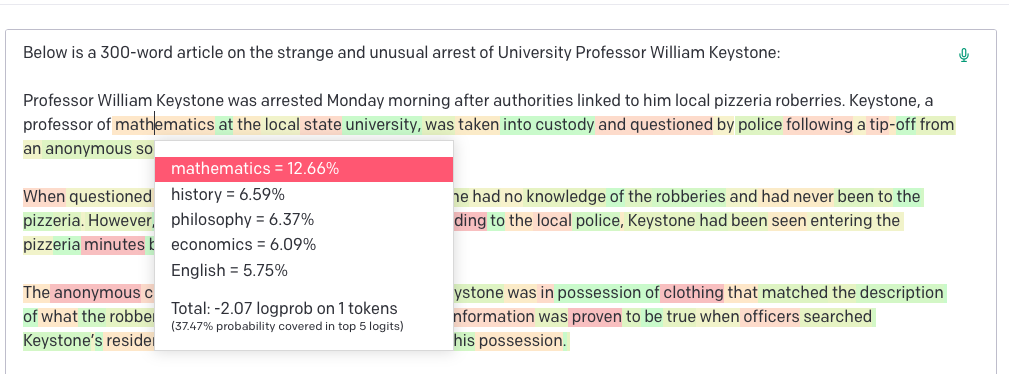
A lower perplexity score means that the language model is more effective at figuring out the most probable word in a given sequence, while a higher perplexity score means that the model is less accurate. To sum up, the lower the perplexity score, the more predictable it is, indicating better generalization and performance.
For example, take a look at the following sentence:
“I picked up the kids and dropped them off at…”
A language model with a high perplexity score might end the sentence with “glacier”, “brooding”, or “thoughtful” but those aren't the best answers because they don't make sense.
In the middle of the perplexity spectrum, you might have a response like “the President’s birthday party”. While it’s pretty funny, the context of the sentence is somewhat unlikely but it does make for an interesting story.
However, a language model with low perplexity might answer “school” or “the park”, which is much more accurate and correct.
As you can see, there are varying degrees of plausibility and it’s often hard to predict which output you’ll get.
Burstiness
Whereas perplexity is the complexity of words used in sentences, burstiness measures the length, structure, and variety of sentences throughout a piece of content. Human writers tend to write in spurts and lulls, naturally switching things up and writing varied sentences. If we're interested in a topic, we might get carried away by our own verbal energy and keep going.
AI models write in a more uniform and robotic manner. There is no intellectual curiosity driving the decisions. The model is just picking the most likely next token. The low burstiness of AI-generated text often accounts for the overly measured and even-handed feel that AI writing has.
Burstiness shouldn't be considered inherently good or bad. However, high burstiness is often correlated with exciting writing. The best human writers, for example, know how to be creative and improvise, grabbing their audience's attention and encouraging them to keep reading.
Now that we fully understand the concepts of burstiness and perplexity, consider the following benefits and downsides before using AI-generated content.
The benefits and downsides of AI-generated content
The quality of AI-generated content can be spotty.
The majority of AI tools are still under development and can only produce content based on data that already exists. In other words, it might not be able to create new and original material if there is a lot of existing human-written content on the subject.
An AI tool also can't think creatively on its own because it needs human input to do so. When it comes to quality, AI-generated content often lacks the level of detail and depth that come with human writing. If you're looking to create evergreen content, like product descriptions or FAQ pages, automation is the best way when it comes to quickly generate large volumes of material.
AI models can only work from existing sources of data.
AI-based content creation has limitations since it can only use data from already-existing sources. In other words, it cannot create new data or material that isn't dependent on information that is already out there. A human writer may be able to write about a subject they have never seen before, but AI would not be able to understand what you have to say about it if there is nothing for it to "see" in your text.
It's also important to keep in mind that, while AI tools are excellent at analyzing large amounts of text and deriving meaning from it, they aren't perfect. AI tools can't understand something that is completely different from what we meant when we wrote it down. As a result, even though your message may come across clearly when you first wrote it, someone else who reads it might interpret it differently.
For instance, take a look when we gave ChatGPT this prompt:
Write brief creative copy for a soda brand. The copy should have a maximum of 200 words and the soda is named Nuke Cola
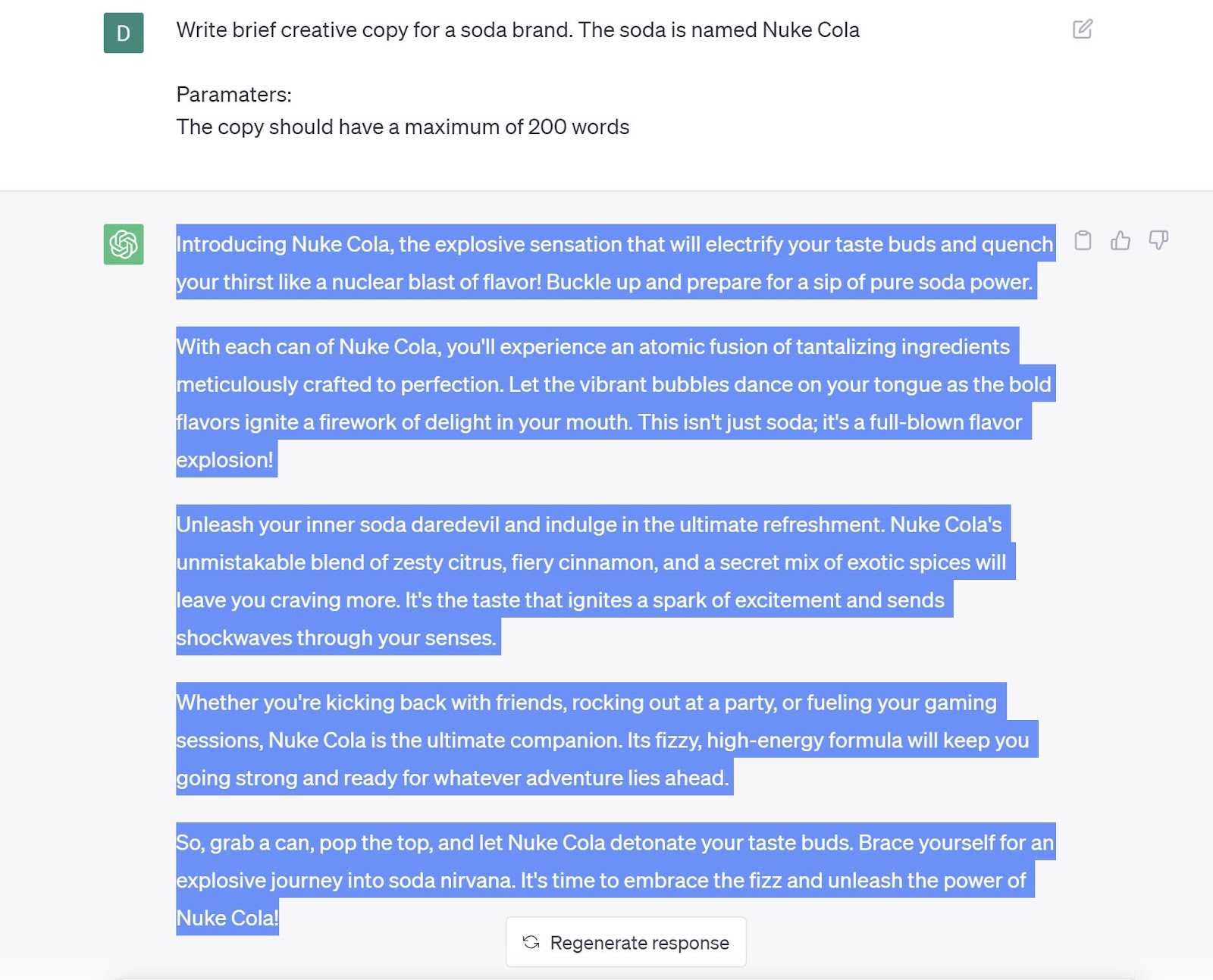
Even though ChatGPT's end copy is fine, it could be much better if it sounded more interesting and personable.
Now let's talk about how to make AI content sound more human by focusing on the benefits that human-written content has over AI-generated content.
How to make AI content more human
What's unique about human-written content?
Human writers can easily understand how creative content must be. Not only are they more personable and empathetic than machines, humans also have a deeper grasp of what drives us and how our lives interact. AI is unable to connect seemingly unrelated thoughts on their own, whereas humans are able to do so. Humans are also more perceptive about how others feel about particular situations or themes because they are aware that different things might garner different reactions from people.
AI-based systems are also capable of producing original material based on user preferences or user behavior data. For instance, if someone likes cats, they may receive an article about cats. This capability is not restricted to human-written content, but compared to human writers, artificial intelligence tends to lack human insight into various experiences. Human-generated content offers distinctive insights that AI simply cannot match because it is based on the writer’s own experiences. They are also better able to comprehend their audience and provide material that is intended just for them.
Most tangibly, text written by people often score noticeably different on perplexity and burstiness. An emotional sensibility is behind the writing that gives the writing a sporadic bounciness that would not typically be produced by weighted averages of the next likely word.
Returning to the soda ad text we got from ChatGPT, we can feed it into an AI Content Converter Tool to convert and humanize ChatGPT AI-generated text into more human-sounding content without changing its meaning. Let’s see it in action:
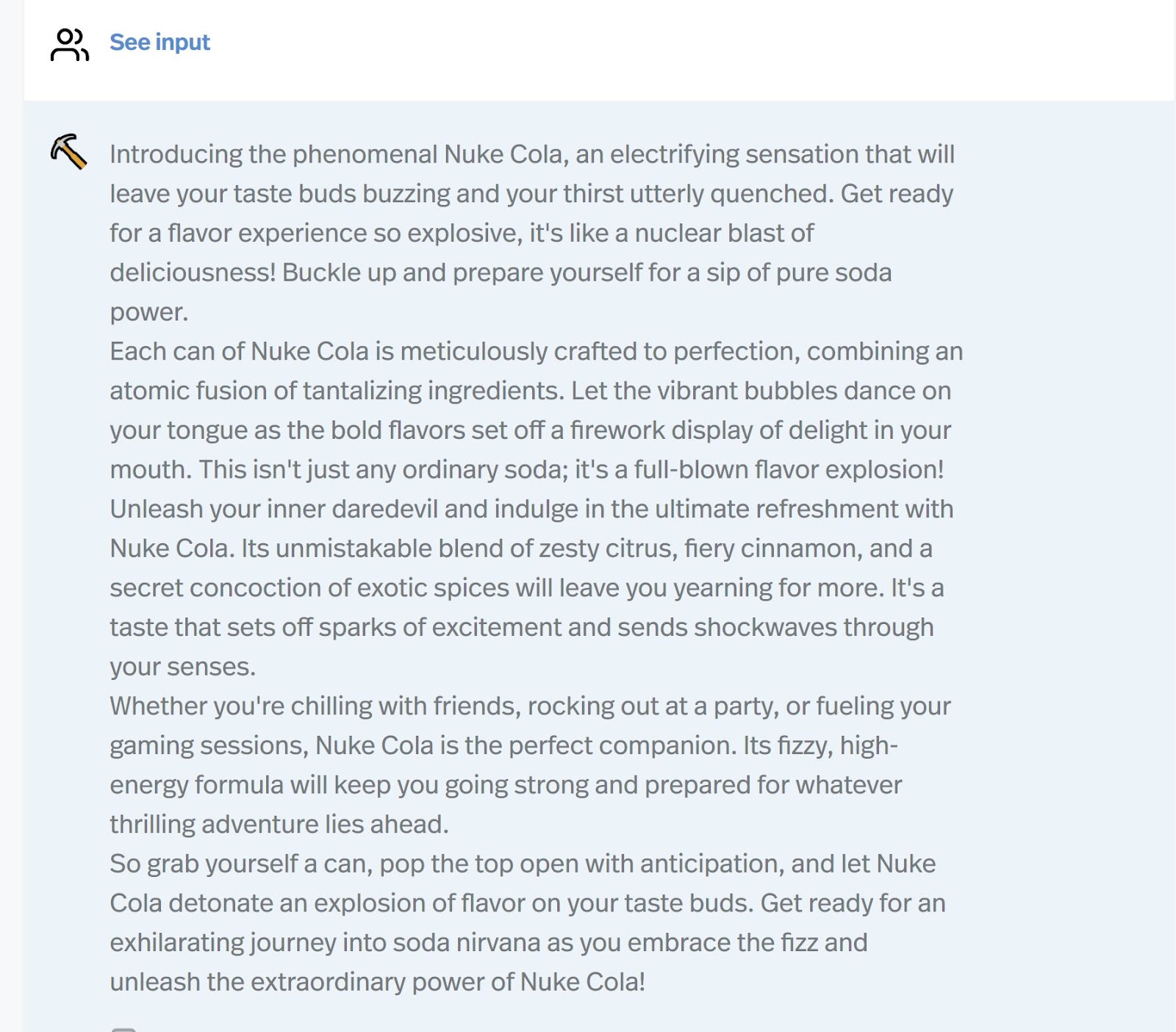
The tool has re-written the text with an emphasis on eliminating certain hallmarks of AI-generated text.
Free AI Content to Human Content Converter Tool
If you're wondering how you can make your AI-generated writing sound more compelling and human, follow the steps below. By humanizing your AI-generated writing, the content will be more likely to bypass AI detection software, engage human readers, and stand out among other AI-generated writing. This AI text converter tool is an automatic way to rewrite content to score more 'human' on burstiness and perplexity. While there's no guarantees, this free tool is an easy way to quickly transform AI-generated writing into more human content.
Step 1
Get some AI-generated text
Step 2
Copy it and paste it into an AI content converter tool
Step 3
Run the tool and copy your results.
Try for free!
If you're curious you can try converting AI-generated content for free below.




.png)