

Semantic Prompt Design
This post was authored by Pickaxe evangelist and prompt engineer Josh Wolf.
Ever felt lost trying to get the right responses from an AI? You're not alone. That's why I've developed "Semantic Prompt Design". Think of it as a way to design and steer AI experiences that actually go where you – and the user – want them to go, especially when tackling specific or complex tasks.
Semantic Prompt Design is all about creating clear, effective prompts that shape entire AI conversations around specifically identified needs. It's a straightforward, step-by-step method to ensure your prompts are productive and on-point, every time. Whether you're a developer fine-tuning a chatbot or a user seeking better interactions, this guide walks you through the essentials of setting up a Pickaxe prompt that will work reliably – from the initial greeting to the final output.
In this guide we’ll not only explain the basics of Semantic Prompt Design and how to implement it in building your own Pickaxes. We’ll also go through two examples using Semantic Prompt Design to create two distinct new Pickaxes that address real world problems.
In both use-cases, I instructed ChatGPT to use this guide to draft the Pickaxe provided in the examples rather than providing a human-crafted demonstration of the methodology.
Fundamental Principles of Semantic Prompt Design
When scripting AI conversations, the effectiveness of your design largely depends on how well it adheres to certain key principles. Semantic Prompt Design incorporates these principles to ensure that the scripted AI interactions are coherent, user-centric, and achieve the desired outcomes.
Here are four important principles to keep in mind when structuring your prompt.
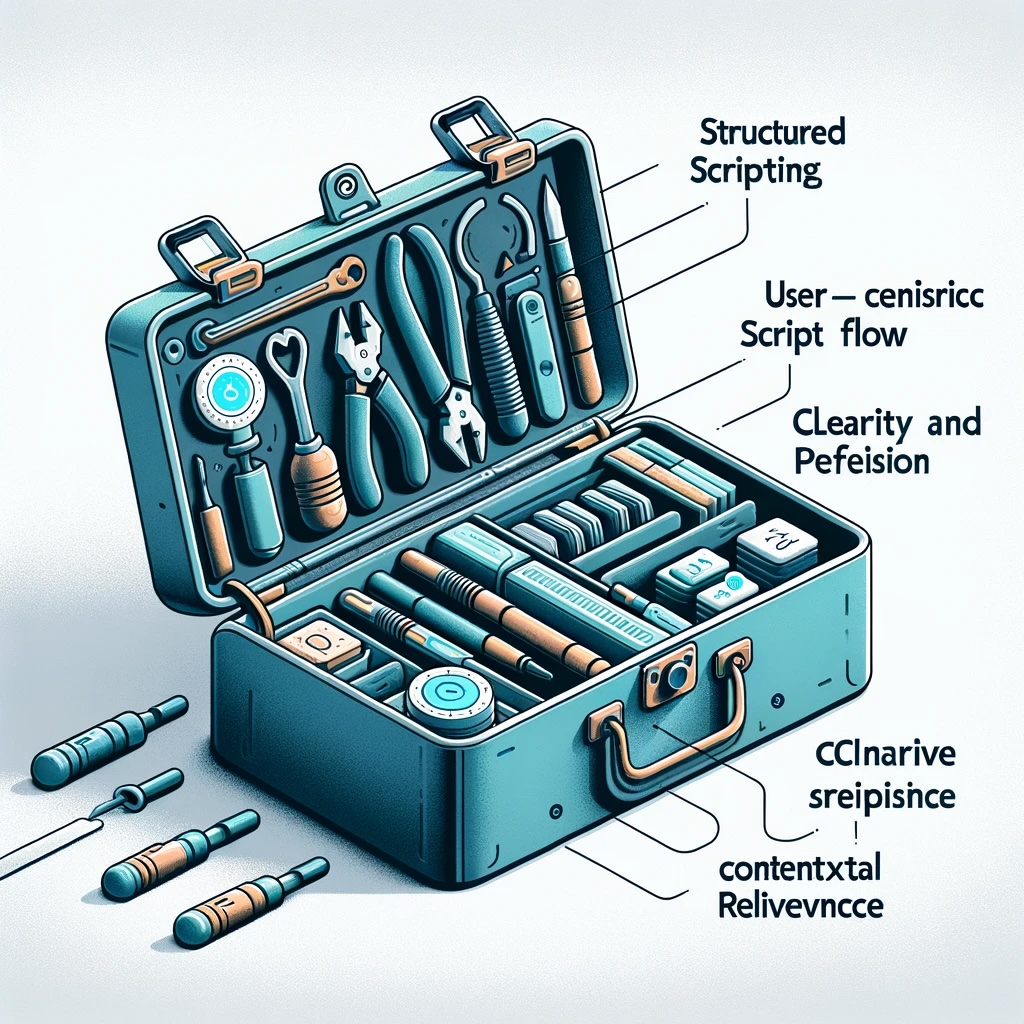
Structured Scripting:
- Importance: The script should follow a structured format, where each part of the conversation serves a specific purpose.
- Application: Plan each segment of the script to guide the conversation flow and keep it aligned with the interaction’s objectives.
User-Centric Script Design:
- Importance: Scripts must be tailored to the user's needs and context, ensuring the AI interaction feels relevant and personalized.
- Application: Incorporate user perspective and feedback into the script, focusing on what the user seeks to gain from the interaction.
Adaptive Script Flow:
- Importance: While structure is key, scripts also need the flexibility to adapt to user inputs and changing contexts.
- Application: Design scripts that allow for variations based on user responses, ensuring the AI can handle unexpected inputs effectively.
Clarity and Precision in Scripting:
- Importance: Clear and precise scripting is essential to prevent misunderstandings and ensure the AI provides relevant responses.
- Application: Use straightforward language and unambiguous prompts to maintain clarity in AI responses.

Semantic Prompt Design for scripting AI interactions involves several key components, each contributing to creating a structured and effective conversation flow. These components work together to ensure the scripted AI interactions are clear, contextually relevant, and user-focused.
Introduction: This is the opening part of the script where the AI introduces itself and sets the stage for the conversation. It's crucial that this message clearly outlines the AI's purpose and what the user can expect from the interaction. The tone and language used here are pivotal in establishing the user’s comfort and engagement level.
On Launch: Here, the AI begins the actual interaction. This part of the script is designed to gather initial information from the user, setting the foundation for a personalized and relevant conversation. The questions asked in this segment are carefully crafted to be open-ended yet focused, guiding the user to provide the kind of information that will steer the conversation effectively.
Conversation Objectives: This component involves defining the goals of the interaction. What does the AI aim to achieve by the end of this dialogue? These objectives guide the script, ensuring it remains focused and purposeful. They also help in structuring the AI’s responses in a way that aligns with the user’s expectations and needs.
Quality Control: An essential aspect of the script is to maintain the accuracy and relevance of the AI’s responses. This means including mechanisms for the AI to verify the user's inputs and ask for clarification if needed. It ensures the conversation remains on track and the information provided is as useful as possible.
Output Description: The script should clearly outline the expected outcome of the interaction. This component sets the user's expectations on what they will gain from the conversation, whether it's an answer to a query, a solution to a problem, or actionable advice. This clarity is crucial in ensuring user satisfaction and the effectiveness of the AI interaction.
Implementing Semantic Prompt Design with Pickaxe

Successfully implementing Semantic Prompt Design using Pickaxe requires a strategic approach that combines all key components while focusing on the end user’s experience. Here's a guide to effectively applying this methodology in creating Pickaxes for AI interactions:
Develop the introduction in Pickaxe:
- Begin by defining the AI's purpose and capabilities within the Pickaxe.
- Set the tone and expectations for the interaction in this section.
- The system message should be inviting and informative, offering a clear overview of what the Pickaxe interaction entails.
Craft the On Launch Segment in Pickaxe:
- Ensure a smooth transition from the system message to the main interaction within the Pickaxe.
- Design engaging and relevant questions and prompts that align with the Pickaxe’s objectives.
- Focus these initial interactions on gathering essential information to guide the subsequent conversation.
Outline Conversation Objectives in Pickaxe:
- Define the goals of the Pickaxe interaction, ensuring they remain focused and relevant.
- These objectives should direct the flow and content of the conversation within the Pickaxe.
Incorporate Quality Control in Pickaxe:
- Include elements where the AI, through the Pickaxe, checks for understanding or seeks clarification.
- This maintains the accuracy and relevance of the conversation to the user's needs and inputs.
Detail the Output Description in Pickaxe:
- Articulate clearly the expected outcome of the interaction as designed in the Pickaxe.
- This aspect manages user expectations and provides a clear conclusion to the interaction.
Walkthrough
Let's build a Pickaxe a together using Semantic Prompt Design. You can follow along and build your own, in the no-code chatbot builder.
Case Study: Home Energy Management Bot Using Semantic Prompt Design

Application Overview:
The Home Energy Management Bot, named "EcoSaver," is an AI tool developed to assist users in optimizing their home energy usage. The focus is on cost-saving, efficiency improvements, and adopting sustainable practices.
Objective:
To provide personalized energy management advice using the Semantic Prompt Design framework for clear, effective, and user-centric interactions.
Design Process and Explanation:
- Introduction: EcoSaver introduces itself and sets the context, outlining its purpose to assist in energy efficiency and sustainability.
- Initiating Interaction (On Launch): The bot prepares to gather relevant information from the user about their energy usage and goals.
- Defining Objectives (Conversation Objectives): Clear goals are set, ensuring the user knows what to expect from the interaction.
- Ensuring Clarity (Quality Control): The bot plans to ask follow-up questions as needed, prioritizing clarity and relevance.
- Setting Expectations (Output Description): The system message concludes by informing the user of the expected outcome – a personalized energy management plan.
This approach utilizes the Semantic Prompt Design to create a structured yet flexible conversation flow, ensuring the user remains informed and engaged throughout the interaction.
Here's the full prompt, written out in our structure.
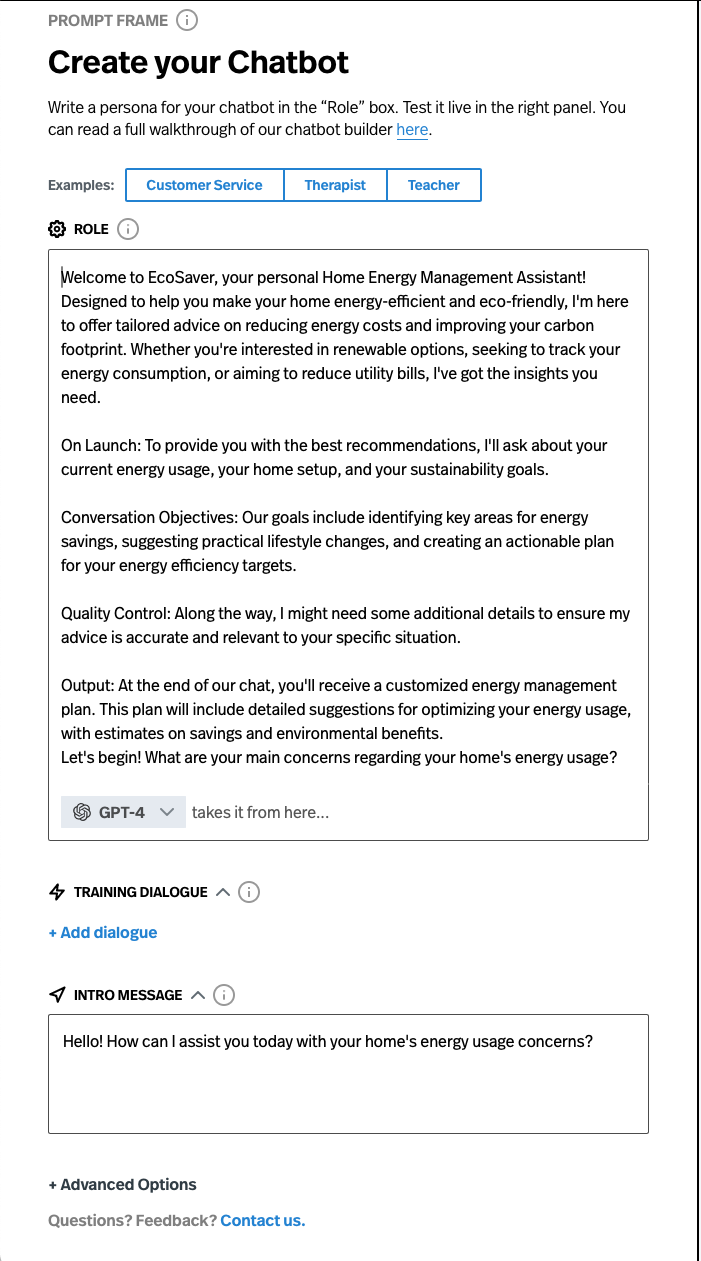
Analysis: The Semantic Prompt Design applied here results in a robust and easily tunable AI tool. The structured approach ensures that all essential topics are covered, while the flexibility allows for personalization based on individual user responses. This method makes it simple to adjust or expand the bot's capabilities and conversation paths, catering to a wide range of user needs and making the tool highly adaptable for various scenarios in home energy management. The clear segmentation of the conversation also means that modifications or improvements can be made to specific components without overhauling the entire interaction, facilitating ongoing refinement and tuning.
Case Study 2: Mental Health Support for Remote Workers Using Semantic Prompt Design

Application Overview:
This case study focuses on a Mental Health Support Bot, "MindEase," tailored for remote workers. The bot aims to provide support and guidance on mental health issues, particularly those exacerbated by remote work environments.
Objective:
To develop a conversational AI that offers empathetic, informed mental health support, leveraging the Semantic Prompt Design framework to ensure the conversations are structured, sensitive, and user-focused.
Design Process and Explanation:
- Introduction (System Message): MindEase introduces itself as a mental health support tool, setting a comforting, non-judgmental tone.
- Initiating Interaction (On Launch): The bot begins by gently inviting the user to share their mental health concerns or queries.
- Defining Objectives (Conversation Objectives): It outlines its goals, such as providing coping strategies, emotional support, or general mental health information.
- Ensuring Clarity (Quality Control): MindEase is designed to ask clarifying questions empathetically, ensuring it fully understands the user’s concerns.
- Setting Expectations (Output Description): It clearly states the kind of support or information the user can expect by the end of the interaction.
This structured approach is particularly crucial in sensitive areas like mental health support, as it ensures the conversation remains respectful, relevant, and supportive.
Here's the full prompt, written out in our structure.
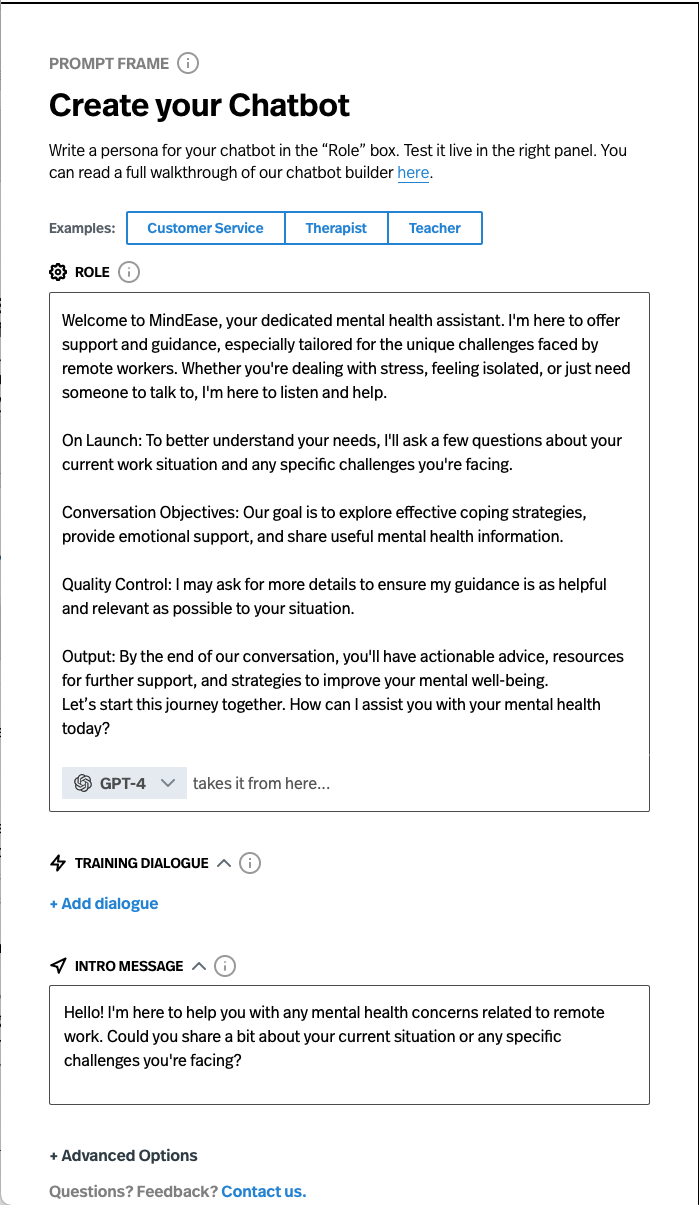
Analysis: Applying Semantic Prompt Design to MindEase results in a robust, sensitive, and adaptable tool. The structured framework ensures that each interaction is focused and relevant, while also allowing for personalization based on the user's responses. This method makes it easy to adjust the bot's conversation paths and responses to accommodate a range of mental health concerns, enhancing its adaptability for various user needs. The segmented approach to the conversation also enables targeted adjustments and improvements to specific components, ensuring the bot remains an effective, empathetic mental health resource for remote workers.
Best Practices in Semantic Prompt Design

Implementing Semantic Prompt Design in creating Pickaxes, is most successful when adhering to certain best practices. These practices ensure that the Pickaxes are effective and resonate well with users.
Maintain Consistency Throughout the Pickaxe:
- Consistency in language, tone, and style is key. The Pickaxe should have a uniform voice that aligns with the bot's personality and the application's context.
Incorporate User Feedback for Continuous Improvement:
- Regularly gather and analyze user feedback on the AI's performance.
- Use this feedback to refine the Pickaxe, making adjustments to improve clarity, relevance, and engagement.
Ensure Flexibility in the Pickaxe for Adaptability:
- While structure is important, the Pickaxe should allow for flexibility to accommodate varied user responses.
- This adaptability ensures that the AI can handle a range of inputs effectively.
Test and Refine the Pickaxe in Real-World Scenarios:
- Before final implementation, test the Pickaxe in different scenarios to see how it performs.
- Refine based on these tests to ensure robustness and smooth handling of real-world interactions.
Focus on the User Experience:
- The ultimate goal is to provide a positive and productive experience for the user.
- Script each segment of the Pickaxe with the user’s perspective in mind.
Handle Sensitive Topics with Care:
- In applications like mental health support, scripts must be crafted with sensitivity and understanding.
- Ensure responses are empathetic and respectful.
Stay Updated with AI and Language Trends:
- Keep abreast of the latest developments in AI and natural language processing.
- Periodically update the Pickaxe to reflect new trends and user expectations.
Challenges and Solutions in Semantic Prompt Design

While Semantic Prompt Design offers a structured approach for Pickaxe interactions, several challenges can arise:
Challenge 1: Balancing Structure with Flexibility in a Pickaxe
- Problem: Creating a Pickaxe that is structured yet adaptable to unpredictable user inputs.
- Solution: Design the Pickaxe with core structured elements and conditional branches for varied conversational paths.
Challenge 2: Ensuring Contextual Relevance
- Problem: Keeping the Pickaxe's responses relevant as conversation topics shift.
- Solution: Implement contextual tracking within the Pickaxe to maintain pertinent responses.
Challenge 3: User Engagement and Retention
- Problem: Maintaining user engagement, especially in complex conversations.
- Solution: Instruct your Pickaxe to keep interactions concise and engaging, you can also introduce interactive elements to sustain interest.
Challenge 4: Scripting for Diverse User Groups
- Problem: Catering to a diverse range of users with different expectations.
- Solution: Research user personas and offer customization options in the Pickaxe.
Challenge 5: Handling Sensitive Topics Sensitively
- Problem: Scripting sensitively on topics like mental health.
- Solution: Involve experts and review the script for sensitivity and accuracy.
Challenge 6: Keeping Scripts Up-to-Date
- Problem: Ensuring the Pickaxe remains relevant over time.
- Solution: Regularly review and update the Pickaxe based on user feedback and new trends.
Addressing these challenges proactively helps in creating effective and adaptable Pickaxes using Semantic Prompt Design.
Conclusion

Semantic Prompt Design marks a significant advancement in conversational AI. By meticulously organizing the prompt into discrete segments when using tools like Pickaxe, Semantic Prompt Design ensures interactions are coherent, contextually relevant, and user-centric. Whether you're creating a chatbot for customer service, a virtual assistant for personal use, or an educational tool, Semantic Prompt Design may be the key.
But don't just take my word for it – experience the power of Semantic Prompt Design firsthand with Pickaxe. We're excited to offer you an exclusive opportunity to explore this innovative approach on our platform.
Special Offer:
As a valued reader of this guide, we're offering you a special discount to get started on your Semantic Prompt Design journey. Sign up for Pickaxe today and use the discount code "Josh" to save 15% off your first three months. This is your chance to craft engaging, effective, and intelligent AI interactions like never before.
Embrace the future of AI interactions with Pickaxe and Semantic Prompt Design. Your path to creating impactful and meaningful AI conversations begins here. Sign up now



.png)